Home
Home
What Is Nano Banana Pro and How It Redefines Professional AI Image Editing
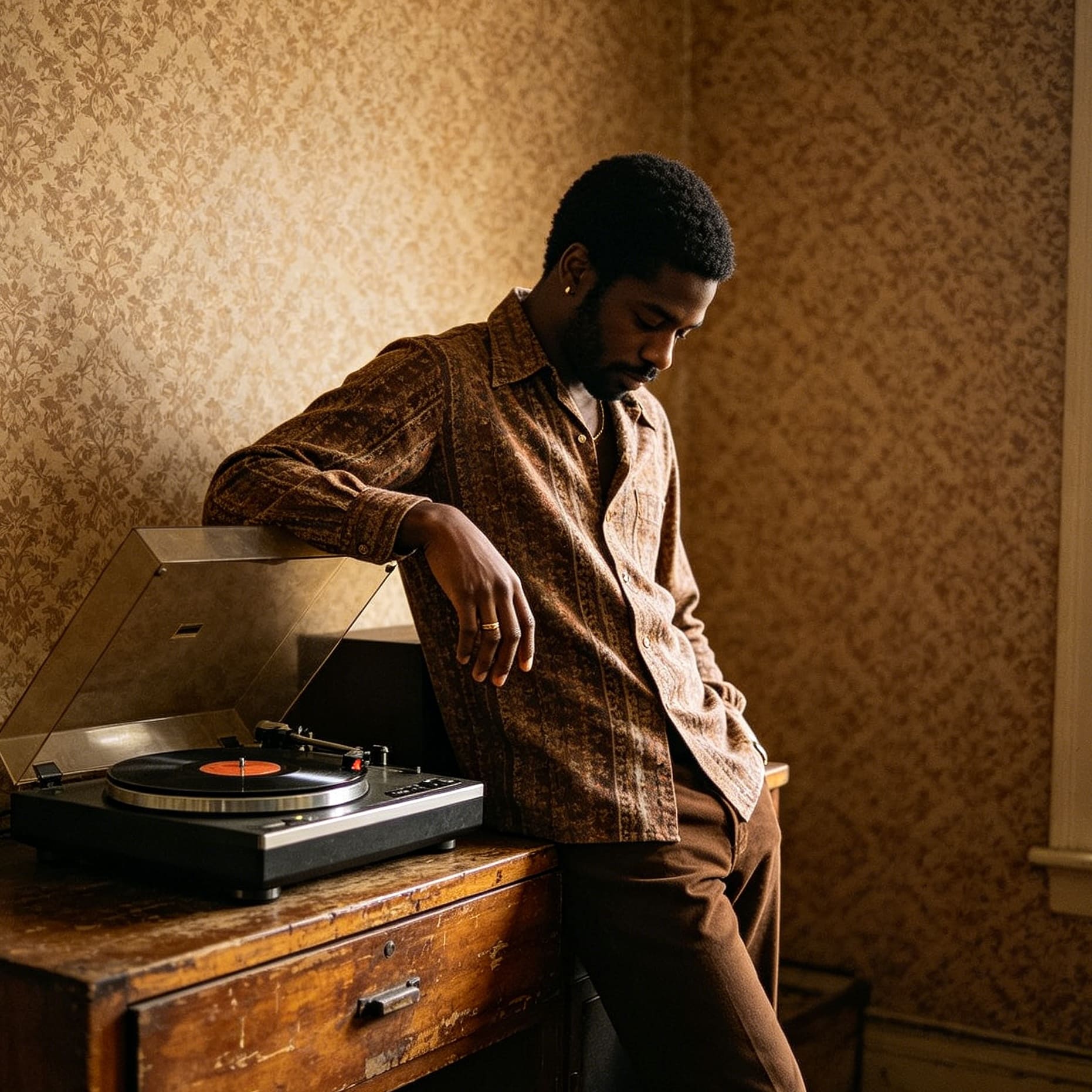
Nano Banana Pro is a state-of-the-art artificial intelligence model designed for high-precision image generation and sophisticated visual editing. Developed as an advanced iteration within the Google DeepMind ecosystem—specifically utilizing the Gemini 3 Pro architecture—this model represents a significant leap forward in how AI understands and executes complex visual prompts. Unlike earlier diffusion models that often struggled with spatial logic or legible text, Nano Banana Pro focuses on "studio-grade" outputs, supporting resolutions up to 4K and offering unprecedented control over compositional elements.
The term often causes confusion due to its similarity to the "Banana Pi" series of single-board computers. However, Nano Banana Pro is strictly a software-based AI entity. It is engineered to bridge the gap between simple text-to-image synthesis and professional-level asset creation, making it a critical tool for designers, creative directors, and researchers alike.
The Technological Architecture Behind Nano Banana Pro
To understand the capabilities of Nano Banana Pro, one must look at its foundation. Built on the Gemini 1.5 and 3 Pro architectures, it utilizes a "deep thinking" reasoning framework. This allows the model to process prompts not just as a collection of keywords, but as a set of interconnected spatial and semantic instructions.
Advanced Deep Thinking Reasoning
When a user provides a complex prompt involving specific lighting, camera angles, and depth of field, Nano Banana Pro does not simply look for patterns in its training data. It simulates a visual environment. For instance, if you request a "cinematic shot of a glass bottle on a wet pavement at midnight with neon reflections," the model calculates the interplay between light sources and refractive surfaces. In practical testing, this results in significantly fewer "hallucinations" where objects blend into each other awkwardly—a common issue in standard generative models.
Resolution and Output Quality
One of the defining features for professionals is the support for 4K rendering. While many AI tools produce 1024x1024 images that require external upscaling, Nano Banana Pro is capable of generating high-fidelity textures directly. This is particularly noticeable in the rendering of skin textures, fabric weaves, and atmospheric effects like fog or smoke, which maintain their integrity even when cropped.
Key Features That Distinguish Nano Banana Pro
What sets this model apart from competitors like Midjourney or DALL-E 3 is its focus on precision and multi-layered control. It is not just about creating a "pretty picture"; it is about creating the exact picture required for a specific project.
Breakthrough in Legible Text Rendering
For years, the "Achilles' heel" of AI image generation has been text. Nano Banana Pro has largely solved this by treating text as a structural element rather than a visual texture. It can render clear, legible typography in multiple languages and varied fonts directly within the generated image.
- Infographics and Posters: You can prompt the model to create a poster for a "Global Tech Summit 2025" and expect the date, location, and title to be spelled correctly and integrated into the design.
- Branding and Logos: It understands the nuances of calligraphy and screen-printed textures, allowing designers to create logos where the letters convey meaning through their form.
The 14-Image Blending Capability
Consistency is the holy grail of AI content creation. Nano Banana Pro allows users to upload up to 14 reference images to guide a single generation. This is transformative for character consistency and storyboarding.
- Character Maintenance: You can upload several photos of the same person from different angles, and the model will maintain their facial structure and resemblance across new scenes.
- Style Mixing: By blending a sketch of a product with a photo of a real-world environment, the model can produce a photorealistic mockup that keeps the proportions of the original sketch while adopting the lighting and textures of the photo.
Professional Creative Controls
The model provides "studio-grade" levers for the output. Instead of relying purely on descriptive adjectives, users can adjust specific parameters:
- Camera Angles: Switch between bird's-eye view, Dutch angles, or macro shots with high precision.
- Lighting Shifts: Transform a scene from "golden hour" to "harsh fluorescent" or "moonlit" without changing the underlying composition.
- Depth of Field: Control exactly which parts of the image remain in sharp focus and which melt into a soft bokeh background.
Evaluation of Nano Banana Pro in Low-Level Vision Tasks
Beyond creative synthesis, Nano Banana Pro has been the subject of intense academic study regarding its "low-level vision" capabilities. A comprehensive evaluation across 14 distinct tasks and 40 datasets has revealed how this model performs as a "generalist solver" for traditional image problems.
Image Restoration and Enhancement
In zero-shot evaluations (where the model is given a task without specific training for that task), Nano Banana Pro has shown remarkable results in:
- Dehazing: Recovering clear images from hazy or foggy outdoor scenes.
- Deraining and Deshadowing: Removing environmental interference like raindrops on a lens or unwanted shadows on a face.
- Denoising: Eliminating sensor noise from low-light photography.
- Super-Resolution: Upscaling low-resolution images while intelligently filling in missing details.
The Performance Dichotomy: Perception vs. Metrics
A fascinating finding from researchers at Huazhong University of Science and Technology is the "performance dichotomy." While Nano Banana Pro often produces results that are subjectively superior to human eyes—meaning they look sharper and more realistic—they sometimes score lower on traditional quantitative metrics like PSNR (Peak Signal-to-Noise Ratio) or SSIM (Structural Similarity Index).
This occurs because Nano Banana Pro is a generative model. Instead of just mathematically calculating pixel values based on the original degraded image, it "hallucinates" plausible high-frequency details. For example, when restoring a blurry photo of a cat, it might generate individual fur strands that weren't in the original. While this looks fantastic to a human observer, it deviates from the "pixel-perfect" ground truth that traditional metrics require. This suggests that Nano Banana Pro is better suited for aesthetic restoration than for scientific or forensic applications where absolute pixel fidelity is required.
Nano Banana Pro vs. Standard AI Models
It is important to distinguish between the standard versions of AI generators and the Pro version of Nano Banana. The differences are not just in speed, but in the depth of understanding and the final output's utility.
| Feature | Nano Banana (Standard) | Nano Banana Pro |
|---|---|---|
| Generation Speed | Rapid (5-10 seconds) | Moderate (Optimized for precision) |
| Text Legibility | Basic / Occasional errors | Advanced / High precision |
| Max Resolution | 1024px to 2K | Up to 4K |
| Image Blending | Limited (1-2 references) | Advanced (Up to 14 references) |
| Professional Controls | Descriptive prompts only | Direct control over lighting/depth |
| Use Case | Social media / Exploration | Professional design / Marketing |
Practical Workflows: How to Use Nano Banana Pro Effectively
To get the most out of Nano Banana Pro, users should adopt a structured workflow that leverages the model's reasoning capabilities.
Step 1: Establish the Visual Foundation
Start by uploading reference images if you have them. If you are designing a product, upload the blueprint or a rough sketch. Nano Banana Pro’s strength lies in its ability to analyze the depth and composition of these references before you even type a prompt.
Step 2: Crafting the Semantic Prompt
The prompt should be structured and detailed. Avoid vague terms like "cool" or "beautiful." Instead, use technical or descriptive language.
- Bad Prompt: "A coffee shop in the rain."
- Good Prompt: "An interior shot of a minimalist Tokyo coffee shop, rain streaking against large floor-to-ceiling windows, soft warm interior lighting contrasting with the blue twilight outside, 35mm lens, f/1.8, high detail on the steam rising from a ceramic cup on a wooden table."
Step 3: Utilizing Image-to-Image for Iteration
Once you have an initial result, use the image-to-image editor for "quick tweaks." If the composition is perfect but you want to change the character's expression or the color of the walls, use the localized editing feature. This ensures that you don't lose the elements you already like while refining the details.
Step 4: Finalizing and Exporting
Review the history and downloads. Every generation is saved, allowing you to go back and download various versions. For professional use, ensure you export in the maximum supported resolution (4K) to preserve the intricate details generated by the model.
Commercial and Creative Use Cases
The versatility of Nano Banana Pro makes it applicable across various industries.
Marketing and Advertising
Marketing teams use the model to localize content quickly. Because the model can maintain visual elements while changing text, a single poster can be generated in English, French, and Japanese while keeping the brand's aesthetic consistent. It is also ideal for creating lifestyle product shots where the actual product (uploaded via reference) needs to be placed in various aspirational settings.
Education and Science Communication
The model’s ability to turn complex instructions into polished visuals is invaluable for education. Teachers can prompt the model to "create a diagram of the human circulatory system with clear labels for the heart, lungs, and arteries." The resulting image is often more engaging and clearer than stock illustrations.
Prototype and Mood Boarding
In the early stages of design, speed and clarity are essential. Designers use Nano Banana Pro to turn handwritten notes or rough doodles into photorealistic prototypes. This helps stakeholders visualize the final product without the need for expensive 3D rendering or photography in the concept phase.
Safety, Privacy, and Commercial Rights
When using professional AI tools, data security is a top priority.
- Privacy: Most professional deployments of Nano Banana Pro ensure that uploaded images and generated outputs remain private. They are not used to train future iterations of the public model unless explicitly authorized.
- Commercial Rights: Typically, annual subscribers or pro-tier users enjoy full commercial usage rights. This allows for the use of generated images in e-commerce, advertising, and social media without legal ambiguity. However, it is always recommended to check the specific terms of service of the interface you are using (e.g., Vertex AI or the Gemini App).
Summary: Is Nano Banana Pro Right for You?
Nano Banana Pro is a powerful, high-precision tool that excels where others falter—specifically in text rendering, spatial consistency, and professional creative control. While it requires more thoughtful prompting and slightly longer processing times than standard "instant" generators, the quality of the output justifies the effort.
It is particularly recommended for:
- Graphic Designers who need integrated text and high-resolution files.
- Brand Managers who require character and style consistency across campaigns.
- Tech Enthusiasts looking to explore the cutting edge of zero-shot image restoration and enhancement.
If your goal is quick, fun images for personal use, the standard version of Nano Banana or other common tools may suffice. However, if you are looking to integrate AI into a professional production pipeline, Nano Banana Pro is currently one of the most capable models on the market.
Frequently Asked Questions (FAQ)
What is the difference between Nano Banana Pro and Banana Pi?
Banana Pi is a physical hardware board (a single-board computer) used for electronics projects. Nano Banana Pro is a software-based AI model used for generating and editing high-precision images. They are entirely unrelated despite the similar names.
Can Nano Banana Pro generate text in non-English languages?
Yes. The model is built on the Gemini architecture, which is multilingual. It can render text in a wide variety of writing systems, including Latin, Cyrillic, Hanzi, and more, maintaining legibility and font style across these languages.
Does Nano Banana Pro require a high-end computer to run?
No. Since Nano Banana Pro is a cloud-based model accessed through services like Google Vertex AI or specialized web dashboards, the heavy lifting is done on remote servers. You can use it on a standard laptop, tablet, or even a smartphone as long as you have an internet connection.
How does the 14-image blending feature work?
This feature allows you to upload up to 14 reference images. The model's "reasoning" engine analyzes these images for common themes, styles, or subjects. It then synthesizes a new image that combines elements from these references, such as putting a specific character into a specific artistic style or setting.
Is Nano Banana Pro free to use?
Generally, Nano Banana Pro is a paid feature due to the high computational cost of the model. However, many platforms offer a limited number of free credits for new users to test the "Pro" capabilities before committing to a subscription.
Can I use the images I generate for my business?
In most professional and annual subscription tiers, users are granted full commercial rights to their outputs. This makes the images suitable for use in professional marketing materials, product packaging, and advertisements.
-
Topic: Nano Banana Pro - AI Image Generator & Editorhttps://nano-banana-pro.com/?fpr=aitoolhunt&ref=aitoolhunt&via=aitoolhunt
-
Topic: Is Nano Banana Pro a Low-Level Vision All-Rounder? A Comprehensive Evaluation on 14 Tasks and 40 Datasetshttps://www.arxiv.org/pdf/2512.15110
-
Topic: Nano Banana Pro | Advanced AI Image Generation & Editinghttps://nanobanana.im/nano-banana-pro