Home
Home
How to Use Banana AI and Nano Banana for Professional Image Editing
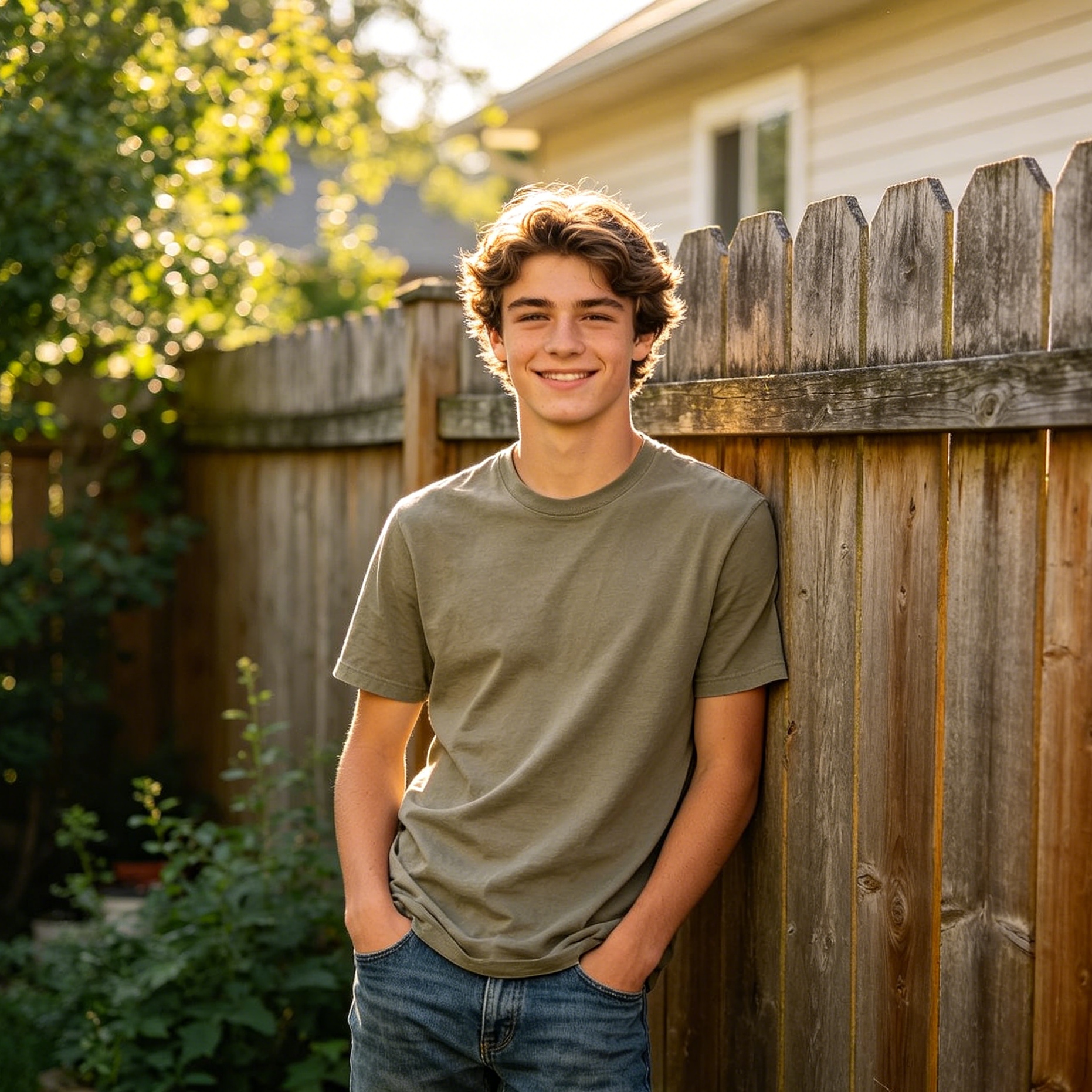
Banana AI is a creative ecosystem of independent web-based platforms and mobile applications designed to simplify high-end AI image generation and precise photo editing. While often marketed alongside names like "Nano Banana" and referencing Google’s underlying Gemini technology, these tools operate as independent services tailored for marketers, social media creators, and e-commerce professionals.
The platform's primary appeal lies in its "instruction-based" editing. Unlike traditional AI generators that require long, convoluted prompts, Banana AI allows users to upload an image and give natural language commands—such as "change the background to a sunset" or "add a red leather jacket"—to achieve context-aware modifications.
Understanding the Technology: What is Nano Banana?
The core engine driving most Banana AI services is a model referred to as Nano Banana. This model is built upon the Gemini 2.5 Flash architecture, which was engineered for speed, efficiency, and high-level multimodal understanding.
In the landscape of artificial intelligence, "Flash" models are optimized for low-latency tasks. For users of Banana AI, this translates to generation times typically ranging between 10 and 30 seconds. The Nano Banana iteration specifically focuses on "instruction-following" capabilities. This means the AI doesn't just look at pixels; it understands the semantic content of a photo. If a user asks to "make the subject smile," the AI identifies the facial structure and applies a realistic anatomical transformation rather than just overlaying a generic filter.
Is Banana AI a Google Product?
It is essential to clarify the distinction between the technology provider and the service provider. Banana AI platforms are independent third-party entities. They leverage Google’s Gemini API and infrastructure to power their creative tools, but they are not owned or operated by Google. This distinction is important for users to understand regarding data privacy, account management, and customer support, which are handled directly by the specific Banana AI site or app developer (such as Ideas Snap Company Limited for the iOS version).
Core Features of the Banana AI Ecosystem
The versatility of Banana AI comes from its hybrid approach to visual creation. It bridges the gap between pure text-to-image generation and traditional graphic design software.
1. Instruction-Driven Image Editing
This is the standout feature of the Nano Banana model. Instead of using brushes or masks, users provide text instructions to modify existing photos.
- Outfit Swapping: Change clothing items while maintaining the person's pose and body shape.
- Background Replacement: Seamlessly move a subject from an indoor office to a Parisian street with consistent lighting.
- Object Addition/Removal: Add sunglasses, jewelry, or remove unwanted photobombers with high fidelity.
2. Multi-Image Fusion
Advanced versions of Banana AI (often found on the .pro platforms) offer a "fusion" capability. Users can upload up to six different images and instruct the AI to combine them. For instance, a user could upload a photo of a specific person and a photo of a luxurious living room, commanding the AI to "place this person on the sofa in this room." The AI handles the perspective, shadows, and color blending to make the fusion look natural.
3. Professional Product Placement
For e-commerce sellers, this feature acts as a virtual photo studio. By uploading a single product shot, users can generate high-quality lifestyle imagery. The Nano Banana engine analyzes the textures and angles of the product and integrates it into various environments—ranging from minimalist marble countertops to rustic outdoor settings—ensuring that the product's lighting matches the new scene's environment.
4. 3D Pose and Perspective Control
One of the more sophisticated elements of the platform is its ability to manipulate objects in 3D space. Users can sometimes command the AI to "show the back view" or "rotate 45 degrees." While this isn't a true 3D render, the AI uses its vast training data to predict and generate what the other side of an object or person would look like, maintaining character consistency throughout the transformation.
How to Use Banana AI: A Step-by-Step Guide
Using Banana AI is designed to be intuitive, even for those with no prior experience in AI art. Here is a typical workflow for achieving professional results.
Step 1: Choosing Your Mode
Upon entering the platform, you are usually presented with two main options: Generate or Edit.
- Select Generate if you are starting from scratch and want to turn a text description into a new image.
- Select Edit if you have an existing photo that needs modification or enhancement.
Step 2: Uploading Assets
If you are in Edit mode, upload your primary image. Most platforms support JPG, PNG, and WebP formats. For best results, ensure the image is clear and well-lit. If you are using the Fusion feature, you may be allowed to upload multiple images (up to six) to serve as references for the final composition.
Step 3: Providing Natural Language Commands
This is where the Nano Banana model shines. In the command box, write exactly what you want to happen.
- Bad Prompt: "Blue sky."
- Good Prompt: "Replace the cloudy gray sky with a vibrant blue sky and a few fluffy white clouds."
- Professional Prompt: "Change the model's business suit to a casual blue linen shirt, adjust the lighting to golden hour, and move the location to a beachside cafe."
Step 4: Iteration and Refinement
The AI will provide a result in a few seconds. If the result isn't perfect, you don't necessarily have to start over. Most Banana AI interfaces allow for "iteration." You can provide follow-up commands like "make the shirt a darker shade of blue" or "remove the sunglasses." Each iteration refines the previous output until the desired look is achieved.
Step 5: Exporting
Once satisfied, you can download the final image. Many platforms offer upscaling options to increase the resolution for print or high-definition web use. Note that high-resolution exports often consume more "credits" from your account balance.
Practical Use Cases for Marketing and Business
The efficiency of Banana AI makes it a powerful tool for various professional sectors.
Social Media Content Creation
Social media managers often need to produce a high volume of varied content from a limited number of original photos. Banana AI allows a single photoshoot to be repurposed into dozens of different posts. A model wearing a summer dress can be "re-clothed" in a winter coat for seasonal promotions, or a product can be moved from a beach setting to a holiday-themed background in seconds.
E-commerce Visuals
High-quality product photography is expensive. E-commerce startups can use Banana AI to generate "lifestyle" shots without hiring photographers or renting studios. By using the product placement and background removal tools, a basic smartphone photo of a product can be transformed into a professional ad banner.
Fashion and Apparel Design
Designers can use the outfit swap and texture replacement features to visualize how different fabrics or patterns would look on a real person. This aids in the prototyping phase and helps in creating lookbooks before physical samples are even manufactured.
Concept Art and Illustration
For artists and game developers, Banana AI serves as a rapid prototyping tool. Using the text-to-image and fusion features, they can explore different character designs, environments, and moods, iterating through hundreds of concepts in a single afternoon.
Is Banana AI Free? Understanding the Credit System
Most Banana AI platforms operate on a "freemium" or credit-based model. This means that while you might get a handful of free credits to test the service upon sign-up, serious or high-volume use requires a financial commitment.
Credit Packages
Typically, Banana AI services offer one-time purchase packs rather than recurring monthly subscriptions, which many users prefer for project-based work.
- Starter Packs: Often priced around $10 for 1000 credits, suitable for light projects or learning the tool.
- Professional/Plus Packs: Around $30 for 4000 credits, aimed at frequent creators or small teams.
- Max/Enterprise Packs: Higher tier packages (around $50 for 8000 credits) offering faster processing and priority support.
Credit Consumption
Different operations have different "costs." A simple text-to-image generation might cost 1 credit, while a complex multi-image fusion with high-resolution upscaling might cost 5 to 10 credits. It is important to monitor your balance within the "My Credits" section of the platform to avoid interruptions during a project.
Why Choose Banana AI over Other AI Tools?
With tools like Midjourney, DALL-E 3, and Stable Diffusion available, why should a professional choose Banana AI?
1. Ease of Control
Midjourney is famous for its artistic quality but can be notoriously difficult to control for specific edits. Banana AI focuses on "context-aware" editing, making it much easier to change a specific detail without altering the entire image's structure.
2. No Prompt Engineering Required
The Nano Banana model is designed to understand "human" speech. You don't need to learn technical terms like "--ar 16:9" or "highly detailed, 8k, octane render." You simply talk to the AI as if you were talking to a human photo editor.
3. All-in-One Workflow
Unlike many tools that only do generation, Banana AI combines generation, editing, upscaling, and fusion in a single browser tab. This streamlined workflow is a significant time-saver for professionals on tight deadlines.
Conclusion
Banana AI, powered by the Nano Banana model and Gemini 2.5 Flash technology, represents a significant step forward in making professional-grade AI image editing accessible to everyone. By prioritizing natural language commands and context-aware transformations, it removes the technical barriers that often hinder creative workflows. Whether you are an e-commerce seller looking to upgrade your product shots or a social media creator needing a constant stream of fresh visuals, Banana AI provides a versatile and efficient solution.
As the underlying models continue to evolve, we can expect even greater precision and faster processing times, further blurring the line between AI-generated content and professional photography.
FAQ
What is the main difference between Banana AI and Nano Banana?
Banana AI is the brand name of the platform/service, while Nano Banana is the specific AI model (based on Gemini 2.5 Flash) that powers the image generation and editing tasks within that platform.
Can I use images generated by Banana AI for commercial purposes?
According to the terms of service for most Banana AI platforms, users hold the rights to the images they generate and can use them for social media, advertising, print, and other commercial projects without additional licensing fees. However, always check the specific "Terms of Use" on the site you are using to ensure compliance.
How fast is the image generation on Banana AI?
Most edits and generations take between 10 and 30 seconds. Extremely complex fusions or high-resolution upscaling tasks may take slightly longer depending on server load.
Is my data safe on Banana AI platforms?
Reputable Banana AI sites use industry-standard encryption and secure infrastructure. Most state that your prompts and uploaded images are private and not shared with third parties.
Does Banana AI work on mobile?
Yes, there are dedicated Banana AI apps available on the Apple App Store and Google Play, and most of the web-based platforms are fully optimized for mobile browsers.
Can Banana AI generate text within images?
Because it is powered by advanced models like Gemini 2.5 Flash, Banana AI has a much better handle on rendering legible text within images than older AI models, though complex or very long strings of text may still require occasional regeneration.