Home
Home
OpenAI Sora 2 Is Shutting Down After Redefining AI Video
The landscape of generative artificial intelligence moves at a pace that often leaves even industry observers in a state of flux. OpenAI Sora 2, the highly anticipated successor to the original text-to-video model, represents one of the most significant technological leaps and, simultaneously, one of the most abrupt product cycles in the history of the company. As of April 2026, OpenAI has officially confirmed the discontinuation of the Sora service. For users who integrated this tool into their creative workflows or social lives, the window for access is rapidly closing. The web and app experiences are scheduled to shut down on April 26, 2026, while the API will follow suit on September 24, 2026.
This development marks the end of a brief but transformative era for AI-generated media. Sora 2 was not merely an incremental update; it was positioned by OpenAI as the "GPT-3.5 moment" for video generation, moving beyond mere visual consistency into the realm of true physical simulation and integrated audio. Understanding the rise and fall of Sora 2 requires a deep dive into its technical architecture, its short-lived social experiment, and the economic realities that led to its sunsetting.
The Technological Evolution of Sora 2
When the first iteration of Sora was previewed in early 2024, it stunned the world with its ability to generate 60-second clips that maintained object permanence. However, that model was often criticized for its "hallucinations" regarding physics—liquids that didn't flow correctly, or characters that merged with objects. Sora 2, released in September 2025, sought to rectify these fundamental limitations.
Physics-Aware Modeling and World Simulation
One of the cornerstone achievements of Sora 2 was its improved understanding of real-world dynamics. OpenAI shifted its training focus from purely visual pattern recognition to large-scale pre-training on video data that emphasized physical laws. In the internal tests and promotional showcases, Sora 2 demonstrated a remarkable ability to model buoyancy, rigidity, and collision.
For example, when prompted to generate a video of a paddleboarder performing a backflip, the model accurately calculated the displacement of water and the reactive forces of the board. Previous models would often treat the water as a static texture or allow the board to clip through the waves. Sora 2 ensured that if a basketball player missed a shot, the ball would rebound off the backboard based on an implicit understanding of momentum and angles, rather than simply disappearing or "teleporting" into the hoop. This transition from "overoptimistic" video generation to a system that could model failure—such as a stumbling athlete or a breaking glass—was a critical step toward creating a useful world simulator.
Synchronized Audio and Dialogue
Prior to Sora 2, AI video generation was a silent medium. Creators had to rely on third-party tools to generate sound effects or voiceovers, which rarely synced perfectly with the visual action. Sora 2 changed this by becoming a natively multimodal video-and-audio generation system.
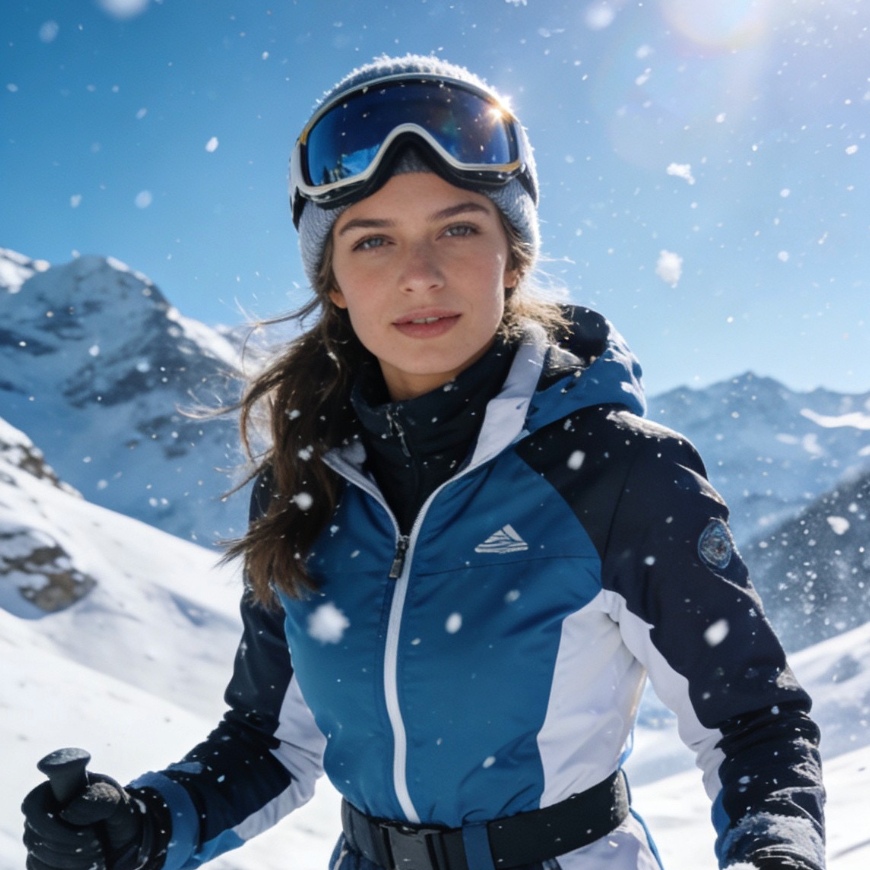
The model was capable of creating sophisticated background soundscapes, localized sound effects (like the crunch of snow under a boot), and synchronized dialogue. In one notable demonstration involving two mountain explorers shouting in a storm, the audio matched the urgency and lip movements of the characters with a high degree of realism. This synchronization was achieved by training the model to predict audio tokens in parallel with video patches, ensuring that the sound was not an afterthought but a fundamental part of the scene's temporal logic.
Enhanced Steerability and Cinematic Control
Sora 2 introduced granular controls that allowed users to dictate camera movements, lighting conditions, and even specific cinematic styles like early medieval cool daylight or high-contrast anime aesthetics. The model could follow intricate instructions spanning multiple shots while accurately persisting the state of the world across those shots. This meant that a character's clothing, scars, or environmental damage would remain consistent even if the camera cut to a different angle and back again—a feat that had previously required extensive manual editing or complex 3D rendering pipelines.
The Social Experiment: The Sora App and Cameos
Unlike the first version, which was primarily a research preview and then a tool for select professionals, Sora 2 was launched alongside a dedicated iOS app designed for social interaction. This app was OpenAI’s first major foray into consumer-facing social media, bearing a striking resemblance to platforms like TikTok but built entirely on generative foundations.
The Cameos Feature
The most talked-about feature of the Sora app was "Cameos." This allowed users to inject themselves or their friends into any generated scene with remarkable fidelity. By performing a one-time video and audio recording in the app to verify identity and capture likeness, users could create a digital twin.
This person-specific generation was not just a simple face-swap. The model understood the user’s unique facial structure, voice timbre, and movement patterns. A user could prompt themselves "walking through a neon-lit cyberpunk city in the rain," and the resulting video would feature their likeness interacting realistically with the environment—complete with reflections on wet pavement and voice-synced dialogue. This feature was designed to reinforce community, allowing friends to "remix" each other’s appearances into collaborative digital narratives.
A New Era of Co-Creative Experience
The Sora app featured a customizable feed driven by new recommender algorithms. Unlike traditional social media algorithms optimized for "time spent," OpenAI claimed its system was designed to maximize creation. Users were encouraged to take a video they liked in the feed and "remix" it—changing the prompt, the character, or the setting while keeping the underlying motion structure. This created a viral loop of creative evolution, where a single interesting generation could spawn thousands of variations.
Safety and Ethics: The Sora 2 System Card
With the power to generate hyper-realistic videos of real people, safety was a paramount concern. The "Sora 2 System Card" outlined a multi-layered approach to mitigation, focusing on provenance, content moderation, and the protection of minors.
The Safety Stack
OpenAI implemented a robust "Safety Stack" that included:
- Input Blocking: Text and image classifiers scanned prompts before generation. If a prompt violated policies—such as requesting non-consensual sexual content or depictions of real-world violence—the request was blocked immediately.
- Output Monitoring: After a video was generated, a custom-trained multimodal reasoning model reviewed the frames and audio. This served as a second layer of defense in case the input filters were circumvented.
- Watermarking and C2PA: Every video generated by Sora 2 included a visible, moving watermark. Furthermore, OpenAI utilized C2PA (Coalition for Content Provenance and Authenticity) metadata to provide a verifiable digital trail of the video’s origin.
Likeness and Consent
The Cameos feature was strictly opt-in. Users had total control over their likeness; they could decide who was allowed to use their Cameo in generations and could revoke access or delete videos containing their likeness at any time. To prevent the creation of deepfakes without consent, the app required live verification during the Cameo setup process.
Challenges with Watermark Removal
Despite these efforts, the safety ecosystem faced significant challenges. Within a week of Sora 2’s release, third-party programs began circulating that could effectively remove the moving watermarks. This highlighted the ongoing arms race between generative AI developers and those seeking to bypass transparency measures. It also raised legal questions about copyright, as Sora 2 allowed for the inclusion of copyrighted material by default unless holders actively opted out, a policy that drew criticism from various creative guilds.
Why is Sora 2 Being Discontinued?
The announcement on March 24, 2026, that Sora 2 would be shut down came as a shock to the tech community. While OpenAI did not provide a singular, official reason in the immediate notice, several factors contributed to this strategic pivot.
Economic and Computational Costs
Generating high-definition video with physical simulation and synchronized audio is an incredibly resource-intensive task. Reports suggest that the Sora service cost an estimated $1 million per day to operate. With a user base that peaked at around one million before declining, the unit economics of a free-to-use or low-cost social app were difficult to sustain. The "compute shortage" that has plagued the industry also forced OpenAI to make hard choices about which products to prioritize.
Strategic Shift Toward Enterprise and Coding
Internal reports indicate that OpenAI decided to reallocate its specialized GPU clusters toward its core enterprise products and advanced coding models (such as the o-series and updated GPT-5 variants). The company appears to be moving away from the consumer social media space to focus on tools that provide more direct utility to businesses and developers.
Integration into the ChatGPT Ecosystem
While the standalone Sora app and API are closing, the research is not being abandoned. OpenAI has signaled that video generation capabilities will be integrated more deeply into the broader ChatGPT ecosystem. Instead of a separate "Sora" brand, users are being directed toward "ChatGPT Images 2.0" and future multi-modal features within the main ChatGPT interface. This consolidation allows OpenAI to maintain its lead in video generation without the overhead of managing a separate social platform.
What Should Current Sora 2 Users Do?
As the shutdown date of April 26, 2026, approaches, it is vital for users to take action to preserve their creative work.
Exporting Your Data
OpenAI has strongly recommended that all users export their videos and images from the Sora app library. Once the service is discontinued, these assets will no longer be accessible via the cloud.
- Step 1: Open the Sora app and navigate to your profile/library.
- Step 2: Select the videos you wish to keep.
- Step 3: Use the "Download" or "Export" function to save them to your local device or cloud storage.
- Step 4: For API users, ensure you have retrieved all generated assets and logs before the September 24, 2026, deadline.
Managing Cameos and Likeness
If you have created a Cameo, you may want to revoke permissions or delete your likeness data before the app closes. While OpenAI's data retention policies usually involve de-identifying data after a certain period, manually deleting your profile provides an extra layer of privacy.
The Legacy of Sora 2
Sora 2 will be remembered as a high-water mark for what generative AI can achieve in the visual domain. It proved that neural networks could, to a surprising degree, learn the laws of physics simply by observing video data. It pioneered the concept of "Cameos," bringing a new level of personalization to AI media.
However, its discontinuation also serves as a cautionary tale about the sustainability of massive-scale generative models. The transition from a research breakthrough to a viable, long-term consumer product is fraught with economic and ethical hurdles. As the industry moves forward, the lessons learned from Sora 2's physics-aware engine and its complex safety stack will undoubtedly inform the next generation of AI tools.
Summary
OpenAI Sora 2 represented the pinnacle of AI video generation in 2025, offering unprecedented physical realism, audio synchronization, and social "Cameo" features. Despite its technical success, OpenAI has decided to discontinue the service in early 2026, citing a broader prioritization of resources toward enterprise and coding-focused products. Users must export their content by April 26, 2026, to avoid data loss. While the standalone brand is ending, its technology will live on in the next generation of multimodal ChatGPT features.
FAQ
When exactly does OpenAI Sora 2 shut down?
The Sora web and iOS/Android app experiences will be discontinued on April 26, 2026. The Sora API will remain active for developers until September 24, 2026.
Why is OpenAI stopping the Sora service?
While a single reason wasn't cited, reports point to high operating costs (approximately $1 million per day), compute resource shortages, and a strategic shift to focus on enterprise-level products rather than consumer social media.
Can I still use my "Cameo" after the shutdown?
No, the Cameo feature is tied to the Sora app ecosystem. Once the app is shut down, you will no longer be able to generate new videos using your likeness within that platform.
Will there be a Sora 3?
OpenAI has not announced a Sora 3. Instead, they are integrating video generation capabilities into the "ChatGPT Images 2.0" ecosystem and other unified multimodal models.
Is my data safe until the shutdown?
Yes, your data remains accessible in your library until the April 2026 deadline. However, it is highly recommended to export any important videos as soon as possible.