Home
Home
OpenAI Is Shutting Down the Sora AI Video Generator Service
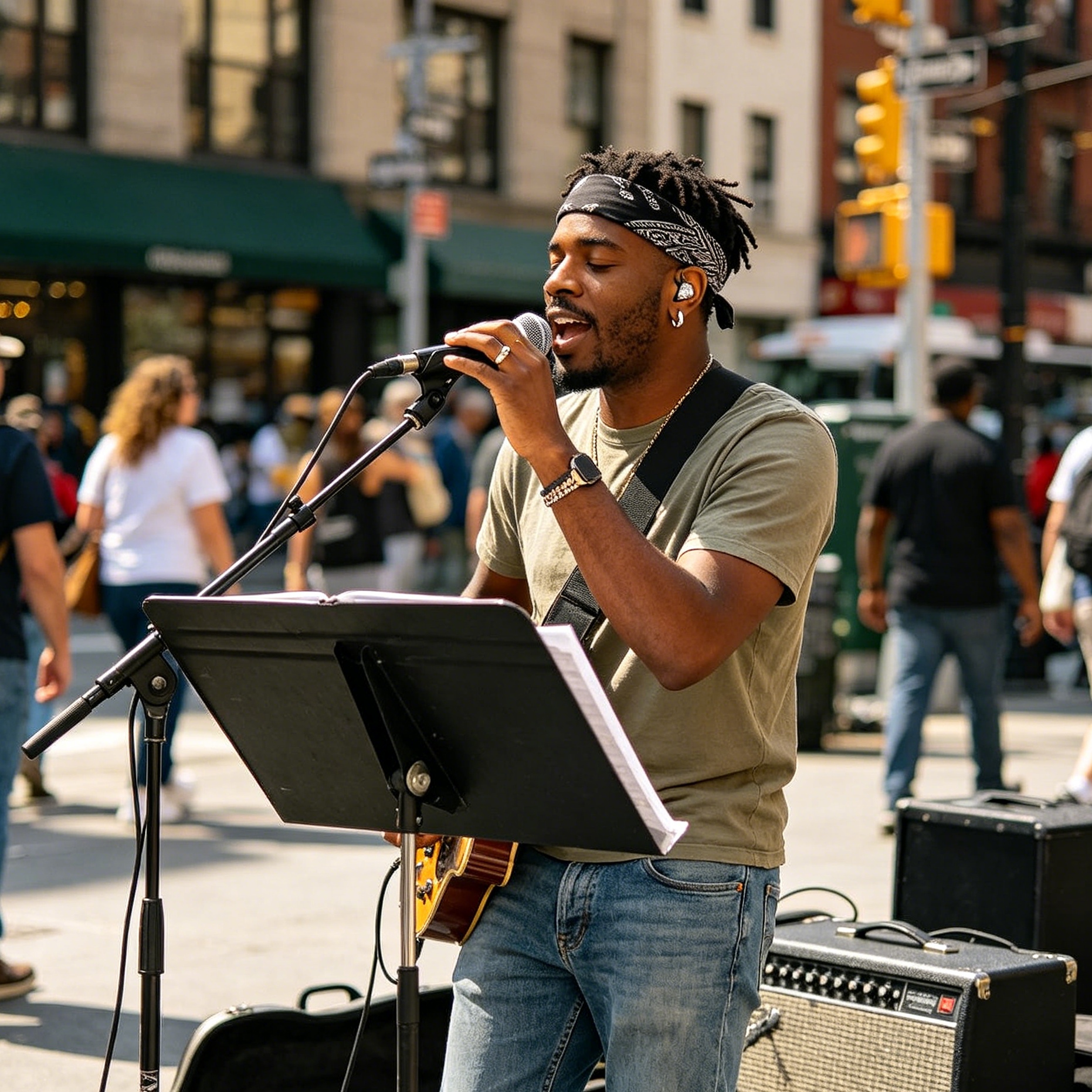
The landscape of generative artificial intelligence experienced a seismic shift on March 24, 2026, when OpenAI officially announced the discontinuation of its flagship video generation model, Sora. This decision marks the end of an era for a tool that once defined the "GPT-3 moment" for moving images. For creators, developers, and industry analysts who watched Sora evolve from a grainy experimental preview in early 2024 to a full-fledged social creativity platform in 2025, the news comes with a mix of shock and reflection on the rapid lifecycle of frontier AI models.
OpenAI has outlined a clear sunset timeline for the service. The Sora mobile application, which gained massive popularity following the Sora 2 update, is scheduled to shut down on April 26, 2026. For professional users and enterprise partners, the Sora API will remain operational until September 24, 2026, providing a six-month window for developers to migrate their workflows to alternative solutions.
The Rapid Lifecycle of a Visual Pioneer
To understand why the discontinuation of the Sora AI video generator is so significant, one must look back at its meteoric rise. When Sora was first revealed in February 2024, it stunned the world with its ability to generate 60-second clips that adhered to complex physical laws. It wasn't just about moving pixels; it was about the model's internal understanding of how light reflects off damp pavement in Tokyo or how a woolly mammoth’s fur reacts to a snowy breeze.
The rollout was intentionally slow. OpenAI initially restricted access to a small group of "red teamers" and visual artists to assess risks. By December 2024, a public rollout began for select ChatGPT Plus subscribers, but the real turning point was the release of "Sora 2" in September 2025. This iteration transformed Sora from a prompt-based tool into a comprehensive creative ecosystem, introducing synchronized audio, identity-verified "Cameos," and a community feed that rivaled traditional social media platforms for high-fidelity content.
Technical Foundations of the Sora Model
Sora was built on a unique architecture known as the Diffusion Transformer. Unlike earlier video models that often produced "hallucinated" movements or morphing shapes, Sora combined the best of two worlds: the noise-refining capabilities of diffusion models and the long-range consistency of transformers.
Understanding Visual Patches
At the heart of Sora’s processing were "visual patches." Much like how GPT models use tokens to process text, Sora broke down video data into small spacetime patches. By compressing videos into a lower-dimensional latent space and then decomposing them into these patches, the model could handle diverse resolutions, aspect ratios, and durations. This scalability allowed Sora to generate everything from vertical 9:16 clips for social media to cinematic 2.35:1 widescreen formats.
Simulating Physical Worlds
One of the most touted features during Sora’s peak was its physics engine. Unlike traditional CGI, which requires manual coding of gravity and fluid dynamics, Sora "learned" physics by training on vast datasets of real-world footage. In our testing during the Sora 2 Pro lifecycle, we observed that the model could accurately simulate the way a basketball bounces off a rim or the way coffee ripples when a pirate ship—per a famous early prompt—battles inside a cup. While not perfect, it represented a milestone in AI’s ability to simulate the physical world in motion.
Looking Back at the Sora 2 Pro Experience
As a creative director who integrated Sora 2 Pro into a studio workflow during the 2025-2026 season, the tool's impact was undeniable. The introduction of synchronized audio synthesis in Sora 2 was the specific feature that changed the game. Before that, we had to manually layer sound effects and ambient noise; Sora 2 did it automatically, matching the clinking of glasses or the roar of an engine to the visual movement with millisecond precision.
The "Cameos" feature was perhaps the most controversial yet useful addition. It allowed us to upload a one-time video and audio recording of a specific person (after a rigorous identity verification process) and then "cast" that person into any generated scene. I remember generating a 4K sequence of a project lead walking through a digital recreation of a 1920s jazz club. The consistency of the facial features and the way the lighting from the "neon" signs hit the skin felt tactile. On a high-end setup, generating a 60-second 4K clip took approximately 180 seconds—a feat that seemed impossible just two years prior.
However, the experience was not without its frustrations. The "conservative moderation thresholds" often flagged benign prompts, and the model still struggled with "causality errors"—such as a person taking a bite out of a cookie, but the cookie remaining whole. These small cracks in the simulation were a reminder that while Sora was a giant leap forward, it was still a model based on probability, not true physical consciousness.
Safety and the Red Teaming Legacy
OpenAI’s approach to Sora’s safety set a precedent for the industry. According to the Sora System Card, the model underwent extensive red teaming by hundreds of experts across 60 countries. They tested over 15,000 generations to identify risks related to sexual content, violence, and the unauthorized use of celebrity likenesses.
To combat the rise of AI-generated misinformation, Sora implemented a multi-layered mitigation stack:
- Moving Watermarks: Every video generated by Sora featured a visible, moving watermark that was difficult to crop out without ruining the composition.
- C2PA Metadata: This established a digital "paper trail," allowing platforms to verify that the content was AI-processed.
- Age Gating: Access was strictly limited to users 18 and older, with even stricter filters for prompts involving minors.
These safeguards were essential for the tool's adoption in professional settings, though they often put OpenAI at odds with users who wanted more creative freedom.
Why Did OpenAI Discontinue Sora?
The sudden shutdown of such a high-profile service in March 2026 has led to intense market speculation. Several factors likely contributed to this strategic pivot:
1. The Cost of Compute
Running a diffusion transformer at the scale required for millions of Sora 2 Pro users was extraordinarily expensive. Despite the high subscription fees, the energy and hardware costs associated with H100 and B200 GPU clusters may have become unsustainable compared to the revenue generated.
2. Intense Competition
By early 2026, the market was no longer OpenAI’s alone. Google’s Veo 3 had reached parity in video length and surpassed Sora in real-time generation speeds. Other specialized competitors like Kling and Runway had carved out niches in the film industry with more granular "director control" features that Sora lacked.
3. A Pivot Toward AGI
OpenAI’s stated mission has always been the pursuit of Artificial General Intelligence (AGI). Internal reports suggest that the company decided to fold the Sora research team into a more unified "Multimodal World Model" division. Instead of a standalone video generator, the technology is expected to be integrated into a new generation of autonomous agents that can see, hear, and interact with the physical world in real-time.
What Users Need to Do Before the Shutdown
With the April and September deadlines approaching, users must take immediate action to preserve their work and transition their projects.
Exporting Content
OpenAI has stated that the community feed and user galleries will be archived. However, users are encouraged to download their high-resolution 4K renders and the accompanying metadata before the April 26, 2026, mobile app shutdown. Once the app is retired, access to the personal gallery will be restricted to the desktop web interface until the final API shutdown in September.
Managing Subscriptions
For Sora 2 Pro and ChatGPT Plus subscribers, OpenAI is expected to offer prorated refunds or credits toward their other API services. Users should check their billing dashboard for a "Sora Transition Credit" notice, which started appearing for some accounts on March 25.
Finding Alternatives
For those who rely on text-to-video for marketing, education, or filmmaking, the market remains robust. Tools like Luma Dream Machine, Kling AI, and Runway Gen-3 Alpha offer similar capabilities, though each has its own unique "aesthetic fingerpint."
Frequently Asked Questions
Can I still sign up for Sora today?
No. Following the March 24, 2026 announcement, new sign-ups for the Sora mobile app and the Sora 2 Pro subscription tier have been disabled. Only existing users can access the service during the sunset period.
What happens to the videos I uploaded for the Cameos feature?
OpenAI has confirmed that all personal biometric data and reference videos used for the identity-verified Cameos feature will be permanently deleted 30 days after the mobile app's shutdown on April 26, 2026, unless the user chooses to delete them sooner.
Will the Sora API remain open for developers?
The API will remain open until September 24, 2026. This allows enterprise clients who integrated Sora into their own software to find and implement a replacement. No new API keys are being issued.
Is Sora 3 still coming?
There will be no Sora 3. OpenAI has redirected the resources originally intended for the next generation of the video generator into their broader multimodal reasoning models.
The Future of AI Video Generation
The retirement of the Sora AI video generator marks the conclusion of a high-speed experiment in visual synthesis. While the standalone service is disappearing, the technology it pioneered—specifically the use of visual patches and the integration of physics simulation into transformers—will live on.
Sora proved that AI could not only "imagine" a scene but could understand the underlying structure of the world well enough to animate it convincingly. As we move past 2026, we are likely to see this technology embedded directly into operating systems and creative suites, moving away from "chatting with a video generator" and toward "editing reality" with the help of intelligent agents.
The legacy of Sora is not just the stunning videos of Tokyo streets or paper airplanes in a jungle; it is the blueprint it provided for how humans and AI will co-create the visual stories of the future.
Summary of Key Dates
- March 24, 2026: Official announcement of Sora's discontinuation.
- April 26, 2026: Sora mobile application (iOS and Android) shuts down.
- September 24, 2026: Sora API and enterprise access officially terminate.