Home
Home
Why Salesforce Agentforce Is Replacing Traditional AI Copilots

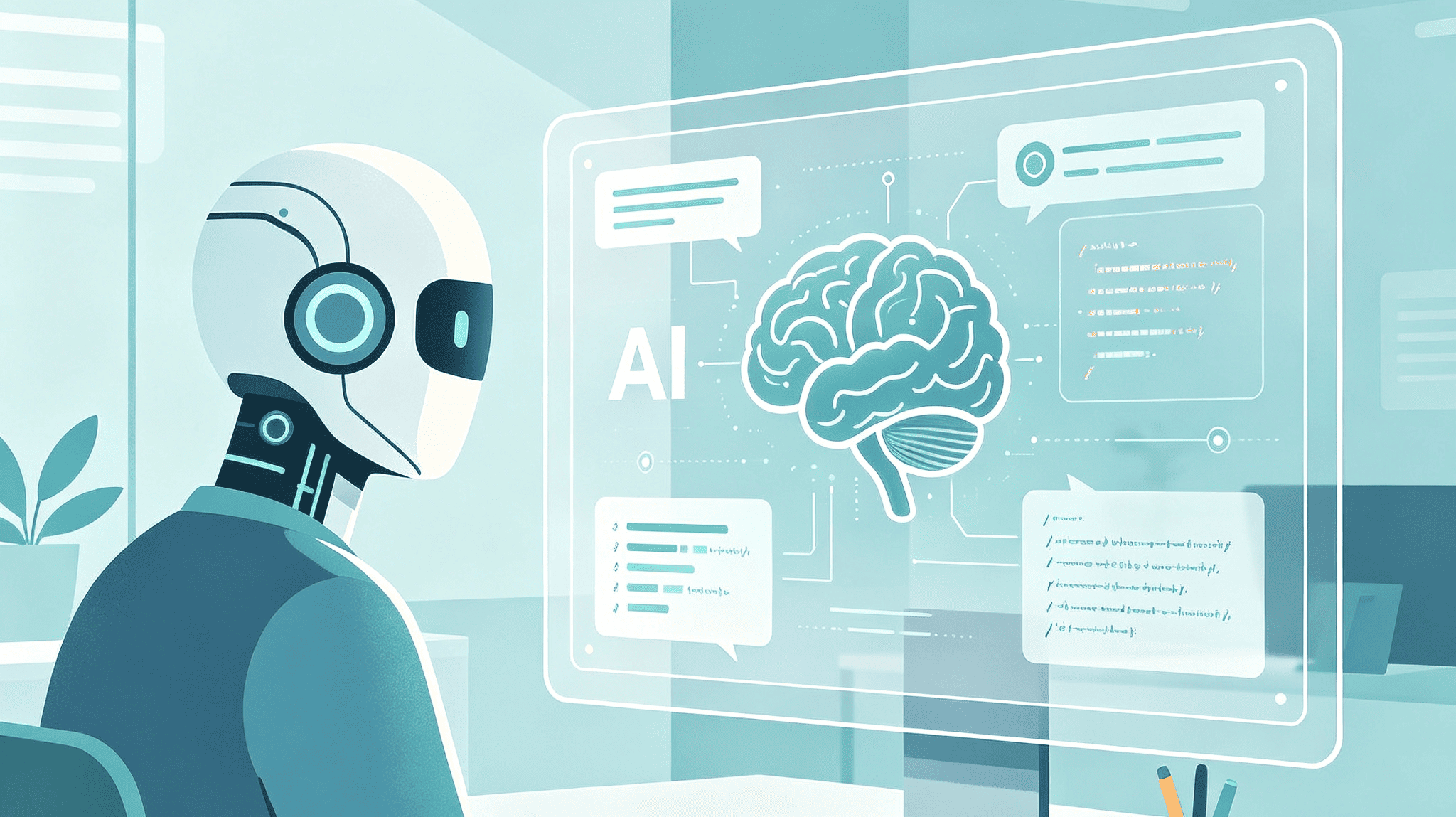
Salesforce has officially transitioned from the era of "assistive AI" to "autonomous AI" with the large-scale rollout of Agentforce. Unlike earlier iterations of AI—such as the Einstein Copilot which required constant human prompting—Agentforce represents a fundamental shift toward digital labor. These agents are designed to reason through complex tasks, access real-time CRM data, and execute multi-step workflows independently. As of mid-2026, the strategy has expanded further with the emergence of highly proactive platforms like the rumored "Agent Albert" and deep strategic integrations with global cloud infrastructures.
The core promise of Agentforce is its ability to operate without human intervention for routine business processes. This marks a departure from the traditional "Software as a Service" (SaaS) model toward what Salesforce calls the "Agentic Enterprise." In this new model, productivity is no longer measured solely by seat count but by the successful execution of business outcomes by autonomous agents.
The Paradigm Shift from Copilots to Autonomous Agents
The distinction between a traditional chatbot and a Salesforce AI agent is significant. While chatbots follow predefined scripts and require users to ask the right questions, Agentforce agents are goal-driven. If a customer asks for a refund, a chatbot might provide the link to a policy; an agent, however, analyzes the customer's purchase history, checks the item's return status in the supply chain, verifies loyalty points, and then executes the refund process across multiple systems.
Understanding the Reasoning Capabilities
The shift is powered by the Atlas Reasoning Engine. This technology simulates human-like cognitive processes. When an agent is assigned a task, it doesn't just look for a template. It evaluates the available tools, consults the organization’s proprietary data in the Data Cloud, and constructs a plan. If a step fails, the reasoning engine allows the agent to self-correct and try an alternative path. This autonomy is what differentiates current Salesforce agents from the static workflows of the past decade.
The Role of Real-Time Data
A significant bottleneck for previous AI implementations was stale data. Salesforce has solved this by making Data Cloud the foundational layer for Agentforce. Because the agents operate directly on the same platform where customer data lives, they have zero-latency access to service history, sales opportunities, and marketing interactions. This context is what prevents the AI from "hallucinating" or providing irrelevant advice.
Technical Architecture of the Agentforce Platform
The maturity of Salesforce's AI offering is best observed through its internal architecture, specifically the Einstein Trust Layer and the Model Context Protocol (MCP).
The Einstein Trust Layer
Security remains the primary barrier to enterprise AI adoption. The Einstein Trust Layer acts as a governance firewall. It ensures that any data processed by an LLM (Large Language Model) is stripped of personally identifiable information (PII) before leaving the secure environment. Furthermore, it retains an audit trail of every decision the agent makes, allowing human supervisors to review "why" an agent took a specific action.
Agentforce 3 and Interoperability
With the release of Agentforce 3 in 2025, Salesforce introduced support for the Model Context Protocol (MCP). This was a pivotal moment for news in the AI space because it broke down the "walled garden" approach. MCP allows Salesforce agents to interact seamlessly with third-party tools from providers like AWS, Box, Google Cloud, and Slack. This interoperability ensures that an agent isn't just a Salesforce expert but can also manage files in Google Drive or trigger functions in an external ERP system.
Command Center and Observability
As enterprises scale their digital labor force, visibility becomes critical. The Agentforce Command Center provides a unified "pane of glass" for monitoring agent health. Managers can track:
- Latency: How fast agents are responding to queries.
- Escalation Frequency: How often an agent needs to hand over a task to a human.
- ROI Metrics: Calculated savings based on task completion and human hours saved.
Measuring the Business Value of Agentforce
The transition to agentic AI is driven by measurable efficiency gains rather than pure technological hype. Independent research, such as the 2025 Valoir report, has provided a stark comparison between building custom (DIY) agents and utilizing the Agentforce platform.
Time to Value: DIY vs. Agentforce
According to industry data, organizations attempting to build autonomous agents from scratch (DIY) faced significant hurdles:
- Model Setup: DIY approaches typically took 12 months, whereas Agentforce users achieved this in 1 month due to pre-tuned LLMs.
- Security and Guardrails: Building a custom trust layer often required over 18 months of development. Agentforce provides this out-of-the-box.
- Total Implementation: On average, a DIY project took 75.5 months to reach production-level maturity, compared to just 4.8 months for Agentforce.
Impact on the Workforce
The rise of agents has not led to the mass obsolescence of human workers as some predicted. Instead, it has shifted the nature of work. Human staff are increasingly transitioning into roles as "AI Deployment Strategists." These individuals are responsible for defining the goals (topics and instructions) for the agents and supervising their performance. In companies like Pearson, the use of agents to handle lost access codes and refund queries has reduced human ticket volume by 40%, allowing employees to focus on complex, high-empathy customer issues that AI cannot yet solve.
2026 Latest News: Agent Albert and Future Horizons
As of the first half of 2026, several high-profile developments have emerged from Salesforce’s AI labs.
The Emergence of Agent Albert
Internal reports and industry leaks have pointed toward a project codenamed "Agent Albert." This platform is rumored to move beyond "reactive" agents to "proactive" ones. While current agents wait for a trigger (like a customer email), Agent Albert is designed to study user habits and business patterns to take action before a problem arises. For example, if the system notices a decline in engagement from a high-value account, it might proactively draft a personalized outreach strategy and suggest inventory adjustments based on predicted demand.
Deep Integration with Google Cloud
The partnership between Salesforce and Google Cloud has reached a new level of maturity in 2026. This allows agents to act with "shared context" across both ecosystems. An agent can now reason across a spreadsheet in Google Sheets and a customer record in Salesforce simultaneously, executing actions in one platform based on triggers from the other without manual data syncing.
Agentforce Vibes 2.0
The developer community has also seen the introduction of Agentforce Vibes 2.0. This update focuses on "Abilities" and "Skills." It allows developers to modularize agent behavior, making it easier to "plug in" a new skill—such as processing a specific type of legal document—without retraining the entire agent.
Real-World Industry Success Stories
The impact of Agentforce is visible across various sectors, demonstrating its versatility as a digital labor platform.
Consumer Goods: PepsiCo
PepsiCo has utilized Agentforce to revolutionize its go-to-market strategy. By unifying data through the Data Cloud, their agents can now provide real-time inventory visibility to field teams. This ensures that product stocking is optimized based on regional consumer trends, significantly reducing waste and increasing sales efficiency.
Education: Pearson
In the education sector, Pearson has deployed agents to handle high-frequency, low-complexity tasks. By automating the resolution of lost access codes and subscription status queries, they have improved their customer resolution rate by 40% without increasing headcount. This "deflection" of routine calls has fundamentally changed their cost-to-serve model.
Finance: PenFed
PenFed Credit Union utilized Agentforce for internal operations, specifically for IT support. Agents now handle password resets and account unlocks for thousands of employees. This has led to a 40% reduction in total IT tickets, allowing the internal IT team to focus on cybersecurity and infrastructure upgrades.
What is the Model Context Protocol (MCP)?
The Model Context Protocol is perhaps the most technical yet impactful part of the Salesforce news cycle. In simple terms, it is an open standard that enables different AI models and applications to communicate through a shared language.
By adopting MCP, Salesforce ensures that its agents are not isolated. If a business uses Anthropic’s Claude for creative writing but wants to use Salesforce’s proprietary data, MCP provides the "handshake" necessary for these two entities to work together securely. This prevents "vendor lock-in" and allows enterprises to choose the best-of-breed models for specific tasks while keeping their data centralized in Salesforce.
Security and Trust in the Agentic Era
As agents become more autonomous, the risks associated with "rogue AI" increase. Salesforce has addressed this through a multi-layered security approach.
- Dynamic Shielding: Data is only accessible to an agent if the human user who triggered the agent has the appropriate permissions.
- Zero Retention Policy: Salesforce’s agreements with LLM providers ensure that no customer data is used to train the general public models of OpenAI or Anthropic.
- Human-in-the-Loop (HITL): For high-stakes actions, such as authorizing a large financial transfer, the system can be configured to require a human "thumbs up" before the agent can finalize the transaction.
How to Transition from Copilots to Agentforce
For organizations still relying on basic chatbots or Copilots, the transition to Agentforce requires a strategic three-step approach:
- Data Unification: The effectiveness of an agent is directly proportional to the quality of the data in the Data Cloud. Organizations must first unify their siloed data sources.
- Defining Topics and Instructions: Unlike coding "if-then" logic, setting up an agent involves writing clear, natural language instructions. This requires "prompt engineering" expertise at an enterprise level.
- Testing and Observability: Before going live, agents must be put through the Testing Center to simulate thousands of customer interactions and ensure the reasoning engine stays within the desired guardrails.
FAQ: Salesforce AI Agents
What is the difference between Einstein Copilot and Agentforce? Einstein Copilot is an assistive tool that requires a human to initiate and guide the conversation. Agentforce is an autonomous platform where agents can reason and complete tasks independently based on a set goal.
Does Agentforce require coding? While advanced customizations are possible via Apex, the majority of Agentforce setup is done using natural language in the Agentforce Studio. It is designed to be a "low-code" to "no-code" platform for business users.
Is my data safe with Salesforce AI agents? Yes. All interactions pass through the Einstein Trust Layer, which handles data masking, toxicity detection, and ensures that your proprietary data is never used to train external AI models.
Can Agentforce work with non-Salesforce data? Yes. Through the Data Cloud and support for the Model Context Protocol (MCP), agents can access and act upon data from external sources like Google Cloud, AWS, and Snowflake.
What is "Agent Albert"? "Agent Albert" is the internal codename for a next-generation proactive AI platform from Salesforce, rumored to be unveiled in late 2026. It aims to anticipate user needs before they are explicitly stated.
Summary
Salesforce Agentforce has redefined the enterprise AI landscape by moving beyond simple assistance to true autonomy. By leveraging the Atlas Reasoning Engine and the Data Cloud, these agents provide a level of operational efficiency that was previously impossible with traditional software. As we move into late 2026, the focus is shifting toward proactive intelligence and deeper cross-platform interoperability. For businesses, the message is clear: the future of CRM is not just about managing data, but about deploying a digital workforce capable of acting on that data to drive real-world ROI. The transition from "software" to "agentic-ware" is no longer a vision—it is the new standard for the modern enterprise.
-
Topic: UPDATE: ACCELERATING AGENTIC AI TIME TO VALUE A VALOIR INSIGHT BRIEFhttps://www.salesforce.com/en-us/wp-content/uploads/sites/4/assets/pdf/agentforce/Valoir-Insight-Brief-10_25-Update-Accelerating-Agentic-Time-to-Value.pdf?bc=OTH
-
Topic: Salesforce Announces Agentforce 3 - Salesforcehttps://www.salesforce.com/news/press-releases/2025/06/23/agentforce-3-announcement/
-
Topic: Marc Benioff shares 'stories' of Salesforce AI Agentforce 'helping' companies 'resolve issues' without any human interaction to prove that those saying software is dead are wrong | - The Times of Indiahttps://timesofindia.indiatimes.com/technology/tech-news/marc-benioff-shares-stories-of-salesforce-ai-agentforce-helping-companies-resolve-issues-without-any-human-interaction-to-prove-that-those-saying-software-is-dead-are-wrong/amp_articleshow/130389625.cms