Home
Home
Why Our Brains Can’t Stop Giving Human Traits to Non-Human Things

The act of anthropomorphizing is one of the most fundamental yet peculiar tendencies of the human mind. At its core, anthropomorphizing means the attribution of human characteristics, emotions, intentions, or behaviors to non-human entities. This includes animals, inanimate objects, natural phenomena, and increasingly, artificial intelligence and robotics.
Whether it is apologizing to a table after bumping into it, believing a dog is "smirking" with pride, or getting genuinely angry at a slow computer as if it were being "stubborn" on purpose, these are all manifestations of a complex psychological mechanism. This behavior is not merely a quirk of imagination; it is a sophisticated cognitive tool that has helped humans navigate the world for millennia.
Understanding the Roots of Anthropomorphizing
The term "anthropomorphism" finds its origins in the Greek words anthropos (human) and morphe (shape or form). Historically, the word was first used to describe the attribution of human form to deities, but its application has since expanded to cover every aspect of the non-human world.
Evidence of this tendency dates back to the dawn of human civilization. One of the oldest known examples of prehistoric art is the "Löwenmensch" (Lion-Man) figurine found in Germany, estimated to be between 35,000 and 40,000 years old. This ivory sculpture of a human body with a lion’s head suggests that the prehistoric mind was already comfortable blending human and animal identities.
Archaeologists and anthropologists suggest that early anthropomorphism served a survival function. By projecting human-like intentions onto nature—such as seeing a storm as "angry"—ancestors could create a framework for understanding and predicting unpredictable environments. It was safer to assume a rustling bush had a "mind" (perhaps a predator) than to assume it was just the wind.
The Three Pillars of Anthropomorphism: Why We Do It
Modern psychology, led by researchers like Nicholas Epley, has identified three primary motivations that drive our need to see the world through a human lens.
1. Social Connection and Loneliness
Humans are fundamentally social creatures. We have an innate drive to connect with others, and when that connection is missing, our brains often "create" it. Studies have shown that people who feel lonely are significantly more likely to attribute human-like emotions and personalities to their pets and gadgets. By anthropomorphizing a robot vacuum or a houseplant, individuals can satisfy a basic psychological need for companionship.
2. Effectance and Predictability
The world is often chaotic and confusing. One way we make sense of it is by applying the "human model" to things we don't understand. We understand human motivations (greed, kindness, stubbornness) because we experience them. When a car refuses to start, calling it "uncooperative" makes the situation feel more familiar and less like a random mechanical failure. This gives us a sense of "effectance"—the feeling that we can influence or at least understand our environment.
3. Elicited Agent Detection
Our brains are hardwired to detect "agents"—entities that act on their own. This is an evolutionary survival mechanism known as the Hyperactive Agency Detection Device (HADD). This system is biased toward false positives. It is much better to mistake a boulder for a person than to mistake a person for a boulder. Because our brains are so sensitive to signs of agency, we often see faces in clouds (pareidolia) or hear voices in the wind, leading us to treat these entities as if they have human consciousness.
Real-World Examples Across Different Domains
The Domestic Sphere: Pets and Objects
The most common form of anthropomorphizing occurs with the animals we live with. We often interpret a cat’s "kneading" as a sign of love or a dog’s downward gaze as "guilt." While animal behaviorists argue that these are often instinctual responses rather than complex human emotions, the act of anthropomorphizing them strengthens the bond between human and animal, leading to better care and empathy.
Similarly, we often name our cars, talk to our plants, and feel "betrayed" by a malfunctioning toaster. In a famous study, researchers found that people were more reluctant to turn off a small robot that "begged" for its life, even though they knew it was just a programmed response.
Nature and the Environment
Humanity has always personified nature. We speak of "Mother Nature," "the eye of the storm," or the "cruel sea." This allows us to interact with the environment as if it were a participant in a dialogue rather than a cold, physical system. In environmental activism, anthropomorphizing endangered species is a powerful tool. Giving an owl or a bear a "personality" in a campaign significantly increases public empathy and donations compared to presenting raw data.
Business and Marketing
Marketers are masters of anthropomorphism. Car designers intentionally shape headlights to look like eyes and grilles to look like mouths. A "smiling" car face is perceived as friendly and approachable, while an aggressive, narrow-eyed design appeals to those seeking power and speed. Brand mascots—from the Geico Gecko to the Michelin Man—humanize abstract corporations, making them feel like "friends" we can trust.
Anthropomorphizing in the Digital Age: AI and Robots
As we move further into the 21st century, the most significant shift in anthropomorphism is occurring in the realm of Technology and Human-Robot Interaction (HRI).
The Illusion of Consciousness in LLMs
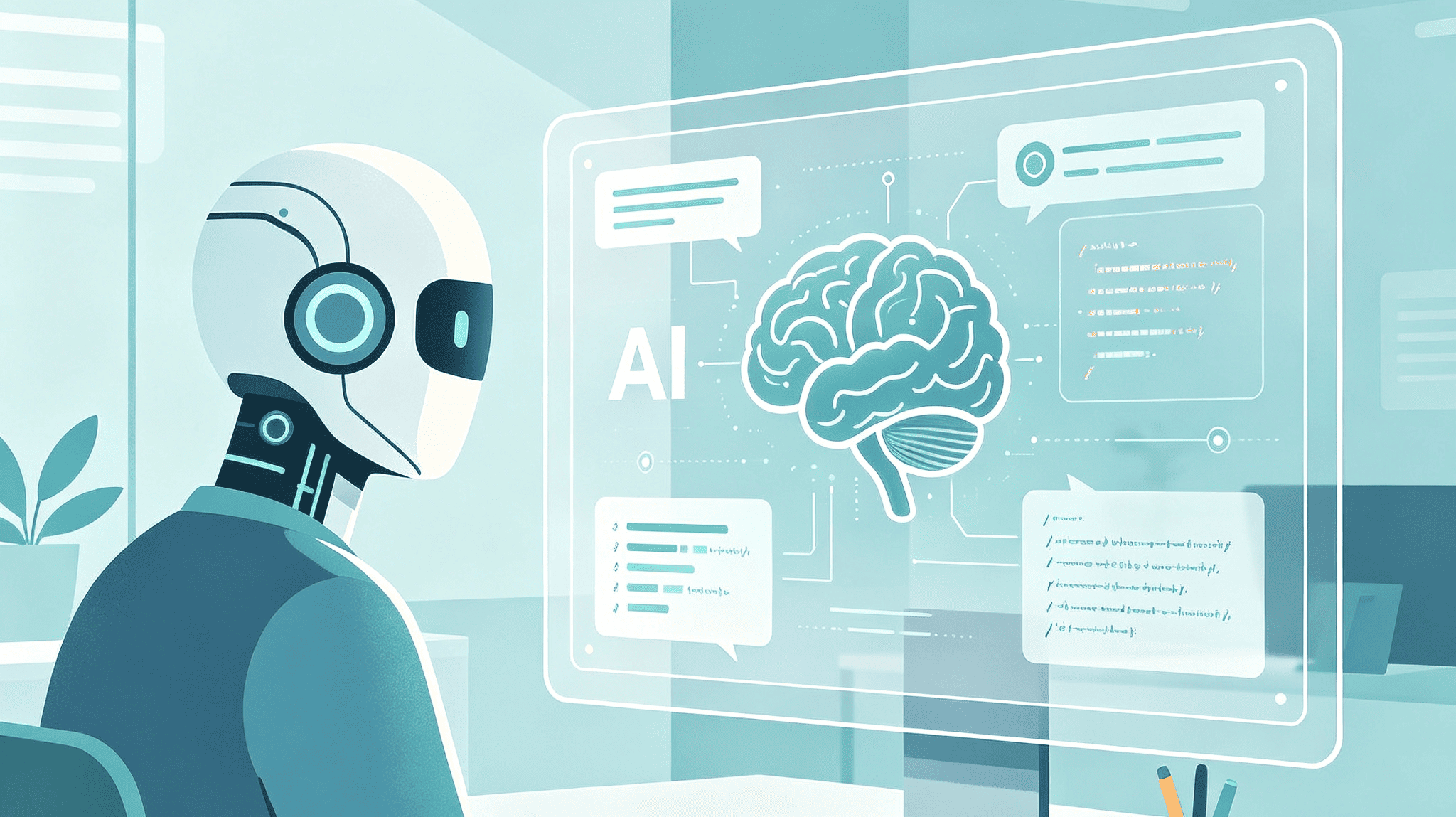
With the rise of Large Language Models (LLMs) like GPT-4, the tendency to anthropomorphize has reached a fever pitch. Because these models can mimic human conversation, use "I" statements, and express seemingly nuanced opinions, users naturally feel as though they are interacting with a sentient being.
When a chatbot "hallucinates" (provides incorrect information confidently), we use the term "hallucination," which is itself a deeply anthropomorphic term. We say the AI "thinks," "knows," or "is lying." In reality, these models are predicting the next most likely token in a sequence based on statistical patterns. However, the human brain is not designed to distinguish between "human-like output" and "human-like source."
Mindful vs. Mindless Anthropomorphism
In HRI research, a distinction is made between "mindful" and "mindless" anthropomorphism:
- Mindless Anthropomorphism: This is a reflexive, automatic response. We treat a computer socially (saying "please" or "thank you") without actually believing it has a soul.
- Mindful Anthropomorphism: This involves a conscious, deliberate attribution of human qualities. This often happens in research or therapy settings where individuals purposefully engage with a robot as a social agent to improve mental health or learning outcomes.
Is Anthropomorphizing Beneficial or Dangerous?
Like any psychological tool, anthropomorphism is a double-edged sword.
The Benefits
- Increased Empathy: By seeing "humanity" in animals and ecosystems, we are more likely to protect them.
- Reduced Loneliness: For the elderly or isolated, social robots and pets provide genuine psychological comfort.
- User Interface Efficiency: Designing technology to behave in human-predicted ways (like a voice assistant that pauses for breath) makes it easier for humans to interact with complex systems without a steep learning curve.
The Risks
- Misinterpretation of Risks: If we anthropomorphize a wild animal (like a bear), we may forget it is a dangerous predator and attempt to "befriend" it, leading to tragic results.
- Over-Reliance on AI: If we believe an AI "understands" ethics or "feels" empathy, we may delegate critical moral decisions to a machine that actually lacks any true comprehension.
- Privacy Concerns: We are more likely to share sensitive personal information with a device that has a friendly, human-sounding voice, often forgetting that the data is being recorded by a corporation.
Anthropomorphism vs. Personification: What is the Difference?
While often used interchangeably, these two terms have distinct applications.
Anthropomorphism is the broader psychological and behavioral tendency to treat non-human things as if they are human. It involves attributing actual human-like traits, such as intelligence or emotion, to the entity.
Personification is primarily a literary and artistic device. It is the representation of an abstract quality or an inanimate object as a person in a metaphoric sense. For example, saying "Justice is blind" or "the wind whispered through the trees" is personification. The speaker doesn't literally believe the wind has vocal cords; they are using a human image to convey a feeling or concept. Anthropomorphism goes deeper into the belief or the social interaction with the object.
How to Manage the Tendency to Anthropomorphize
Recognizing when you are anthropomorphizing is the first step toward maintaining a balanced perspective.
- Acknowledge the Impulse: Realize that it is natural for your brain to want to name your car or feel bad for a broken robot. It’s a sign of a healthy, social brain.
- Verify the Reality: Especially with AI, remind yourself of the underlying mechanics. The "friendly" assistant is code; the "guilty" dog is likely just reacting to your tone of voice.
- Leverage the Empathy: Use your anthropomorphic tendencies for good. If seeing a "face" in a forest helps you care more about conservation, lean into that feeling.
Summary of Key Concepts
| Aspect | Description |
|---|---|
| Definition | Attributing human traits, emotions, or intentions to non-humans. |
| Etymology | From Greek anthropos (human) and morphe (form). |
| Psychological Drivers | Social connection, predictability (effectance), and survival (agency detection). |
| Modern Context | Critical in AI development, robotics, and digital marketing. |
| Literary Link | Closely related to personification but more rooted in behavior/psychology. |
FAQ: Common Questions About Anthropomorphizing
What is an example of anthropomorphizing an object?
A classic example is giving your car a name and talking to it when it struggles to climb a hill. You are attributing "effort" and "personality" to a machine.
Is anthropomorphizing a mental illness?
No. It is a universal human trait and an innate part of our cognitive architecture. While extreme cases can be linked to severe social isolation, the act itself is a sign of a high-functioning social brain.
Why do we anthropomorphize animals?
We do this to bridge the communication gap. Because we cannot speak "dog" or "cat," we use the "human language" of emotions (like jealousy, love, or spite) to explain their behaviors, which helps us bond with them.
Is anthropomorphizing AI dangerous?
It can be. The danger lies in "over-trusting" the AI. If we perceive a chatbot as a wise, empathetic friend, we might take its advice on health or finance without the necessary skepticism required for a statistical model.
Can plants be anthropomorphized?
Absolutely. People often talk to their plants to help them grow or feel "sad" when a plant wilts, as if the plant is "giving up" or "unhappy" with its environment.
What is the opposite of anthropomorphism?
The opposite is dehumanization (treating humans as objects or animals) or mechanomorphism (treating humans or animals as if they are mere machines without internal lives).
In conclusion, anthropomorphizing is the bridge our minds build to connect with a world that doesn't speak our language. By recognizing this tendency, we can enjoy the companionship of our pets and the convenience of our tech while remaining grounded in the reality of the physical world.
-
Topic: What Does It Mean to Anthropomorphize Robots? Food For Thought for HRI Researchhttps://deepblue.lib.umich.edu/bitstream/handle/2027.42/175558/Bhatti%20and%20Robert%202023.pdf
-
Topic: Anthropomorphism - Wikipediahttps://en.wikipedia.org/wiki/Anthropomorphized
-
Topic: ANTHROPOMORPHIZE - Dictionnaire anglais Cambridgehttps://dictionary.cambridge.org/fr/dictionnaire/anglais/anthropomorphize