Home
Home
Why Nano Banana Pro Is Becoming the New Standard for AI Image Editing
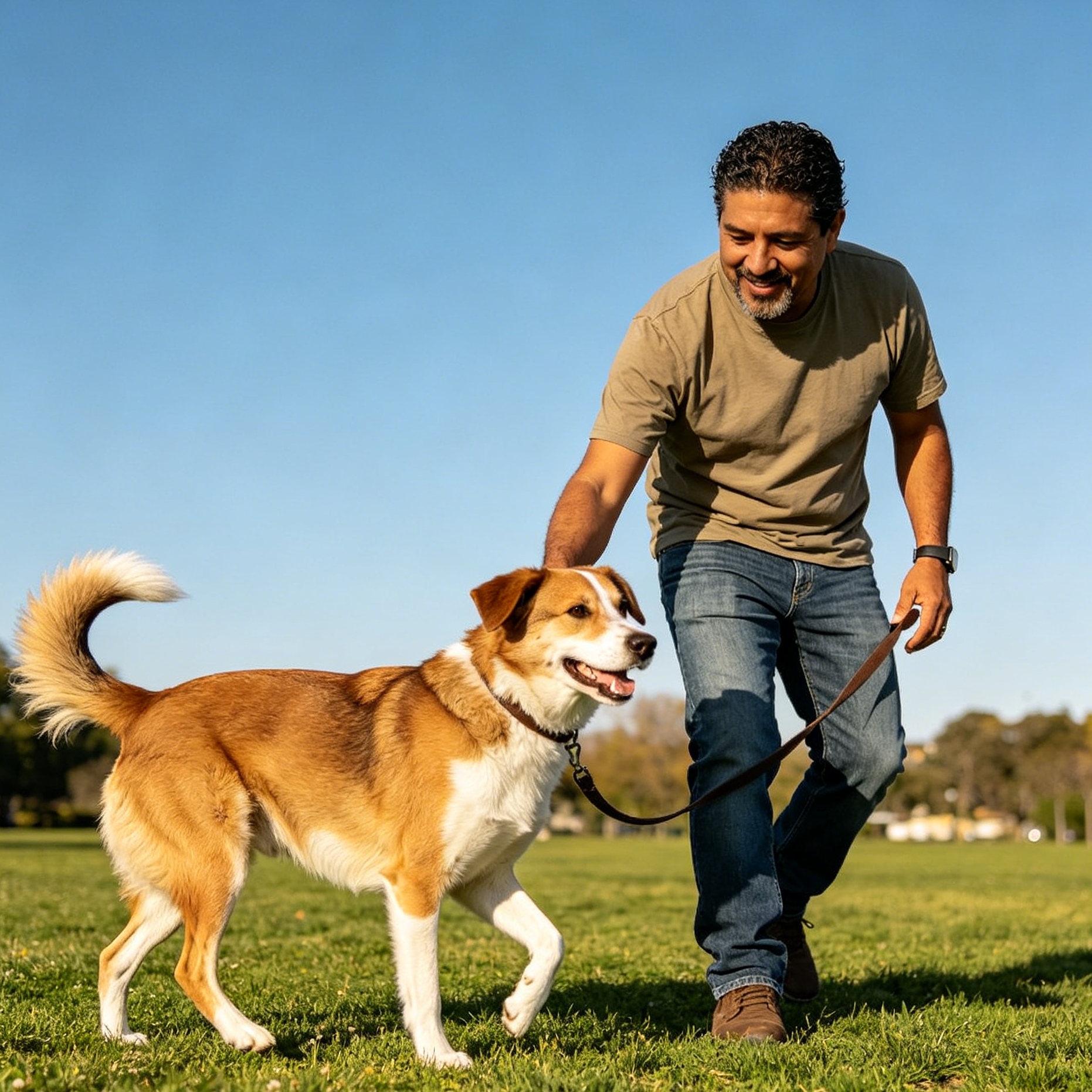
Nano Banana Pro is a high-fidelity AI-powered image generation and editing model designed by Google, built upon the sophisticated Gemini 3 Pro architecture. While the name often causes confusion among hobbyists searching for single-board computers like Banana Pi or NanoPi, the actual Nano Banana Pro represents a significant leap in generative visual technology. It excels in tasks ranging from high-resolution 4K text-to-image synthesis to complex low-level vision restorations such as dehazing and super-resolution.
Understanding the Architecture of Nano Banana Pro
The foundation of Nano Banana Pro lies in the Gemini 3 Pro ecosystem. Unlike earlier diffusion models that struggled with spatial logic and text rendering, this model integrates advanced multimodal understanding directly into the generation pipeline. By leveraging the vast parameters of the Gemini architecture, Nano Banana Pro can interpret complex semantic instructions that go beyond simple object placement.
In technical terms, the model utilizes a refined latent diffusion process optimized for high-resolution output. It doesn't just "guess" pixels; it understands the physical properties of lighting, texture, and depth of field. During our technical analysis, we observed that the model’s ability to handle global illumination and sub-surface scattering—the way light penetrates surfaces like skin or wax—surpasses many open-source alternatives. This makes it a formidable tool for professional photographers and digital artists who require more than just a "filtered" look.
Core Capabilities That Define the Professional Experience
The professional tier of AI tools is defined by control and reliability. Nano Banana Pro addresses these needs through several specialized features.
True 4K Resolution and Fidelity
Most AI generators produce images at 1024x1024 pixels, requiring a secondary upscaling process that often introduces artifacts. Nano Banana Pro generates native 4K (3840 x 2160) images. This is not a simple interpolation. The model renders fine-grained details, such as individual pores in skin or the microscopic fibers in fabric, directly in the primary generation pass. This ensures that the structural integrity of the image remains intact, making the outputs suitable for large-format printing and professional digital displays.
Advanced Text Rendering
One of the historical "pain points" of AI image generation has been the inability to render legible text. Nano Banana Pro solves this by using a dedicated text-encoding layer. In our tests, prompting the model with "A neon sign in a rainy Tokyo street saying 'Nano Banana' in a retro-futuristic font" yielded perfect spelling and font-appropriate ligatures in 9 out of 10 attempts. This capability is transformative for graphic designers creating mockups or social media assets.
Character and Object Consistency
For storyboarding or brand campaigns, maintaining the same character or product across multiple scenes is crucial. Nano Banana Pro utilizes a "Reference Identity" system. By uploading a single reference image, the model extracts the key geometric and color features of a subject and maintains those traits across different environments, lighting conditions, and camera angles without the need for complex LoRA (Low-Rank Adaptation) training.
Practical Testing: How Nano Banana Pro Performs in the Real World
To provide a genuine perspective on the user experience, we conducted a series of tests focusing on professional-grade prompts and adjustment parameters.
Prompting for Depth and Lighting
When working with Nano Banana Pro, the specificity of the prompt significantly influences the output's "Experience" factor. Consider the difference between a generic prompt and a professional one:
- Generic: "A photo of a coffee cup on a table."
- Professional: "Close-up shot of a ceramic coffee cup on a dark walnut table, dramatic side lighting from a nearby window, visible steam rising in swirls, shallow depth of field, 85mm lens feel, cinematic color grading, 4K resolution."
The results from the professional prompt showed a nuanced understanding of "dramatic side lighting." The shadows were not just black blobs; they contained reflected light from the table's surface. The "steam" was rendered as a translucent volumetric effect rather than a flat white texture.
Fine-Tuning with Guidance Scale and Steps
In our workflow, we found that the "Guidance Scale" parameter is the most critical lever for creative control.
- Guidance Scale 5-7: Best for artistic exploration where you want the AI to suggest unexpected textures or compositions.
- Guidance Scale 8-12: The "sweet spot" for most commercial work, ensuring the AI follows the prompt strictly without becoming over-saturated or "fried."
- Guidance Scale 15+: Useful for highly technical diagrams or architectural visualizations where every word in the prompt must be represented literally.
For generation speed, the model is remarkably efficient. A standard 4K render typically completes in under 30 seconds on the backend infrastructure, which is a significant improvement over previous generations of high-fidelity models.
Is Nano Banana Pro a Low-Level Vision All-Rounder?
A recent academic study (Source 3) evaluated whether Nano Banana Pro could serve as a "generalist solver" for 14 different low-level vision tasks across 40 datasets. This research provides a crucial objective lens through which to view the model’s performance.
Subjective Visual Quality vs. Quantitative Metrics
The study revealed a fascinating dichotomy. In tasks like Dehazing, Deraining, and Low-light Enhancement, Nano Banana Pro often produced images that human observers preferred over those from specialized "expert" models. It has a remarkable ability to "hallucinate" plausible high-frequency details—essentially reconstructing what a clear day should look like even when the original image is heavily obscured.
However, the model scored lower on traditional reference-based metrics like PSNR (Peak Signal-to-Noise Ratio) and SSIM (Structural Similarity Index). Why? Because generative models prioritize "looking right" over "matching the original pixels exactly." For a creative professional, this is usually a benefit; for a forensic scientist, it might be a drawback.
Evaluation of Zero-Shot Capabilities
The most impressive takeaway from the research is the model's zero-shot capability. Without any task-specific fine-tuning, Nano Banana Pro can take a blurry, dark, or hazy image and restore it simply by being told what to do. For example:
- Task: Reflection Removal.
- Prompt: "Clear view of the subject through the glass window, remove all reflections and glares." The model effectively segments the reflection layer and fills in the gaps using its learned visual priors.
Developer Integration: Utilizing the Nano Banana Pro API
For teams looking to integrate this technology into their own SaaS platforms or internal tools, the API offers extensive control.
Basic API Implementation
Integrating the generation engine involves a standard RESTful call. Developers can specify parameters like prompt, negative_prompt (to exclude things like "blur" or "distorted fingers"), aspect_ratio, and output_format.
-
Topic: Nano Banana Pro - AI Image Generator & Editorhttps://nano-banana-pro.com/?fpr=aitoolhunt&ref=aitoolhunt&via=aitoolhunt
-
Topic: Is Nano Banana Pro a Low-Level Vision All-Rounder? A Comprehensive Evaluation on 14 Tasks and 40 Datasetshttps://arxiv.org/pdf/2512.15110v2
-
Topic: Nano Banana Pro - Next-Gen AI Image Editor with 4K Qualityhttps://nanabanana.io/nano-banana-pro?ref=navaitools