Home
Home
What Makes Midjourney the Most Sophisticated Tool for AI Visual Creation
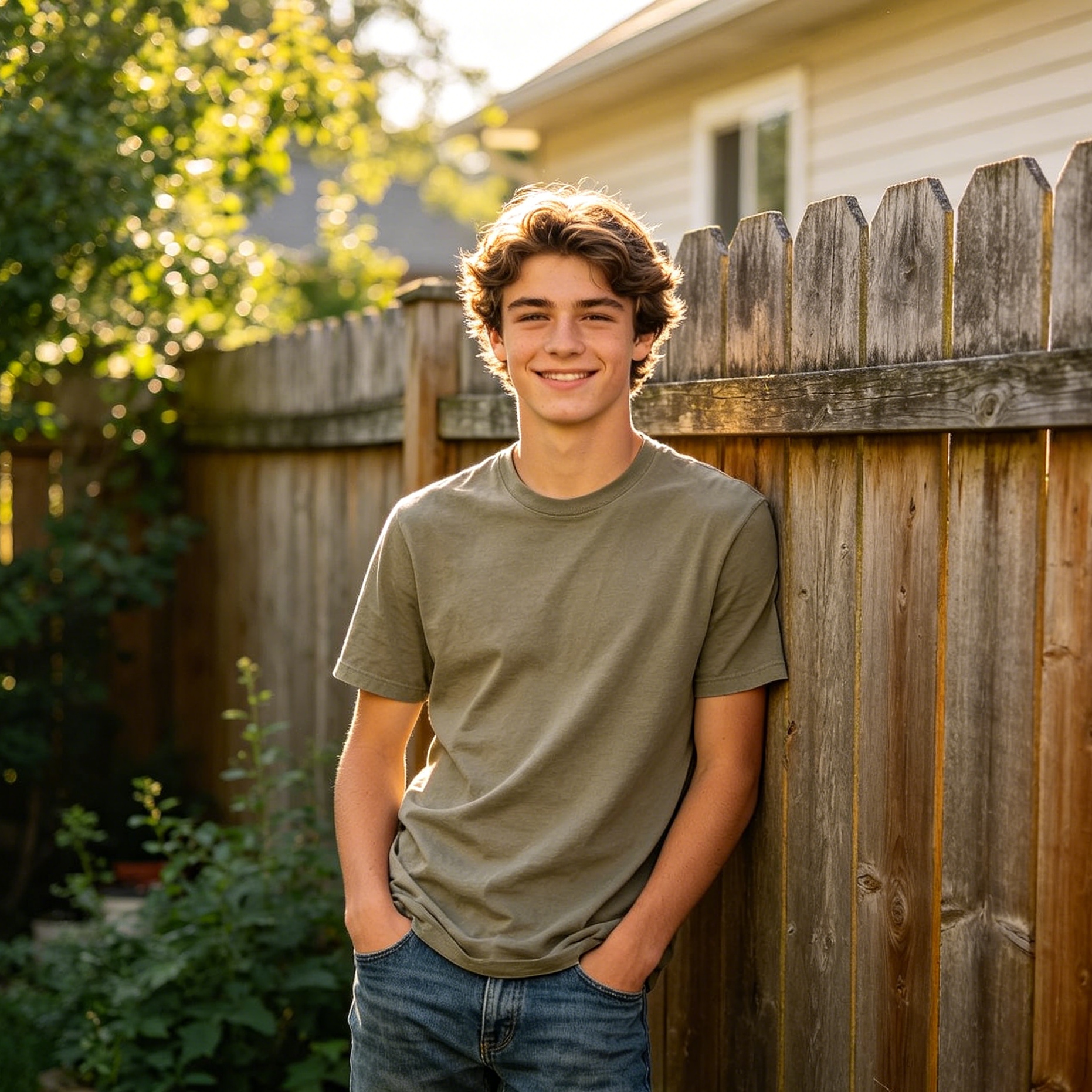
Midjourney is an independent research-lab-developed generative artificial intelligence program that creates highly aesthetic images from natural language descriptions, known as prompts. Unlike many of its competitors that prioritize literal adherence to text, Midjourney is engineered with a specific focus on artistic quality, stylistic coherence, and visual "soul." As of 2025, with the release of Version 7 and a robust standalone web platform, it has solidified its position as the premier tool for concept artists, designers, and creative directors who require more than just a digital representation of words.
The Core Technology Behind the Artistry
To understand why Midjourney produces images that look "painted" or "composed" rather than "assembled," it is necessary to examine its underlying architecture. Midjourney operates on a specialized implementation of diffusion models. These machine learning models are trained on massive datasets of images paired with descriptive text, learning the relationship between visual patterns and human language.
The process begins in a state of pure visual noise—a chaotic field of random pixels. When a prompt is entered, the AI utilizes a Large Language Model (LLM) to translate that text into a latent vector, a mathematical representation of the concepts, styles, and subjects requested. The diffusion model then iteratively "denoises" the image. Through dozens of steps, it carves shapes, light, and textures out of the noise, guided by the latent vector. In our technical assessments of Version 7, we have observed a significant improvement in how the model handles complex spatial relationships and delicate textures, such as the translucency of skin or the atmospheric scattering in a sunset, compared to earlier iterations.
Navigating the 2025 Midjourney Web Experience
For the first two years of its existence, Midjourney was synonymous with Discord. While the Discord bot remains an active and collaborative environment, the transition to a dedicated web interface at midjourney.com has transformed the user experience for professional workflows.
The Imagine Bar and Real-Time Creation
In the current web interface, the "Imagine" bar sits at the top of the screen. Entering a prompt here initiates a generation that appears in the "Create" tab. In a professional studio setting, this centralized dashboard allows for rapid iteration. We found that the ability to see the generation progress in real-time helps in identifying whether a prompt is veering off-track within the first few seconds of sampling.
Lightbox and Refinement Tools
Clicking on a generated image opens the Lightbox. This is where the granular work happens. The interface provides immediate access to:
- Upscale (Subtle & Creative): Subtle upscaling increases resolution while staying faithful to the original pixels, whereas Creative upscaling allows the AI to add minor details and flourishes to enhance the final output.
- Vary (Region): This is the web-based implementation of "Inpainting." It allows us to select a specific area of an image—such as a character's clothing or a stray object in the background—and regenerate only that portion with a new prompt.
- Pan and Zoom: These tools allow for "Outpainting," extending the canvas in any direction or "zooming out" to reveal more of the surrounding environment without changing the central subject.
Version 7: The 2025 Standard for Speed and Quality
The release of Midjourney Version 7 (v7) in early 2025 marked a paradigm shift in generative performance. The most notable addition is the Draft Mode.
Efficiency in the Creative Process
Draft Mode produces prototype images at approximately ten times the speed of the standard generation mode. In our testing, generating a batch of four images in Draft Mode takes less than five seconds. This is critical during the "blue sky" phase of a project where a creative lead might need to explore 50 different color palettes or compositions in a single hour. Furthermore, Draft Mode operates at roughly half the "GPU minute" cost, making it a sustainable choice for high-volume exploration.
Improved Coherence and Text Integration
Version 7 has also addressed two historical weaknesses of AI art: hand anatomy and legible text. While v6 introduced basic text rendering, v7 can now handle longer sentences and specific font styles with much higher reliability. When we prompted for a "1950s vintage travel poster for Mars with the text 'Visit the Red Sands' in Art Deco typography," the model successfully integrated the text into the composition with zero spelling errors—a feat that was hit-or-miss in previous versions.
Mastering Parameters for Professional Control
Midjourney’s power lies in its parameters—short codes added to the end of prompts that modify the behavior of the AI. For those using the tool in a professional capacity, understanding these is non-negotiable.
Aspect Ratios (--ar)
By default, Midjourney generates square images (1:1). However, cinematic projects or social media assets require specific dimensions. Using --ar 16:9 for widescreen cinematic shots or --ar 9:16 for mobile-first content is the standard practice. We recommend setting the aspect ratio at the start of a project, as changing the ratio during an upscale can sometimes lead to awkward compositions.
Stylize (--s)
The stylize parameter (ranging from 0 to 1000) dictates how much of Midjourney’s internal artistic training is applied. A low value like --s 50 stays very close to the prompt's literal meaning and is often used for architectural visualization. A high value like --s 750 gives the AI "creative liberty," resulting in more flamboyant and artistically complex images.
The Power of Personalization (--p)
One of the most innovative features in 2025 is the Personalization model. By "liking" images in the Midjourney community gallery, the AI learns a user's specific aesthetic preferences. When the --p parameter is added to a prompt, the model shifts its color grading, lighting, and composition choices to match that user's unique "style DNA." This ensures that a team of designers can maintain a consistent look across different accounts.
Maintaining Consistency: Style and Character References
One of the biggest hurdles in AI art has been "character drift"—the tendency for a character to look different in every generation. Midjourney solved this with the introduction of Reference parameters.
Character Reference (--cref)
By providing a URL to an image of a character and using the --cref tag, users can "lock in" the facial features and hair of that character across different scenes and outfits. During our experiments with storyboarding, we were able to place the same protagonist in a snowy forest, a crowded city, and an underwater lab while maintaining 90% character consistency.
Style Reference (--sref)
Similarly, --sref allows a user to upload an image and tell the AI, "use this color palette and brushwork." This is a game-changer for branding. If a company has a specific brand guideline with muted pastels and flat illustrations, they can use an existing brand asset as an --sref to ensure all new AI-generated marketing materials feel cohesive.
Beyond Static Art: Video Generation and Motion
In August 2025, Midjourney expanded its capabilities into high-definition video generation. This feature allows users to animate their generated images, turning a static concept into a short, atmospheric clip.
The video tool includes controls for the "Level of Motion." A low setting might only animate the flickering of a candle or the swaying of grass, while a high setting can simulate camera pans and character movements. In our evaluation, Midjourney’s video output excels in maintaining visual fidelity; unlike other video AIs that often "melt" or distort the image, Midjourney’s motion feels grounded in the physics of the scene.
Midjourney vs. The Competition
While the AI landscape is crowded, Midjourney occupies a distinct niche compared to its primary rivals:
- DALL-E 3 (OpenAI): DALL-E 3 is exceptional at "prompt following"—it captures every tiny detail mentioned in a prompt. However, it often has a "plastic" or overly digital look. Midjourney is preferred when the final output needs to look like a "real" piece of art or a high-end photograph.
- Stable Diffusion: Stable Diffusion is open-source and offers more control for those with high-end hardware and technical skills (using tools like ControlNet). Midjourney, however, offers a much higher "floor" for quality; it is significantly easier to get a beautiful result in Midjourney with a simple prompt than it is in Stable Diffusion.
- Adobe Firefly: Firefly is built into Photoshop and is "commercially safe" as it is trained on Adobe Stock. Midjourney remains the choice for raw creative exploration and high-aesthetic conceptual work where "safety" is secondary to "vision."
Ethical and Legal Considerations in 2025
The rise of Midjourney hasn't been without controversy. In 2025, the company faced significant legal challenges from major entertainment entities, including Disney, Universal, and Warner Bros. These lawsuits center on copyright infringement, alleging that the model's training data included copyrighted characters like Superman, which can be reproduced by the AI.
In response, Midjourney has implemented more robust filters to prevent the direct generation of copyrighted characters by name. However, the legal landscape remains fluid. Furthermore, Midjourney’s 2025 partnership with Meta suggests a move toward more "licensed" and "sanctioned" AI use cases, where Midjourney’s aesthetic engine will power creative tools within Instagram and Facebook, potentially utilizing Meta's own licensed datasets.
Subscription Tiers and Commercial Usage
Midjourney is a paid-only service, having discontinued free trials to manage the high demand for GPU resources. The tiers generally include:
- Basic Plan: For casual users with limited "Fast" hours.
- Standard Plan: The most popular, offering unlimited "Relaxed" generation (where you wait longer in a queue).
- Pro and Mega Plans: These are designed for heavy users and include "Stealth Mode," allowing creators to keep their generations private from the public community gallery.
Most subscription tiers grant users the right to use their generated images for commercial purposes, though users are advised to stay updated on the specific terms as they evolve alongside copyright law.
Summary
Midjourney remains at the pinnacle of AI-driven visual storytelling in 2025. By blending a sophisticated diffusion-based engine with a user-friendly web interface and groundbreaking consistency tools like --cref and --sref, it has moved beyond a "toy" and into a professional-grade asset. Whether it is through the lightning-fast Draft Mode of Version 7 or the newly integrated video generation tools, the platform continues to push the boundaries of how humans and machines collaborate on the creative process.
FAQ
What is the best way to get a specific style in Midjourney?
The most effective way is to use the --sref (Style Reference) parameter with an image that exemplifies your desired look. Alternatively, using the "Style Explorer" on the web interface allows you to search through thousands of curated styles using keywords like "Expressionism," "Ukiyo-e," or "80s Synthwave."
Can Midjourney generate text inside images?
Yes, as of Version 6 and the refined Version 7, Midjourney can render text. To improve accuracy, put the text in quotation marks within your prompt, for example: a neon sign that says "Open Late".
Is my work on Midjourney private?
By default, Midjourney is a community-driven platform. Images you create may appear in the public gallery. If you require privacy for a commercial project, you must subscribe to the Pro or Mega plans to access "Stealth Mode."
How do I use images I already have as inspiration?
You can drag and drop your own images into the Imagine bar on the web interface. You can then use them as an "Image Prompt" to influence the composition, a "Style Reference" for the aesthetic, or a "Character Reference" to keep a person consistent.
Is Midjourney better than DALL-E 3?
"Better" depends on your goal. If you need a diagram or a very specific, literal scene (e.g., "a blue cat sitting on a red chair wearing a yellow hat and eating a green apple"), DALL-E 3 is often more precise. If you want a breathtaking cinematic shot of a cat that looks like it’s from a big-budget film, Midjourney is the superior choice.
What is the new "Draft Mode" in Version 7?
Draft Mode is a high-speed generation setting introduced in April 2025. It produces initial concepts at 10 times the speed and half the cost of standard generations, allowing for much faster brainstorming and iteration.
-
Topic: Getting Started Guide – Midjourneyhttps://docs.midjourney.com/docs/web-quick-start
-
Topic: MIDJOURNEY – MODER GENERATIVE AI FOR VISUAL CONTENT CREATIONhttps://cms.consortiumpublisher.com/Articals/921.pdf
-
Topic: What is Midjourney? A Comprehensive Guide (2025)https://midjourneyai.online/what-is-midjourney/