Home
Home
What Is DeepThink AI and How Does the New Reasoning Mode Work

The term DeepThink AI has rapidly become a focal point in the technology sector, representing a shift in how artificial intelligence processes complex information. However, for many users, the name is shrouded in ambiguity. Depending on whether you are an AI researcher, a hardware engineer, or a casual smartphone user, DeepThink AI could refer to a groundbreaking reasoning feature, a specialized hardware company, or a myriad of third-party applications.
To understand what DeepThink AI truly is, one must look past the branding and examine the underlying technologies that are redefining machine intelligence in 2024 and 2025.
Defining the Three Pillars of DeepThink AI
Before diving into the technical mechanics, it is essential to clarify the three primary ways the term DeepThink AI is currently used in the industry:
- The Reasoning Mode (DeepSeek-R1): This is the most prevalent association today. It refers to the "DeepThink" feature found in the DeepSeek-R1 model, which utilizes "Chain of Thought" (CoT) processing to solve advanced mathematical, coding, and logical problems.
- The Hardware Innovator (Deepthink.ai): A private company headquartered in China that specializes in AI-powered low-light imaging. Their technology allows cameras to see in near-total darkness, serving industries like maritime patrol and drone surveillance.
- The Third-Party Ecosystem: A collection of mobile applications and GPT wrappers found on the iOS App Store and Google Play. These apps often leverage existing Large Language Model (LLM) APIs to provide a "deep thinking" experience for general productivity.
The Reasoning Revolution: DeepSeek-R1 and DeepThink
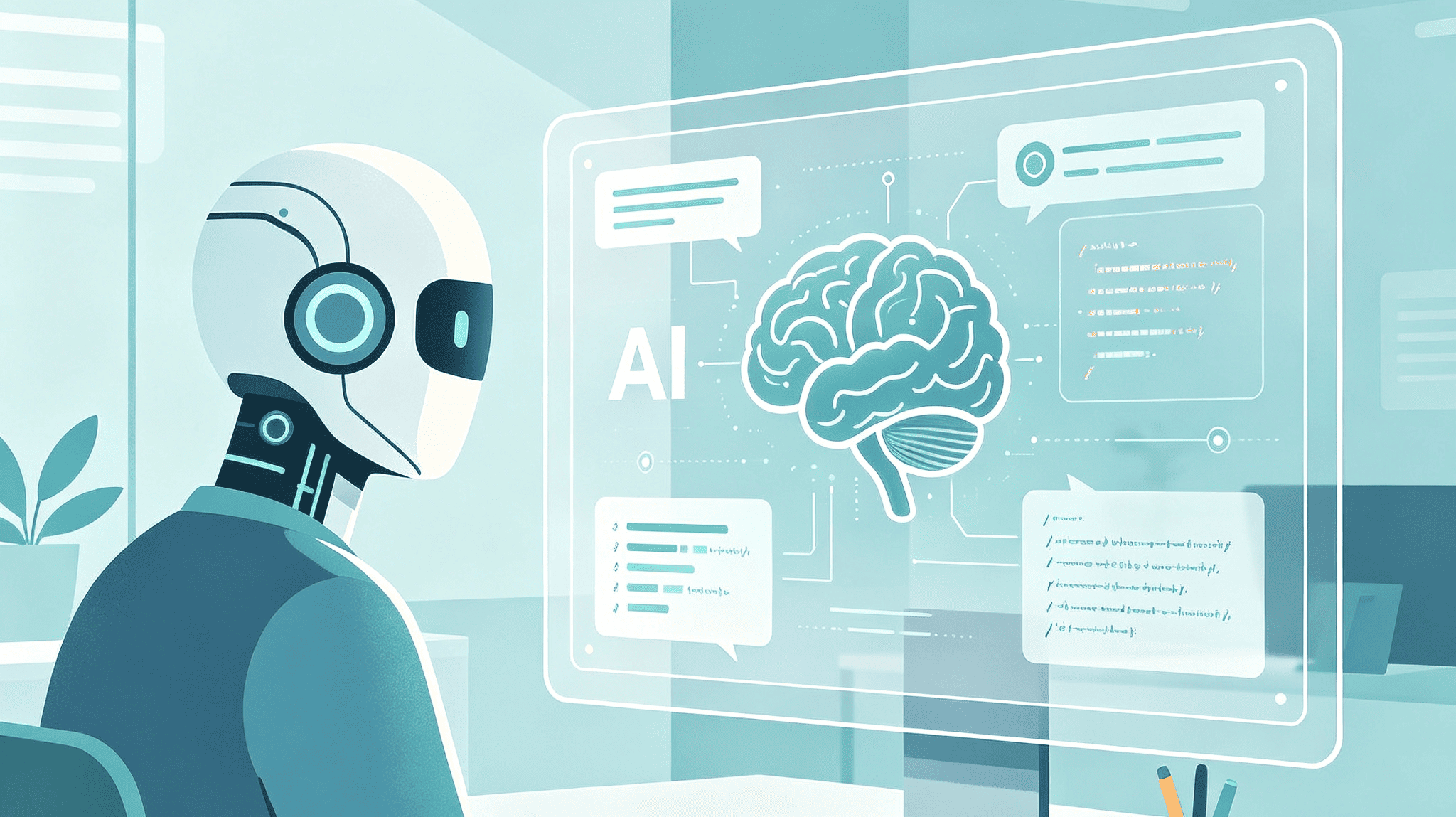
The most significant development associated with the name is the emergence of reasoning-oriented models. Unlike traditional AI that predicts the next most likely word in a sequence almost instantaneously, the DeepThink mode in models like DeepSeek-R1 introduces a deliberate pause—a period of "internal monologue"—where the AI explores multiple solution paths before delivering an answer.
What Makes Reasoning Models Different?
Standard LLMs are often criticized for "hallucinating" or failing at basic logic, such as comparing decimal numbers (e.g., mistakenly claiming 9.11 is greater than 9.9) or counting letters in a word. This happens because they are optimized for speed and statistical probability rather than step-by-step logic.
DeepThink AI changes this paradigm. When the DeepThink mode is activated, the model undergoes a process called "inference-time compute." This means the AI spends more computational power during the response phase to verify its own logic. It effectively "thinks" about the problem, checks for errors in its initial assumptions, and self-corrects in real-time.
Chain of Thought (CoT) Explained
The core of the DeepThink experience is the visualization of the Chain of Thought. When a user asks a complex question, the interface often displays a dropdown or a separate text box showing the AI’s internal reasoning. You might see the AI say to itself: "Wait, if X is true, then Y must be false. Let me re-calculate that. No, the first approach was better. Let's try another angle."
This transparency serves two purposes:
- Verification: Users can see exactly where the AI’s logic might have gone wrong.
- Trust: It demonstrates that the AI is not just guessing but is following a structured methodology.
Technical Architecture of Reasoning AI
To achieve the level of logic seen in DeepThink AI, developers utilize a combination of specific architectural choices and training methodologies.
Reinforcement Learning (RL)
The intelligence behind the DeepThink feature is largely derived from Reinforcement Learning. Unlike traditional supervised learning, where the AI is told the "right" answer by humans, RL allows the model to learn through trial and error. By rewarding the model when it reaches the correct conclusion in math or coding benchmarks, the AI learns to prioritize certain reasoning paths over others.
Inference-Time Scaling
A new law is emerging in the AI field: the more time you give an AI to think, the smarter it becomes. DeepThink AI leverages this by scaling the computation during the inference phase. This is why a DeepThink response may take 30 to 60 seconds to generate, whereas a standard chat response takes only two. For high-stakes tasks like auditing smart contracts or solving Olympiad-level math, this trade-off is invaluable.
Benchmark Performance
The impact of this approach is evident in recent benchmarks. Models utilizing the DeepThink methodology have achieved:
- Gold Medal Level in Math: Scoring exceptionally high on the International Mathematical Olympiad (IMO) problems.
- Senior Engineer Coding Levels: Dominating benchmarks like LiveCodeBench by identifying edge cases that traditional models miss.
- Scientific Discovery: Assisting researchers in formulating conjectures that require connecting disparate pieces of scientific literature.
Deepthink.ai: The Hardware Dimension
While the software world focuses on reasoning, a specific hardware company is using the name to revolutionize vision. Deepthink.ai (the hardware firm) focuses on AI ISP (Artificial Intelligence Image Signal Processing).
Vision in the Dark
The primary challenge in traditional photography and surveillance is low-light noise. When light levels drop, sensors produce grain and artifacts. Deepthink.ai’s technology uses deep learning to reconstruct images in environments as dark as 0.0001 Lux.
At this level of darkness, the human eye and standard cameras see nothing but black. Deepthink’s AI identifies patterns in the microscopic amounts of photons hitting the sensor and "paints" a full-color, high-definition image.
Applications in Industry
This version of DeepThink AI is not for chatting; it is for survival and security:
- Maritime Patrol: Identifying obstacles or vessels in the open sea at night without the need for active infrared lighting, which can be detected by others.
- Drones and Robotics: Allowing autonomous systems to navigate complex environments in total darkness.
- Security Systems: Providing color evidence in nighttime security footage, which is far more useful for identification than traditional grainy black-and-white night vision.
The Landscape of DeepThink Mobile Applications
For the average consumer, searching "DeepThink AI" on an app store will yield dozens of results. It is crucial to distinguish between official features and third-party wrappers.
What Are AI Wrappers?
Most DeepThink apps on mobile are "wrappers." This means the app developer does not own a massive data center or a proprietary model. Instead, they connect their app to the APIs of companies like DeepSeek or OpenAI.
While many of these apps are legitimate tools that offer a better user interface or offline capabilities (such as the 3DTOPO Inc. version which offers offline privacy), others are "fleeceware." Users should be cautious of:
- High Subscription Fees: Some apps charge $20+ per month for features that are free on the original web platforms.
- Privacy Concerns: Unofficial apps may log your queries and personal data.
- Model Accuracy: A wrapper is only as good as the API it connects to. If it uses an outdated model, the "DeepThink" name is purely decorative.
Offline DeepThink: A New Frontier
Some innovative apps are now bringing DeepThink capabilities directly to the device. By using "distilled" versions of reasoning models, these apps can perform logic-heavy tasks without an internet connection. This is a massive win for privacy-conscious users who want the power of AI without sending their data to the cloud.
When Should You Use DeepThink Mode?
Not every query requires the heavy lifting of a reasoning model. Understanding when to toggle this feature can save time and computational resources.
Ideal Use Cases
- Complex Debugging: If your code is running but producing the wrong output, DeepThink can trace the logic of the entire script to find the flaw.
- Advanced Mathematics: From calculus to game theory, the step-by-step verification prevents the "silly mistakes" standard AI often makes.
- Strategic Planning: When you need to consider the long-term implications of a business decision, the AI can simulate multiple scenarios.
- Scientific Reasoning: Validating hypotheses or understanding dense, multi-layered research papers.
When to Skip It
- Factual Retrieval: "Who won the World Series in 1998?" A standard model is faster and just as accurate for simple facts.
- Casual Creative Writing: If you just need a poem or a short story, the rigorous logic of DeepThink might actually make the output feel stiff or overly analytical.
- Quick Summarization: For a short email or news article, the extra "thinking time" adds no real value.
The Future: Toward Autonomous Reasoning
DeepThink AI represents a stepping stone toward "System 2" thinking in artificial intelligence. Borrowing from psychology, System 1 is fast and intuitive, while System 2 is slow and analytical. Most AI to date has been stuck in System 1.
The move toward DeepThink and similar reasoning architectures suggests that future AI will act more like a collaborator and less like a search engine. We can expect to see:
- Multi-Agent Reasoning: Different "thought agents" within the AI arguing with each other to find the most robust solution.
- Dynamic Budgeting: The AI automatically deciding how much time it needs to think based on the difficulty of the prompt.
- Reduced Hallucination: As models become better at self-verification, the "confidence" of their answers will finally match their actual accuracy.
Summary
DeepThink AI is not a single product but a movement toward depth—whether that is the depth of logic in a reasoning model or the depth of vision in low-light hardware. While the branding is often used by third-party apps to capitalize on the hype, the core technology represents a genuine breakthrough. By allowing AI to "pause and reflect," the industry is finally solving the logic gaps that have plagued large language models since their inception.
FAQ
Is DeepThink AI free to use?
The "DeepThink" feature in the DeepSeek-R1 model is currently free on many platforms, though some providers may implement usage limits or "thinking budgets." Third-party apps often charge a subscription or a one-time fee.
Does DeepThink AI work offline?
Most advanced reasoning models require massive cloud infrastructure. However, specialized mobile apps have begun offering "distilled" versions that can run offline on modern smartphones with high-end chips (like Apple's A-series or Qualcomm's Snapdragon 8 series).
How does DeepThink differ from ChatGPT?
Standard ChatGPT (like GPT-4o) focuses on conversational fluency and speed. DeepThink-style models (like DeepSeek-R1 or GPT-o1) prioritize logic and accuracy, often showing their internal reasoning process and taking longer to respond.
Is DeepThink AI safe for private data?
If you are using the DeepThink feature through an official, reputable provider, your data is generally handled according to their standard privacy policy. However, be extremely cautious with third-party "DeepThink" apps on app stores, as they may not have the same security standards.
Why is it called "DeepThink"?
The name refers to the concept of "Deep Exploration." It suggests that the AI is going beyond surface-level patterns to understand the deeper, underlying structure of a problem, much like a human expert would.
Can DeepThink AI solve any math problem?
While it is significantly better than standard AI, it is not infallible. It can still make mistakes if the logic becomes too circular or if the initial premises are flawed. Always verify critical results.
What is the hardware company Deepthink.ai?
Deepthink.ai (headquartered in China) is a separate entity that develops hardware for low-light imaging. It is unrelated to the "DeepThink" reasoning feature found in chat models, despite the identical name.
-
Topic: About | Deepthink Aihttps://www.deepthinkai.ai/blank-1
-
Topic: DeepThink-Free AI-Powered Deep Explorationhttps://yes.finechat.ai/gpts-9t557I8ZNxg-DeepThink
-
Topic: Gemini Deep Think AI: Why Google’s New Reasoning Model Is a Game-Changer in 2025https://ossels.ai/gemini-deep-think-ai-google-reasoning-model/