Home
Home
Robert Kyncl and the Strategic Evolution of Warner Music Group
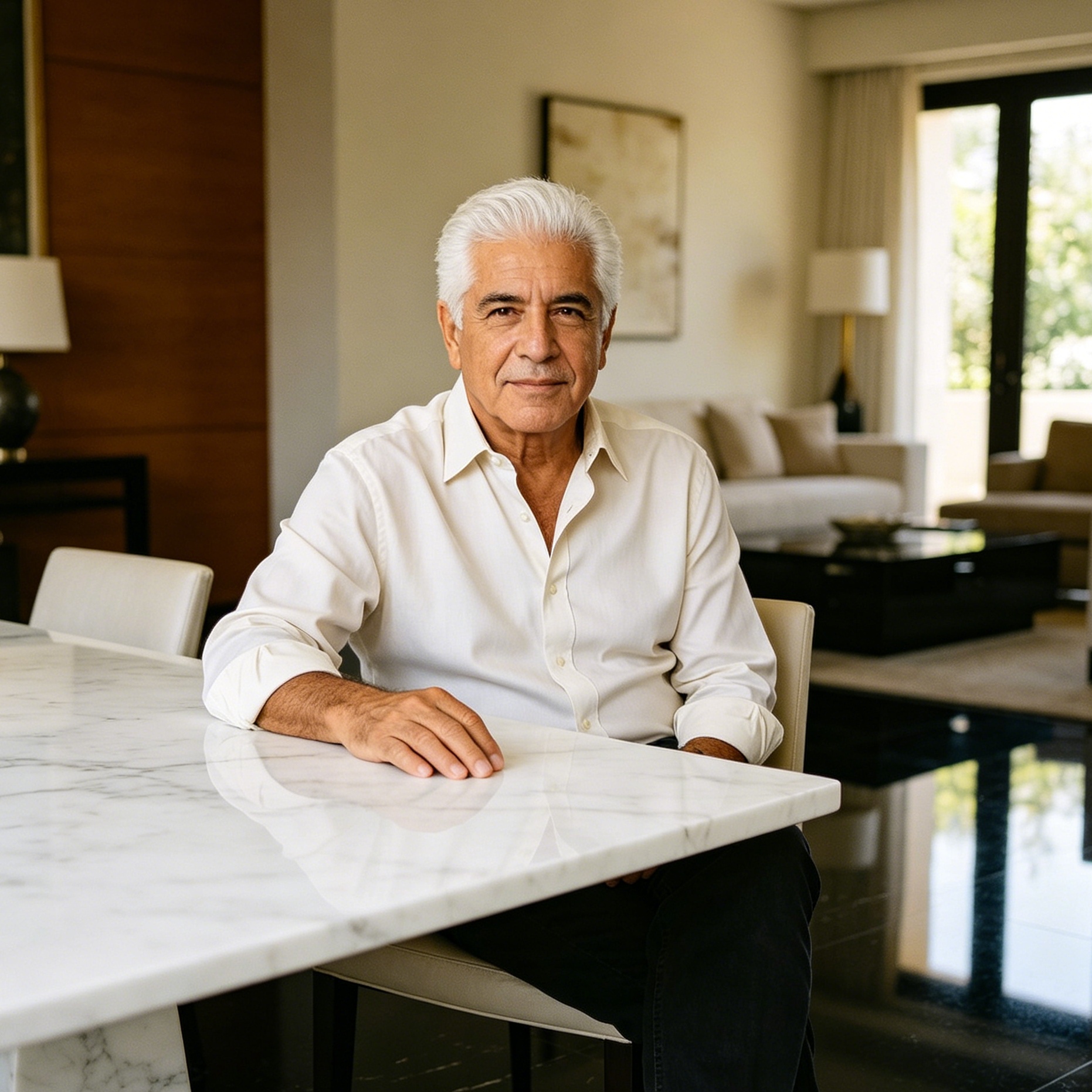
Robert Kyncl is the Chief Executive Officer of Warner Music Group (WMG), having officially assumed the leadership role on January 1, 2023. His appointment marked a significant turning point for the legendary music conglomerate, signaling a shift from traditional entertainment management toward a tech-centric, creator-driven business model. Kyncl succeeded Stephen Cooper, who led the company for over a decade, and his arrival has initiated a period of aggressive restructuring and technological modernization designed to position WMG at the forefront of the digital music economy.
The Professional Background of Robert Kyncl
Robert Kyncl's trajectory to the head of one of the world's "Big Three" music labels is rooted in Silicon Valley’s most influential platforms. Unlike many of his predecessors in the music industry who rose through the ranks of A&R (Artists and Repertoire) or legal departments, Kyncl’s expertise lies at the intersection of streaming technology and global content distribution.
The Netflix Era
Before entering the music sphere, Kyncl spent seven years at Netflix during its most critical period of transformation. Joining the company when its primary business was mailing DVDs, Kyncl was a pivotal figure in the transition to digital streaming. He led content acquisition efforts, negotiating the licenses that allowed Netflix to evolve into a global streaming powerhouse. This experience provided him with a unique understanding of how legacy media consumption can be disrupted by internet-scale distribution, a lesson that would later define his strategy at Warner Music Group.
The YouTube Tenure
Following his success at Netflix, Kyncl spent 12 years at YouTube, serving as its Chief Business Officer. At YouTube, he was instrumental in building the modern creator economy. He oversaw commercial partnerships and was a primary architect behind the platform’s subscription services, including YouTube Music, YouTube Premium, and YouTube TV. His tenure at YouTube was characterized by a focus on balancing the interests of copyright holders with the explosive growth of user-generated content—a complex dynamic that prepared him for the intricate licensing world of the music industry.
The 2024 Reorganization: Building a Flatter Structure
In August 2024, Robert Kyncl announced a massive reorganization of Warner Music Group’s recorded music operations. This strategic move was designed to eliminate layers of management, increase speed to market, and create a more direct line of communication between local regional offices and global leadership.
Leadership Transitions and the Departure of Max Lousada
A central component of this reorganization was the departure of Max Lousada, the long-time CEO of Recorded Music. Lousada, a respected figure in the industry who spent 20 years at WMG, stepped down as part of a broader effort to remove the middle-management tier of "CEO, Recorded Music." This decision reflected Kyncl’s preference for a flatter organizational chart where regional and label leaders report directly to the group CEO.
The Rise of Elliot Grainge and Atlantic Music Group
The restructuring also saw a significant shift within Atlantic Music Group. Julie Greenwald, a legendary figure in the label’s history, transitioned to the role of Chairman before ultimately preparing for a leadership handover. Elliot Grainge, the founder and CEO of 10K Projects, was appointed as the new CEO of Atlantic Music Group, reporting directly to Kyncl. Grainge represents a younger generation of music entrepreneurs, focused on data-driven artist development and viral marketing, which aligns with Kyncl’s tech-forward vision for the company.
Regional Empowerment
Under the new structure effective October 1, 2024, WMG’s operations in Europe, the Middle East, Africa (EMEA), Latin America (LATAM), and Asia Pacific (APAC) began reporting directly to the corporate headquarters. This decentralization aims to empower local experts to make faster creative and commercial decisions while still benefiting from WMG’s centralized global resources in distribution, marketing, and technology.
Financial Performance and the 2025 Outlook
Analyzing the financial health of Warner Music Group under Robert Kyncl reveals a company focused on "sustained profitable growth." In the fiscal year ending September 30, 2025, WMG reported record-breaking quarterly revenues, driven by double-digit growth in both recorded music and music publishing.
Key Financial Indicators
For the fourth quarter of 2025, total revenue increased by approximately 15% (or 13% in constant currency). This growth was largely underpinned by high-single-digit expansion in subscription streaming, proving that despite market saturation in some regions, the value of premium music consumption remains high.
However, the full-year results for 2025 showed a more nuanced picture. While total revenue for the twelve-month period increased by 4%, net income saw a decrease to $370 million from $478 million in the previous year. This discrepancy was primarily attributed to restructuring costs and the termination of a major distribution agreement with BMG. Kyncl and CFO Armin Zerza have emphasized that these short-term costs are investments in a more efficient future, with cost-savings plans expected to contribute significantly to margin improvement in 2026.
The Role of Adjusted OIBDA
Operating Income Before Depreciation and Amortization (OIBDA) is a critical metric for the music industry. In Q4 2025, WMG’s Adjusted OIBDA reached $405 million, a 15% increase. This margin stability, despite significant internal changes, suggests that the company's cost-cutting measures—including the restructuring plans announced in early 2024 and mid-2025—are successfully offsetting the expenses of transformation.
Warner Music Group’s Strategy in the AI Era
One of the most defining characteristics of Robert Kyncl’s leadership is his proactive stance on Artificial Intelligence. While many in the music industry initially viewed AI as a threat to copyright and artist livelihood, Kyncl has framed it as a dual opportunity: a tool for creative enhancement and a new revenue stream for rights holders.
Protecting Copyright while Embracing Innovation
Kyncl has been a vocal advocate for the "Human Artistry Campaign," ensuring that AI models are trained on licensed content and that artists are compensated for the use of their likeness and voice. He has consistently argued that the music industry must not repeat the mistakes of the early digital era, where piracy outpaced legal innovation. Instead, WMG is seeking to establish licensing frameworks that allow tech companies to use music in AI applications while returning value to the creators.
Incremental Revenue Opportunities
In his communications with investors, Kyncl has highlighted that AI will provide "incremental revenue opportunities." This includes licensing for AI-generated music tools, personalized fan experiences, and more sophisticated internal tools for identifying the next big global star. By integrating tech expertise into the core of the music label, WMG aims to be a partner to the tech industry rather than just a vendor.
Global Expansion and the Creator Economy
The "Creator Economy" is a term Kyncl pioneered during his time at YouTube, and he has brought this philosophy to Warner Music Group. In the modern era, an artist is more than just a singer; they are a multi-platform brand.
Diversifying Revenue Streams
Under Kyncl, WMG is moving beyond the "royalty-only" model. The company is leaning heavily into artist services, merchandising (through EMP), and direct-to-fan engagement via WMX. Although EMP was classified as held for sale in late 2025 as WMG focuses on core high-growth areas, the emphasis remains on capturing the full value of a fan’s relationship with an artist.
High-Growth Markets
Kyncl has prioritized growth in non-Western markets. With the saturation of streaming in the US and Europe, WMG is investing heavily in LATAM and APAC. The appointment of regional leaders who report directly to the CEO ensures that these markets are not treated as secondary territories but as primary engines of future growth. This is particularly evident in the resurgence of Warner Records and the strategic integration of recently acquired labels like 10K Projects.
Philanthropy and the Kyncl Family Foundation
Beyond the boardroom, Robert Kyncl and his wife, Luz Avila-Kyncl, are active in social initiatives. They founded the Kyncl Family Foundation, an organization dedicated to providing financial assistance to students from underrepresented communities who are pursuing degrees in STEM (Science, Technology, Engineering, and Mathematics). This philanthropic focus reflects Kyncl’s belief in the power of education and technology to drive social mobility, a theme he also explored in his book, Streampunks: YouTube and the Rebels Remaking Media.
Frequently Asked Questions
Who replaced Steve Cooper as WMG CEO?
Robert Kyncl replaced Steve Cooper as the CEO of Warner Music Group. Cooper served as CEO from 2011 until the end of 2022. Kyncl officially took the reins on January 1, 2023.
What was Robert Kyncl's role at YouTube?
Robert Kyncl was the Chief Business Officer (CBO) at YouTube for 12 years. He was responsible for all business functions, including global partnerships and the development of paid subscription services like YouTube Music.
Why did Warner Music Group reorganize in 2024?
The reorganization was designed to create a flatter, more efficient structure. By removing layers of executive management and having regional leaders report directly to Robert Kyncl, WMG aims to move faster in a globalized, tech-driven music market.
How is Warner Music Group performing financially?
As of late 2025, WMG is seeing record-high quarterly revenues with strong growth in subscription streaming. While net income was impacted by restructuring costs in 2025, the company expects margin improvement in 2026 due to cost-saving initiatives and new revenue from AI and technology partnerships.
Who is the CEO of Atlantic Music Group?
As of October 1, 2024, Elliot Grainge serves as the CEO of Atlantic Music Group. He succeeded the long-standing leadership team of Julie Greenwald and Craig Kallman as part of the company's broader structural overhaul.
Summary of WMG Leadership and Strategy
The tenure of Robert Kyncl as CEO of Warner Music Group represents a fundamental shift in how a major music company operates. By leveraging his background at Netflix and YouTube, Kyncl is attempting to modernize an industry that has historically struggled to keep pace with technological change. From the 2024 restructuring to the focus on AI and the creator economy, his strategy is built on efficiency, direct leadership, and the proactive monetization of digital innovation. While the music industry remains volatile, the record-breaking revenues of 2025 suggest that WMG’s transition into a tech-centric entertainment giant is gaining momentum. The focus for 2026 will be the realization of cost savings and the continued expansion of music’s value in the age of artificial intelligence.
-
Topic: Robert Kyncl - Warner Music Grouphttps://www.wmg.com/leadership/robert-kyncl
-
Topic: WARNER MUSIC GROUP ANNOUNCES REORGANIZATION OF RECORDED MUSIC OPERATIONS - Warner Music Grouphttps://www.wmg.com/news/warner-music-group-announces-reorganization-of-recorded-music-operations
-
Topic: Robert Kyncl - Wikipediahttps://en.m.wikipedia.org/wiki/Robert_Kyncl