Home
Home
Real World Results From Testing the Top AI Generators for Text and Images
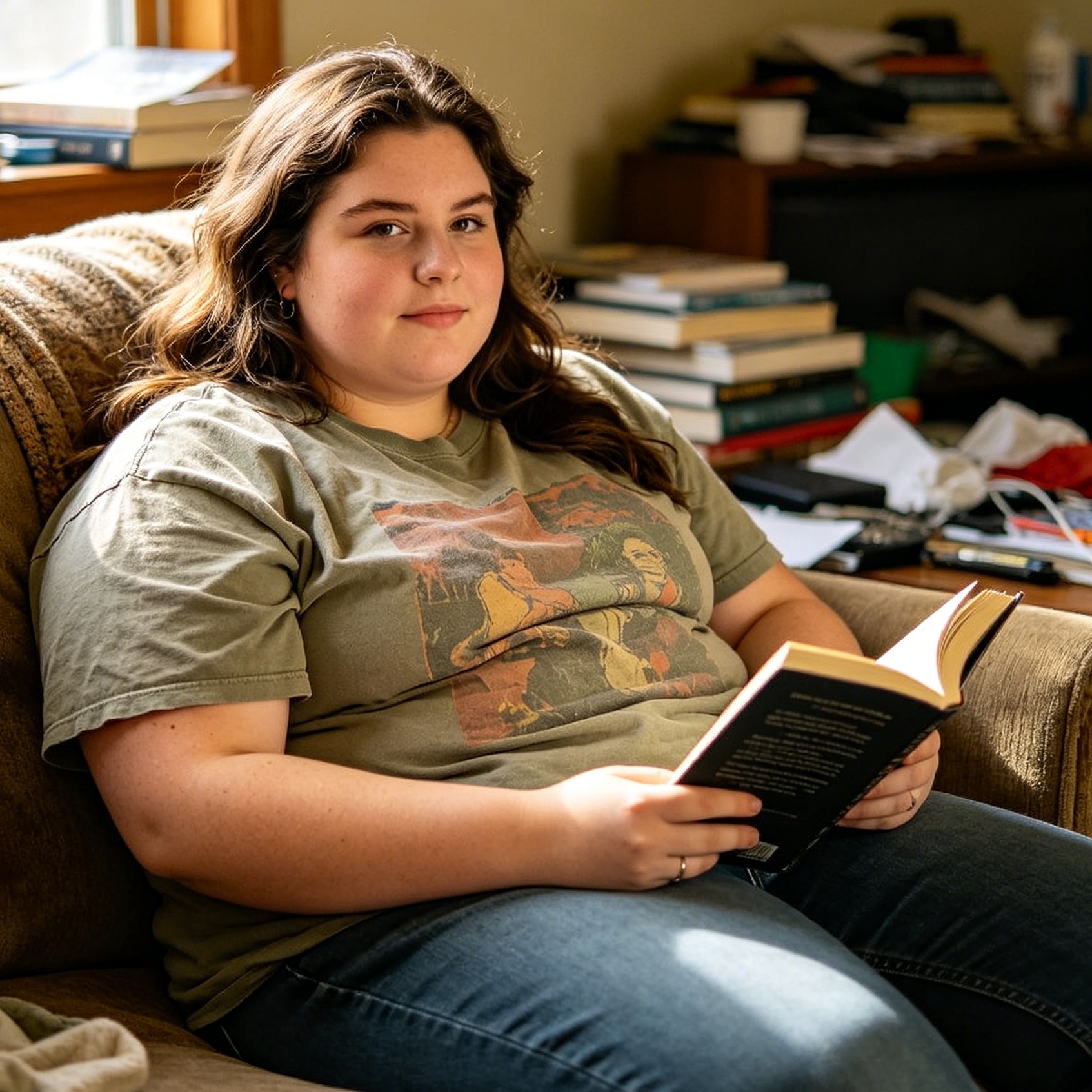
Artificial intelligence has transitioned from a novel experiment into a fundamental component of the digital production pipeline. The surge in generative tools has created a marketplace where quality varies significantly depending on the specific use case, prompting a need for rigorous, experience-based evaluations. Navigating this ecosystem requires an understanding that no single "perfect" tool exists; rather, there are specialized instruments suited for different stages of the creative process.
The Evolution of Generative AI in Professional Workflows
In early 2024, the primary focus for many organizations was simple automation. Today, the conversation has shifted toward brand alignment, nuance, and the mitigation of "AI artifacts"—those subtle signs that a piece of content was generated by a machine. The most effective implementations of these tools involve a hybrid approach, often referred to as "Human-in-the-Loop." This methodology acknowledges that while an AI can generate a 2,000-word draft in seconds, the human editor provides the strategic direction, factual verification, and emotional resonance necessary for high-stakes content.
The current market is divided into several key categories: LLMs (Large Language Models) for text, diffusion models for imagery, and specialized generators for industry-specific needs like fashion or e-commerce photography. Understanding the strengths and friction points of each is essential for making an informed investment.
Professional Text Generators and Their Performance Metrics
When evaluating text generators, the primary metrics are reasoning capability, stylistic flexibility, and "hallucination" rates—the frequency with which an AI invents facts.
Claude 3.5 Sonnet by Anthropic
In our testing environments, Claude 3.5 Sonnet has frequently outperformed other models in terms of human-like phrasing and adherence to complex instructions. Unlike earlier iterations of generative text, Claude exhibits a less "robotic" cadence, avoiding the repetitive sentence structures often found in standard AI outputs.
- Experience Insight: When tasked with writing a nuanced editorial on market volatility, Claude maintained a sophisticated tone without over-relying on corporate jargon like "leverage" or "synergy." Its ability to handle a 200,000-token context window makes it particularly useful for analyzing long-form documents or multiple research papers simultaneously.
- Operational Note: Users requiring high reasoning for coding or technical documentation will find its logic more consistent than many competitors, though it can occasionally be overly cautious in its safety guardrails.
ChatGPT (GPT-4o) by OpenAI
ChatGPT remains the industry standard due to its versatility and the robustness of its ecosystem. The introduction of the "o" (omni) model has significantly decreased latency, making it the preferred tool for rapid brainstorming and iterative drafting.
- Experience Insight: The real strength of GPT-4o lies in its multi-modal capabilities. In a recent project, we uploaded a rough sketch of a UI layout, and the model successfully converted that image into functional React code. This cross-functional utility is where ChatGPT maintains its edge.
- Operational Note: Frequent users may notice a certain "flavor" to its writing—a tendency to start conclusions with "In summary," or "Ultimately." These patterns require active prompting or manual editing to ensure a unique brand voice.
Jasper for Enterprise Marketing
Jasper is not just a wrapper for an LLM; it is a platform built specifically for marketing teams. Its core value proposition is the "Brand Voice" feature, which allows users to upload style guides and previous content to train the model on specific tonal requirements.
- Experience Insight: For a large-scale e-commerce campaign requiring 100+ product descriptions, Jasper’s ability to pull from a central "knowledge base" ensured that technical specifications remained accurate across all entries. It significantly reduced the time spent on back-and-forth revisions between the legal and creative teams.
- Operational Note: It is a more expensive option compared to direct API access, but for teams needing a collaborative environment with built-in SEO templates, the cost is often justified by the efficiency gains.
The Visual Frontier of AI Image Generation
The landscape for AI imagery has seen a massive leap in photorealism and text rendering capabilities. The choice of tool here depends heavily on whether the goal is artistic exploration or commercial utility.
Midjourney v6.1
Midjourney continues to be the benchmark for artistic quality. Its latest updates have significantly improved skin textures, lighting, and "prompt adherence"—the accuracy with which the AI follows the user's specific text instructions.
- Experience Insight: In testing high-fashion concepts, Midjourney v6.1 produced images that were indistinguishable from professional studio photography. The level of detail in fabric weaves and reflections is currently unmatched. However, its reliance on a Discord-based interface remains a friction point for some corporate users who prefer a standard web UI.
- Operational Note: To get the most out of Midjourney, users must master specific parameters like
--ar(aspect ratio) and--stylize. It is less of a "click and go" tool and more of a digital craft.
DALL-E 3 (via ChatGPT Plus)
DALL-E 3’s greatest strength is its understanding of complex, descriptive prompts. Because it is integrated with ChatGPT, users can describe an image in plain language, and the AI will refine the prompt behind the scenes to produce a coherent result.
- Experience Insight: While DALL-E 3 struggles to match the photorealism of Midjourney, it is exceptional for creating illustrations, diagrams, and images that require specific text to be rendered correctly within the graphic.
- Operational Note: It is the most accessible tool for non-designers, but it offers fewer granular controls over camera settings (ISO, f-stop, lens type) compared to more specialized platforms.
MolyPix and Specialized Design Tools
Newer entrants like MolyPix have carved out a niche by offering "editable" AI designs. Unlike traditional diffusion models that output a flat image file, these tools allow for the modification of specific layers or text elements after the image has been generated.
- Experience Insight: For social media managers, the ability to generate a poster and then manually change the date or the call-to-action button without re-generating the entire image is a major workflow improvement. In our tests, this "hybrid editing" approach saved hours of rework in Photoshop.
Assessing AI Model and Fashion Photography Generators
The emergence of tools like Raw Shot.ai and Leonardo.ai has revolutionized the fashion and e-commerce industries. These platforms are designed to generate consistent human models without the need for traditional photoshoots.
- Ethical and Technical Compliance: Many of these specialized tools now include C2PA authentication and audit trails, ensuring that the generated imagery complies with emerging transparency regulations like the EU AI Act.
- Practical Application: Small e-commerce brands are using these generators to place their clothing designs on virtual models with diverse body types and ethnic backgrounds, a process that used to cost tens of thousands of dollars per season.
The Reality of AI Detection Tools
As AI generation becomes more prevalent, the demand for detection tools like GPTZero, Winston AI, and Originality.ai has grown. However, our internal testing aligns with the consensus that these tools should be used as signals rather than absolute verdicts.
Accuracy and False Positives
AI detectors work by measuring "perplexity" (the randomness of word choice) and "burstiness" (the variation in sentence structure). Because professional human writers often strive for clarity and concise structure, their work can sometimes be flagged as AI-generated.
- Experience Insight: In a test of 50 purely human-written technical articles, several were flagged with a "70% probability of AI" because they followed a highly structured, logical format. Conversely, AI content that has been lightly edited by a human often bypasses these detectors entirely.
- Strategic Advice: Organizations should use detectors to spot-check for potential quality issues or academic dishonesty, but they should never be the sole basis for disciplinary action or content rejection.
Essential Criteria for Evaluating AI Generators
Before committing to a subscription or integrating a tool into a business workflow, it is necessary to run a pilot test based on the following criteria:
Prompt Adherence and Logic
Does the tool follow complex, multi-part instructions? A high-quality generator should be able to handle "negative prompts" (telling the AI what not to include) as effectively as positive ones.
Brand Voice and Training
For text generators, can the tool be trained on your proprietary data? For image generators, can you upload "reference images" to maintain visual consistency across a campaign?
Output Resolution and Format
For visual content, does the tool provide high-resolution outputs (4096x4096px or higher) suitable for print or large-scale digital displays? For text, does it support Markdown, HTML, or direct exports to CMS platforms like WordPress?
Privacy and Data Security
Reputable professional tools must offer an opt-out for model training. Ensure that your inputs—especially sensitive business data or unpublished research—are not being used to train the next version of the public model.
Comparison of Top AI Generators (2025 Evaluation)
| Tool | Primary Use Case | Key Strength | Notable Weakness |
|---|---|---|---|
| Claude 3.5 | Long-form Writing | Exceptional human-like nuance | Strict safety filters |
| ChatGPT (4o) | General Utility | Multi-modal & Speed | Generic writing patterns |
| Jasper | Marketing Teams | Brand voice consistency | Higher subscription cost |
| Midjourney | Visual Art | Unmatched photorealism | Discord-only interface |
| DALL-E 3 | Casual Graphics | Ease of use & Text rendering | Lower realism than competitors |
| MolyPix | Marketing Design | Directly editable AI posters | Newer, smaller template library |
| GPTZero | Content Detection | Clear sentence-level analysis | Prone to false positives |
FAQ: Navigating the AI Generation Landscape
How can I make AI-generated text sound more human?
The most effective way is to provide specific "persona" instructions and to avoid generic prompts. Instead of saying "Write a blog post about coffee," try "Write a blog post from the perspective of a third-generation Italian roaster who values tradition over modern trends." Additionally, manually changing the opening and closing paragraphs can significantly reduce the "AI feel."
Do I own the rights to the images I generate with AI?
Ownership rights vary by platform and geography. Most paid subscriptions (like Midjourney or DALL-E 3) grant you commercial usage rights, but the ability to "copyright" AI-generated work is currently a complex legal issue that varies by country. Always check the specific Terms of Service for each tool.
Can AI generators replace professional writers and designers?
While AI can handle the "heavy lifting" of first drafts and basic asset creation, it lacks the ability to understand deep cultural context, strategic business goals, and genuine emotional connection. It is best viewed as an "amplifier" of human talent rather than a total replacement.
What hardware is needed to run these AI generators?
Most popular tools (ChatGPT, Midjourney) are cloud-based and run in any modern web browser. However, if you choose to run open-source models like Stable Diffusion or Flux.1 locally, you will typically need a dedicated GPU with at least 12GB to 24GB of VRAM for smooth performance.
Summary of Findings
The current generation of AI tools offers unprecedented opportunities for scaling content production. For text, Claude 3.5 Sonnet and Jasper lead the way in quality and brand alignment. In the visual realm, Midjourney remains the gold standard for quality, while MolyPix offers unique utility for marketers needing editable designs.
Success in using these tools depends on a rigorous testing process and a commitment to maintaining human oversight. By understanding the specific strengths and limitations of each generator, creators and businesses can build a technology stack that enhances creativity without sacrificing authenticity or accuracy.
-
Topic: Best AI Model Photo Generator | 20 Tools Ranked (2026)https://gitnux.org/best/ai-model-photo-generator/
-
Topic: Free AI Design Generator: Effortless, Professional Creations - starryaihttps://starryai.com/en/ai-design-generator
-
Topic: 11 Best AI Image Generators Tested: My Picks for 2025https://molypix.ai/blog/best-ai-image-generators-ultimate-comparison-guide/