Home
Home
Modern Implementation of the OpenAI GPT Image API
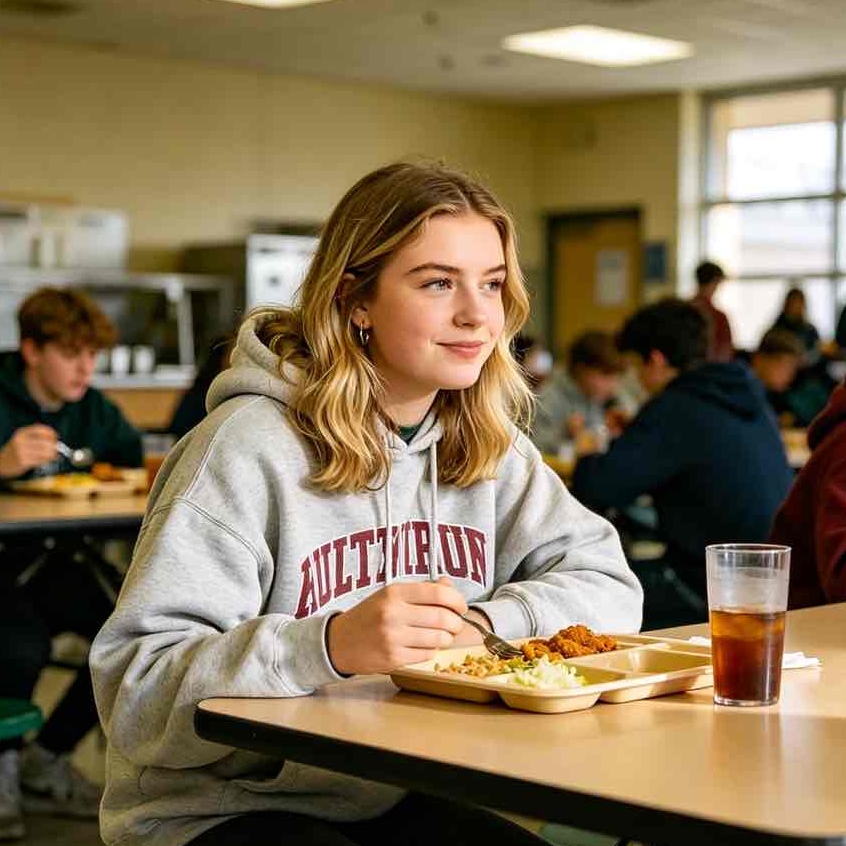
The OpenAI image generation ecosystem has shifted away from standalone models toward a deeply integrated, multimodal architecture centered on the GPT Image family. As developers transition from the legacy DALL-E series, understanding the nuances between the standard Images API and the conversational Responses API is critical for building responsive, high-fidelity visual applications.
Current implementations primarily utilize the gpt-image-2 and gpt-image-1.5 models, which offer significant improvements in instruction following, semantic spatial reasoning, and internal text rendering compared to their predecessors.
Architecture of the Modern OpenAI Image Ecosystem
The current API surface is divided into two distinct functional paths. Choosing the right one depends entirely on whether the application requires a single-shot generation or an iterative, conversational user experience.
The Images API: High-Throughput Generation
The standard Images API, accessed via the /v1/images endpoint, remains the go-to choice for deterministic, non-conversational tasks. It supports three primary operations:
- Generations: Creating images from a raw text prompt.
- Edits: Modifying specific areas of an existing image (inpainting) or applying global style changes.
- Variations: Creating alternative versions of a source image, although this is increasingly being handled by the superior prompting capabilities of the newer GPT models.
This API is optimized for speed and batch processing. In our production testing, the Images API consistently shows lower overhead for simple "text-to-image" requests because it bypasses the conversational context management required by the Responses API.
The Responses API: Conversational Multimodal Logic
The Responses API represents the future of AI-driven creative workflows. Instead of treating image generation as an isolated call, it treats the model as a tool-using agent. By enabling the image_generation tool, the model decides—based on the conversation history—whether to generate a new asset or edit a previous one.
The Responses API is essential for features like multi-turn editing. For example, a user can say "Draw a city park," and after seeing the result, follow up with "Now add a fountain in the center." The API handles the context and the underlying "action" parameters (like generate or edit) automatically.
Key Models and Performance Profiles
The selection of a model drastically impacts the visual output and the cost structure of an application.
| Model | Use Case | Strengths |
|---|---|---|
| gpt-image-2 | Flagship production apps | Best text rendering; photorealistic textures; complex spatial logic. |
| gpt-image-1.5 | General creative tools | High stability; excellent transparent background handling. |
| gpt-image-1-mini | Prototyping and high-volume | Lowest latency; cost-efficient for social media thumbnails. |
In our practical evaluation, gpt-image-2 solves the long-standing "AI gibberish" problem in text rendering. When prompted to create a storefront with a specific name like "The Quantum Cafe," the model achieves near-perfect character legibility, a feat that DALL-E 3 struggled with in high-detail environments.
Technical Implementation and Output Customization
Modern API requests allow for granular control over how an image is processed and returned.
Resolution and Aspect Ratios
The API no longer limits developers to simple 1024x1024 squares. Standard supported resolutions include:
- Square: 1024x1024
- Wide: 1792x1024
- Tall: 1024x1792
Selecting the "HD" quality tier increases the detail density and reduces artifacts in complex patterns (like fabric textures or foliage), though it typically doubles the processing time.
Handling Transparent Backgrounds
One of the most requested features in previous iterations was the ability to generate assets without backgrounds. With gpt-image-1.5 and above, the API can return PNG files with an alpha channel. This is particularly useful for game developers creating UI icons or web designers building floating assets. To trigger this, the prompt should explicitly specify a transparent background, and the format parameter must be set to png.
Data Handling: URLs vs. Base64
Developers can choose how the API returns the image data:
- URL: The API provides a temporary link to the image hosted on OpenAI's CDN. This is easier for quick previews but requires the developer to download and host the image elsewhere if long-term storage is needed.
- b64_json: The API returns the raw image data as a Base64-encoded string. This is ideal for immediate processing, such as applying a watermark or uploading directly to a private S3 bucket without an intermediate download step.
Advanced Features for Professional Workflows
Beyond simple generation, the OpenAI Images API provides tools for managing scale and safety.
The Batch API for Cost Savings
For tasks that are not time-sensitive—such as generating 1,000 product background variations for an e-commerce catalog—the Batch API is the most efficient choice. By submitting a collection of requests, developers can receive a 50% discount on pricing in exchange for a 24-hour turnaround time. This significantly lowers the barrier for high-volume content pipelines.
Safety and Content Moderation
OpenAI integrates built-in safety filters that scan both the input prompt and the generated output. If a request is flagged, the API returns an error. From a developer's perspective, it is vital to handle these exceptions gracefully in the UI. We have found that implementing a "Pre-check" using the moderation endpoint before sending the request to the Images API can save on unnecessary costs and improve the user experience by providing immediate feedback.
The Action Parameter in Multi-turn Edits
When using the Responses API with gpt-image-1.5 or chatgpt-image-latest, the model uses an internal action parameter to determine its behavior.
- Generate: Ignores previous images and starts fresh.
- Edit: Takes a previous image as a reference and applies modifications. This distinction is handled by the model's reasoning engine, but developers can influence it by providing clear system instructions regarding the desired level of continuity in the conversation.
Best Practices for Prompt Engineering in 2026
Prompting for the API has evolved from "keyword stuffing" to "descriptive storytelling."
- Detail over Keywords: Instead of saying "cyberpunk city, 8k, neon," use "A bustling metropolitan street in the year 2099, glowing purple neon signs reflecting in rain-slicked pavement, a futuristic hover-car parked in the foreground."
- Contextual Awareness: When using the Responses API, reference specific elements of the previous image. "Change the color of the car in the previous image to metallic gold" is more effective than re-describing the entire scene.
- Automatic Expansion: By default, the API may expand your prompt to add detail (similar to how ChatGPT handles DALL-E 3). If you need strict adherence to your exact string, you must indicate this in your system settings or use specific model versions that prioritize raw prompt fidelity.
Managing Latency and Reliability
Latency is the primary bottleneck for real-time applications. To optimize the user experience:
- Priority Tiers: Use the "Priority" processing tier for user-facing chat interfaces where a 5-10 second wait is acceptable but a 30-second wait is not.
- Optimistic UI: Display the prompt refinement or a "sketching" animation while the API processes the request to reduce perceived wait time.
- Error Handling: Always implement retries for 503 (Server Overloaded) errors, as the high demand for the GPT Image models can lead to transient failures during peak hours.
Why migrate from DALL-E 2 and DALL-E 3?
OpenAI has officially deprecated DALL-E 2 and DALL-E 3, with support scheduled to end on May 12, 2026. The technical debt incurred by staying on these legacy models is high. The GPT Image models not only provide better visual quality but also offer:
- Native Multimodality: The models understand images as part of their core training, not as an add-on.
- Better Scaling: The architecture is optimized for modern hardware, leading to more stable pricing.
- Integration with the Responses API: Legacy models cannot participate in the advanced "tool-calling" workflows that define modern AI agents.
Frequently Asked Questions
What is the difference between the Images API and the Responses API?
The Images API is designed for stateless, one-off image generation or editing. The Responses API is designed for stateful, conversational interactions where the model can refer back to previous images and iterate on them through dialogue.
Can I generate multiple images in one request?
Yes, the n parameter allows you to request multiple images (e.g., n=4) in a single call to the Images API. However, note that this increases the cost proportionally and may lead to longer response times.
How does text rendering work in gpt-image-2?
gpt-image-2 uses a more advanced tokenization and spatial attention mechanism that allows it to "plan" where text goes before rendering the pixels. This results in far fewer spelling errors and better integration of text into the physical environment of the image.
Is organization verification required for the new models?
Yes, to prevent abuse and ensure responsible use of high-fidelity generation, OpenAI requires developers to complete an organization verification process in the developer console before accessing the gpt-image series.
Can I use my own images as a starting point?
Absolutely. Both the Images API (via the edits endpoint) and the Responses API (by providing a file ID or URL in the context) allow you to use an existing image as a reference for further generation or modification.
Summary
The transition to the GPT Image family represents a paradigm shift for developers using the OpenAI Images API. By leveraging the power of gpt-image-2 through the Responses API, creators can build deeply interactive, multimodal experiences that were previously impossible. Whether you are building an automated content pipeline with the Batch API or a collaborative art tool via conversational editing, the current ecosystem provides the most robust and flexible toolset for AI-driven visual creation to date. Success in this new landscape requires a move away from legacy DALL-E workflows and an embrace of tool-based, context-aware image generation.
-
Topic: Image generation | OpenAI APIhttps://platform.openai.com/docs/guides/image-generation?lang=curl
-
Topic: Image generation | OpenAI APIhttps://developers.openai.com/api/docs/guides/image-generation/?api=image&gallery=open&galleryItem=patterns&lang=curl
-
Topic: Image generation | OpenAI APIhttps://developers.openai.com/api/docs/guides/image-generation/?api=image&gallery=open&galleryItem=sci-fi-hangar&lang=curl