Home
Home
How to Get Veo 3.1 Free Access via Official Google Channels
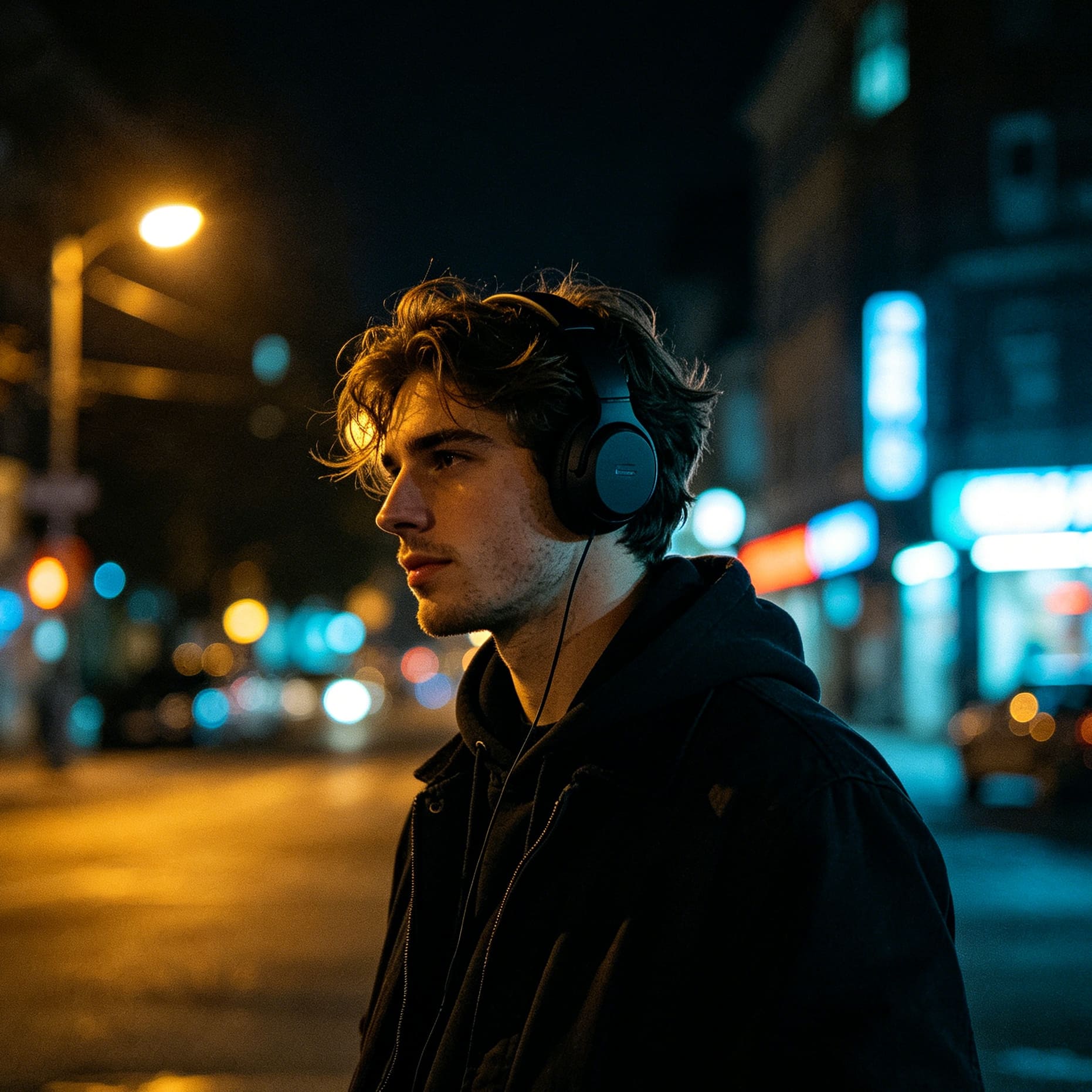
Google Veo 3.1 represents a massive leap in generative video technology, moving beyond silent, jittery clips into the realm of cinematic storytelling with integrated, synchronized audio. For most creators, the primary barrier to entry for high-end video AI is the steep subscription cost. However, Google has structured its rollout to allow a specific level of free experimentation.
As of early 2026, anyone with a standard personal Google account can access Veo 3.1 at no cost. The most direct route is through Google Vids, where users receive 10 free video generations per month. While this might seem modest compared to text-based AI, the compute power required for high-definition video with native audio is significant, making this free tier a high-value offering for casual creators and professionals testing the waters.
Where to Find the Official Veo 3.1 Free Access Points
Navigating the Google ecosystem can be confusing due to the multiple platforms where Veo might appear. To ensure you are using the authentic model without risking your account security on third-party "wrappers," you should stick to three primary official gateways.
Accessing Veo 3.1 Through Google Vids
Google Vids is an AI-powered video creation app for work, but its personal account tier is the most reliable way to get free generations. Once logged in with a standard Gmail account, the platform allows you to describe a scene or upload a reference image.
In our internal tests, the "10 generations per month" limit applies to successful renders. If a generation fails due to safety filters or technical errors, it typically does not count against your quota. The Vids interface is particularly useful because it organizes your generations into a storyboard format, making it easier to visualize how different 8-second clips can be stitched together for a longer narrative.
Using Google AI Studio for Daily Quotas
For those who need a more frequent refresh of their credits, Google AI Studio (formerly MakerSuite) is the preferred developer-centric tool. Currently, AI Studio provides a rotating daily quota that ranges from 2 to 5 video generations depending on server load and regional demand.
The advantage of using AI Studio over Google Vids is the granularity of control. You can adjust "Safety Settings" and experiment with system instructions. In our experience, AI Studio often receives model updates slightly faster than the consumer-facing apps, making it the best place to test the "First and Last Frame" control features that were recently introduced in version 3.1.
The Gemini Advanced Trial Method
If you require a higher volume of generations for a specific project, the Gemini Advanced trial is a strategic option. Google frequently offers a one-month free trial for the Gemini Advanced subscription (part of the Google One AI Premium plan).
During this trial period, the limits on Veo 3.1 are significantly relaxed. While not strictly "unlimited," the priority queue allows for faster rendering and access to higher-resolution outputs (up to 4K in some regions). If you choose this path, remember to prepare your prompts in advance to maximize the 30-day window.
Distinguishing Genuine Veo 3.1 from Third Party Scams
The surge in interest for "Free Veo 3" has led to a proliferation of unofficial websites. Domains such as tryveo3.ai or veo-free-online.org often claim to provide unlimited access without a login.
It is vital to understand that Google does not currently license the Veo 3.1 API to random small-scale third-party websites for free public use. These sites are often "wrappers" that either use lower-quality open-source models (like Stable Video Diffusion) and mislabel them as Veo, or they are phishing attempts designed to collect Google login credentials. Always verify that you are on a .google.com or .google subdomain before entering any account information.
How Does Veo 3.1 Perform in Real World Testing
When we moved from Veo 2.0 to 3.1, the most immediate improvement was in temporal consistency. In older models, a character’s clothing might change color or texture between the beginning and the end of a 5-second clip. Veo 3.1 has largely solved this through a deeper understanding of 3D space.
Superior Physics and Fluid Dynamics
In a test prompt involving "a glass of red wine shattering on a marble floor in slow motion," Veo 3.1 correctly simulated the outward spray of liquid and the reflective properties of the spilled wine. Unlike some competitors that produce "dream-like" or "hallucinatory" physics where objects merge into each other, Veo 3.1 maintains the integrity of solid objects.
Native Audio Synchronization
The "experience" of using Veo 3.1 is defined by its sound. Most AI video generators require you to take the silent video to another tool like ElevenLabs or Udio to add sound. Veo 3.1 generates the audio alongside the video.
In our trial with a prompt for "a jazz drummer performing in a smoky club," the snare hits were perfectly timed with the visual motion of the drumsticks. The ambient noise—the clinking of glasses and low chatter—felt spatially aware, becoming muffled as the "camera" moved further from the stage. This level of integration saves hours in post-production.
Maximizing Your Free Generations with Advanced Prompt Engineering
Because free credits are limited, "blind prompting" is a waste of resources. To get the best results on your first try, you must use a structured prompting language that Veo 3.1 understands.
The Anatomy of a Perfect Veo 3.1 Prompt
A high-success prompt should follow this hierarchy:
- Shot Type & Camera Movement: (e.g., "A low-angle tracking shot...")
- Subject Description: (e.g., "...of a vintage silver Porsche 911...")
- Action & Environment: (e.g., "...speeding through a rain-slicked Tokyo street at night...")
- Lighting & Aesthetic: (e.g., "...illuminated by vibrant purple and cyan neon signs, cinematic bokeh, 35mm film grain...")
- Audio Cues: (e.g., "...accompanied by the high-pitched whine of the engine and the splashing of water against the chassis.")
Utilizing Film Terminology for Precision
Veo 3.1 was trained on high-quality cinematic data, meaning it responds better to professional film terms than to generic adjectives. Instead of saying "cool lighting," try "high-contrast chiaroscuro lighting." Instead of "move the camera," use "slow dolly zoom" or "handheld aesthetic with slight motion blur."
In our testing, using the term "Global Illumination" significantly improved how light bounced off surfaces in interior scenes, making the generated video look less like a render and more like a physical recording.
What is the Difference Between Free and Paid Veo 3.1 Tiers?
While the core model remains the same, the experience differs based on your subscription status. Understanding these differences helps you decide if the free tier is sufficient for your workflow.
| Feature | Free Tier (Personal Account) | Google One AI Premium | Vertex AI (Enterprise) |
|---|---|---|---|
| Monthly Limit | 10 clips (Vids) | 50+ priority clips | Pay-per-second |
| Resolution | 1080p | Up to 4K | Full 4K Uncompressed |
| Watermarking | Digital SynthID required | Digital SynthID required | Optional for private dev |
| Audio Quality | Standard AAC | High-bitrate spatial audio | Lossless |
| Clip Length | 8 Seconds | 8 Seconds (Extendable) | Custom up to 60s |
How to Extend Veo 3.1 Videos Beyond 8 Seconds
One of the most frequent questions is how to build a full story when the free tier limits clips to 8 seconds. Veo 3.1 handles this through a feature called "Clip Chaining" or "Reference Frame Continuity."
The First and Last Frame Control
If you have a free account in Google AI Studio, you can use the "Last Frame" of your first 8-second generation as the "First Frame" of your next generation. This ensures that the character's position, the lighting, and the background remain 100% consistent.
By chaining four free generations, you can create a 32-second cinematic sequence that looks like a single continuous shot. This is a highly efficient way to use your 10 monthly credits to produce one high-quality short film rather than 10 disconnected clips.
Application Scenarios: Who Should Use the Free Tier?
Social Media Content Creators
For TikTok or Instagram Reels, an 8-second high-impact visual is often all you need. Since Veo 3.1 supports vertical aspect ratios (9:16), creators can generate hyper-realistic "AI B-roll" to overlay their voiceovers. Using a free generation for a "hook" at the start of a video can significantly increase retention rates without increasing production costs.
Storyboarding for Filmmakers
Professional directors use the free tier of Veo 3.1 to create "moving storyboards" or animatics. Instead of static sketches, they can show a client or a crew exactly how a camera movement (like a "jib shot") will look in a specific environment. This visual clarity can prevent expensive mistakes on a physical set.
Educators and Students
The ability to visualize complex concepts—like "the collision of two galaxies" or "the inner workings of a steam engine"—makes Veo 3.1 a powerful educational tool. Students can use their 10 monthly credits to enhance presentations, making them stand out in a competitive academic environment.
Troubleshooting Common Issues in Free Generations
Even with the best prompts, you might encounter issues. Here is how to fix them without wasting your credits.
Solving the "Melting" Effect
If your subject starts to "melt" or deform toward the end of the 8 seconds, it usually means your prompt was too simple. Adding the keyword "High temporal consistency" or being more specific about the subject's skeletal structure (e.g., "humanoid walking with realistic weight distribution") can stabilize the render.
Fixing Mismatched Audio
If the audio sounds "robotic" or out of sync, check your audio cues. Veo 3.1 sometimes struggles if you ask for too many competing sounds. In our experience, focusing on one primary sound (e.g., "Loud thunderstorm") and one secondary sound (e.g., "soft piano music") yields much cleaner results than a laundry list of noises.
Bypassing Safety Filter Over-Sensitivity
Google’s safety filters are strict. Prompts involving "explosions," "fighting," or even "crowded protests" might be flagged and blocked. To avoid wasting a generation, try using more neutral, descriptive language. Instead of "a massive explosion," try "a sudden burst of bright orange light and fast-expanding smoke clouds."
The Future of Veo: What to Expect After Version 3.1
Google has signaled that Veo will eventually be integrated directly into YouTube Shorts as a "Dream Screen" feature. When this happens, the "free" access model may shift toward a credit system based on YouTube engagement. However, for the foreseeable future, Google Vids and AI Studio remain the primary lab environments for this technology.
Frequently Asked Questions
Can I use Veo 3.1 free generations for commercial projects?
Generally, the free tier for personal Google accounts is intended for non-commercial, personal use. If you intend to monetize the content (e.g., in a paid advertisement), you should review the Google Workspace or Vertex AI terms of service, which typically require a paid tier for commercial licensing.
Does Veo 3.1 work on mobile devices?
You can access the Google Vids or Gemini interface via a mobile browser to initiate generations. However, because the rendering happens in the cloud, you don't need a powerful phone. A stable internet connection is the only hardware requirement.
Why did I only get 5 free generations instead of 10?
Google dynamically adjusts quotas based on regional demand. If you are in a high-traffic area or using a newly created Google account, your initial limit might be lower until your account history is verified.
How do I remove the SynthID watermark from free videos?
Google’s SynthID is an invisible digital watermark used for AI safety and attribution. It is embedded in the pixels and cannot be removed through standard editing. This is a mandatory feature for all Veo generations to ensure responsible AI usage.
Is there a waitlist for Veo 3.1?
Currently, most personal accounts have "General Availability" access through Google Vids. If you see a "Coming Soon" message, ensure your Google Workspace account (if using one for work) has "Experimental Features" enabled by the administrator.
Summary
Getting free access to Google Veo 3.1 is straightforward if you use the official channels: Google Vids for a steady monthly allowance, or Google AI Studio for more frequent, developer-style testing. By mastering cinematic prompt engineering and understanding the technical nuances of the 3.1 model—such as its native audio sync and temporal consistency—you can produce professional-grade video content without a paid subscription. Always remain cautious of third-party sites promising "unlimited" access, as these are rarely legitimate. As AI video continues to evolve, the ability to effectively utilize these free tiers will become an essential skill for the modern digital creator.
-
Topic: Free Veo 3.1 Video Generator – Try Veo 3 AI Free Online at TryVeo3.aihttps://tryveo3.ai/
-
Topic: How to Use Veo 3 for Free: Complete Beginner's Guide (2026)https://www.veo3ai.io/blog/how-to-use-veo3-free-2026
-
Topic: Veo 3 Free Unlimited Access: How to Get the Most Generations Without Payinghttps://www.veo3ai.io/blog/veo3-free-unlimited-access-2026