Home
Home
How Image Generating AI Works and Why It Is Changing Modern Design
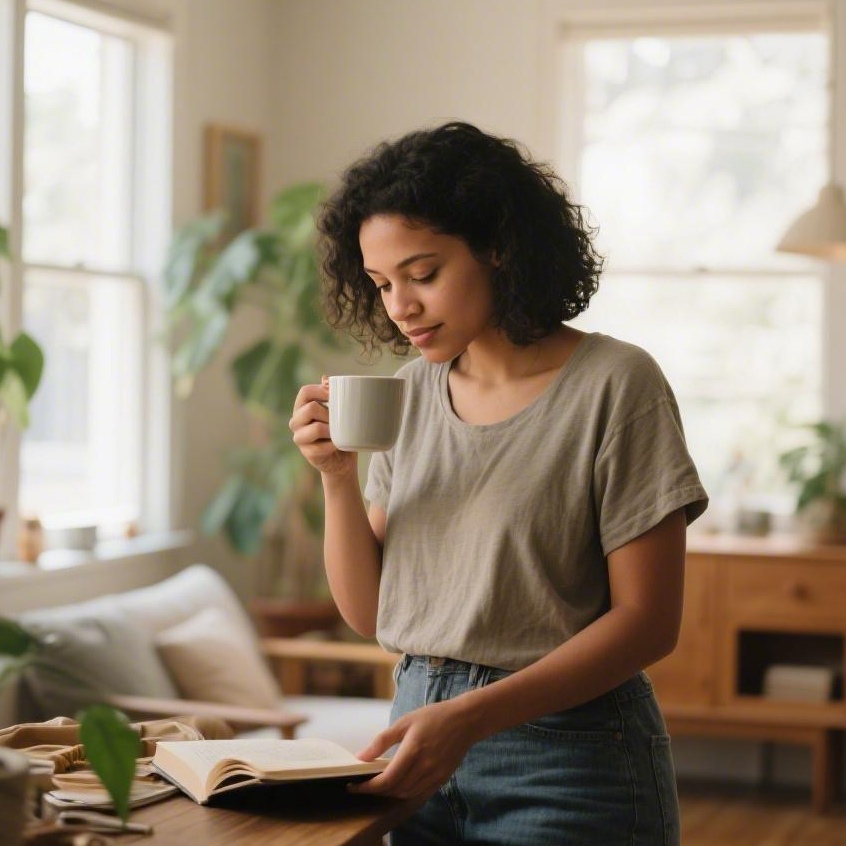
The rapid evolution of image generating AI has transitioned from a niche academic pursuit to a foundational pillar of modern digital creativity. In less than three years, the industry has shifted from generating grainy, surrealist blobs to producing photorealistic assets and complex illustrations that challenge the boundaries of human-led design. At its core, image generating AI represents the convergence of massive data processing, advanced neural networks, and a fundamental shift in how humans communicate with machines.
Understanding this technology requires looking beyond the surface-level magic of entering a text prompt and seeing an image appear. It involves dissecting the intricate mathematical processes that allow a machine to "understand" visual concepts and the strategic applications that make these tools indispensable for marketing, architecture, entertainment, and software development.
The Mechanics of Modern Image Generating AI
To comprehend how a system like Stable Diffusion or Midjourney functions, one must look at the transition from Generative Adversarial Networks (GANs) to the now-dominant Diffusion Models. While GANs relied on two competing networks—a generator and a discriminator—to create images, Diffusion Models have proven far more stable and capable of handling complex, high-resolution outputs.
Neural Networks and the Role of Massive Datasets
Image generating AI models are built on artificial neural networks trained on billions of image-text pairs. These datasets, such as LAION-5B, serve as the library from which the AI learns the statistical relationships between pixels and linguistic descriptions. For instance, the model doesn't "know" what a "cat" is in a biological sense; instead, it recognizes that when the word "cat" appears in a prompt, the resulting pixel arrangement should typically include pointed ears, whiskers, and fur textures based on billions of examples it has processed during training.
The training process involves a technique called Contrastive Language-Image Pre-training (CLIP). Developed by OpenAI, CLIP is the "bridge" that allows the AI to understand the semantic meaning of a prompt. It maps images and their descriptions into a shared multidimensional space. When a user types a prompt, the model finds the corresponding location in this latent space and begins the visual generation process.
The Diffusion Process Explained
Most contemporary AI image generators utilize a process known as "diffusion." This can be visualized as the reverse of adding static to a television screen.
- Forward Diffusion: During the training phase, the model takes a clear image and gradually adds Gaussian noise until it becomes a field of unrecognizable static.
- Reverse Diffusion: The actual generation happens here. The AI starts with a canvas of pure random noise. Guided by the text prompt, it iteratively "denoises" the canvas. In each step, the model predicts what the noise should look like if it were a slightly clearer version of the requested subject.
- Iteration: Through dozens of steps, the model refines the image, moving from vague shapes to sharp details, lighting, and textures.
In our practical testing with models like Flux.1 and SDXL, we have observed that the "noise schedule" and the number of sampling steps significantly impact the final output. Too few steps results in a blurry or "muddy" image, while too many can lead to over-sharpening or "artifacting," where the AI tries to find detail where none should exist.
Latent Space and Computational Efficiency
Generating high-resolution images pixel by pixel is computationally expensive. To solve this, "Latent Diffusion" was introduced. Instead of working in the high-dimensional "pixel space," the model operates in a compressed "latent space." This mathematical representation captures the essential features of an image while discarding redundant data. Once the generation is complete in the latent space, a component called a "VAE Decoder" (Variational Autoencoder) translates that mathematical representation back into the pixels we see on our screens.
Advanced Capabilities Beyond Simple Text to Image
Modern image generating AI is no longer a "one-shot" tool. Professional workflows now demand granular control, allowing designers to edit, expand, and refine outputs with surgical precision.
Inpainting and Outpainting for Precision Editing
Inpainting is perhaps the most transformative feature for professional retouchers. It allows a user to mask a specific area of an image—such as a person's clothing or an unwanted object in the background—and prompt the AI to replace only that section while maintaining the lighting, shadows, and style of the surrounding environment.
Outpainting (or generative expansion) works in the opposite direction. If an image is shot in a vertical format but a horizontal banner is needed for a website, outpainting allows the AI to "imagine" what exists beyond the original frame. In a professional context, this is invaluable for adapting assets across different social media platforms and aspect ratios without losing the integrity of the original composition.
High-Resolution Upscaling and Detail Enhancement
Native outputs from many AI models are often limited to 1024x1024 pixels. For print media or high-density displays, this is insufficient. Advanced AI generators now include integrated upscalers that don't just stretch pixels but actually "re-imagine" the detail at a higher density.
Using a technique called "Creative Upscaling," the model adds skin pores, fabric weaves, or leaf veins that weren't present in the low-resolution original. Our internal benchmarks show that modern Tile-based upscaling methods can take a standard AI generation and boost it to 4K or 8K resolution with remarkable fidelity, making it viable for billboard-scale advertisements.
Style Consistency and Reference Images
One of the biggest hurdles in early AI adoption was the lack of consistency. If a designer needed ten images of the same character in different poses, the AI would often change the character's facial features or hair color in every shot.
Newer frameworks have solved this through:
- IP-Adapter: This allows the model to use an uploaded image as a structural or stylistic reference.
- LoRA (Low-Rank Adaptation): These are small, specialized files that can be "plugged into" a base model to force it to generate a specific art style, a specific person's likeness (with consent), or a specific product.
- ControlNet: This gives users absolute control over the composition. By providing a "depth map" or a "Canny edge" outline, a designer can force the AI to follow a specific layout, ensuring that the generated elements land exactly where they are needed in a UI mock-up.
Leading Platforms in the Current AI Landscape
Choosing the right tool depends on whether a user prioritizes artistic flair, ease of use, or raw technical control.
Midjourney for Artistic Expression
Midjourney remains the gold standard for aesthetic quality. Unlike other models that strive for literal accuracy, Midjourney’s proprietary algorithms are tuned for "opinionated" beauty. It excels at complex lighting, atmospheric depth, and painterly styles. For concept artists and mood-board creators, its ability to interpret vague, poetic prompts into stunning visuals is unmatched. However, its "black box" nature means users have less control over the underlying architecture compared to open-source alternatives.
DALL-E 3 and ChatGPT Integration
DALL-E 3, integrated into the ChatGPT ecosystem, is the leader in "prompt adherence." Because it uses a powerful Large Language Model (LLM) as a front-end, it can understand complex, multi-layered instructions that would confuse other models. If you ask for "a green apple on a red plate next to a blue spoon, with text on a napkin that says 'Lunch Time'," DALL-E 3 is the most likely to get every element correct. It is the ideal tool for rapid ideation and users who prefer conversational interaction.
Stable Diffusion for Local Control and Customization
For power users and enterprises, Stable Diffusion (developed by Stability AI) is the primary choice. Because it is open-source, it can be run locally on a user's hardware, ensuring total privacy and no subscription fees. More importantly, the ecosystem of community-developed extensions—like ComfyUI and Automatic1111—allows for highly complex workflows. In our experience, Stable Diffusion is the only tool that allows for "fine-tuning" a model on a company's specific brand guidelines or product catalog.
Adobe Firefly for Commercial Workflows
Adobe Firefly takes a different approach by focusing on "commercial safety." While other models are trained on broad internet scrapes that often include copyrighted material, Firefly is trained primarily on Adobe Stock images and public domain content. This gives enterprise legal teams peace of mind. Furthermore, its deep integration into Photoshop (Generative Fill) and Illustrator makes it a seamless part of existing professional design pipelines.
Mastering the Art of Prompt Engineering
The quality of an AI-generated image is directly proportional to the quality of the "Prompt." Effective prompt engineering is the act of providing the model with enough context to narrow down the billions of possibilities in its latent space.
Defining Subject and Context
A weak prompt like "a building" gives the AI too much freedom. A professional prompt starts with a clear subject and its immediate environment.
- Example: "A Brutalist concrete library in a dense pine forest during a misty morning."
This defines the architectural style, the material, the location, and the atmospheric conditions.
Incorporating Artistic Style and Lighting
To elevate an image, one must specify the medium and the lighting. AI models respond exceptionally well to photography terminology and art history references.
- Lighting Keywords: Cinematic lighting, volumetric fog, rim lighting, golden hour, soft box studio light.
- Style Keywords: Double exposure, isometric 3D render, Ukiyo-e print, oil painting on canvas, macro photography.
When we design prompts for product visualization, adding technical camera specs like "shot on 85mm f/1.8 lens" often signals the AI to create a shallow depth of field, making the subject pop against a blurred background.
Iterative Refinement and Negative Prompts
Rarely is the first generation perfect. The process is iterative. Users should adjust their prompts based on the output. If the AI adds unwanted elements (like "extra fingers" or "blurry textures"), many tools allow for "Negative Prompts." This is a list of things the AI should explicitly avoid. Common negative prompts include: "deformed, watermark, low resolution, ugly, blurry, extra limbs."
Ethical Implications and Legal Realities
As image generating AI becomes ubiquitous, it brings significant challenges regarding intellectual property and social responsibility.
Copyright Ownership and Intellectual Property
The legal status of AI-generated art is currently in flux. In many jurisdictions, including the United States, the Copyright Office has ruled that images created solely by AI without "significant human authorship" cannot be copyrighted. This creates a dilemma for businesses: if you generate your brand's logo using an AI, you may not be able to legally protect it from being used by others.
Furthermore, there are ongoing debates regarding "training data." Many artists object to their work being used to train models without compensation or an opt-out mechanism. Ethical users should prioritize models that offer artist compensation programs or use ethically sourced datasets.
Combatting Bias and Misinformation
Because AI models learn from the internet, they inevitably pick up societal biases. Early versions of these tools often defaulted to Western-centric beauty standards or gender stereotypes for certain professions. Responsible developers are now implementing "system prompts" and diversity filters to ensure a more representative output.
On the misinformation front, the rise of "deepfakes" and hyper-realistic fake news photos is a major concern. The industry is responding with "digital watermarking" technologies, such as Google’s SynthID or the C2PA standard, which embed metadata into the image file to prove it was generated by an AI.
The Role of Transparency
In professional journalism and commercial advertising, transparency is becoming a legal and ethical requirement. Disclosing that an image is AI-generated helps maintain trust with the audience. Many platforms now automatically include "AI-generated" tags on content produced with their tools.
Choosing the Right Tool for Specific Needs
To help you decide which image generating AI to integrate into your workflow, consider the following scenarios:
- For Social Media Managers: Canva Magic Media or DALL-E 3 are best. They are fast, integrated into design platforms, and require very little technical knowledge.
- For Concept Artists & Illustrators: Midjourney is the clear winner for its sheer aesthetic power and ability to generate "creative accidents" that spark inspiration.
- For Photographers & Retouchers: Adobe Firefly (via Photoshop) is essential for its ability to seamlessly blend AI elements into existing high-resolution photos.
- For Developers & Tech Enthusiasts: Stable Diffusion (specifically the SDXL or Flux.1 models) offers the customizability needed to build specialized applications or run local, private generations.
- For UI/UX Designers: Midjourney combined with Uizard or Figma plugins can help rapidly generate icons, avatars, and layout inspirations.
Summary
Image generating AI is no longer just a novelty; it is a sophisticated engine for visual synthesis. By mastering the underlying principles of diffusion, the nuances of prompt engineering, and the specific strengths of various platforms, creators can significantly augment their productivity. While the technology poses real challenges in terms of copyright and ethics, its potential to democratize high-end design and accelerate the creative process is undeniable. The key to success in this new era is not to replace human creativity, but to use AI as a high-powered "co-pilot" that handles the heavy lifting of pixel manipulation, leaving the high-level conceptualizing to the human designer.
FAQ
What is the best free image generating AI?
Currently, Microsoft Designer (which uses DALL-E 3) and Google Gemini offer high-quality image generation for free. For those with a powerful PC, Stable Diffusion is "free" to run locally once downloaded.
Can I use AI-generated images for commercial purposes?
It depends on the platform's Terms of Service. Midjourney (paid plans), Adobe Firefly, and DALL-E 3 (via ChatGPT Plus) generally allow commercial use, but you should always check the specific license, especially regarding copyright ownership.
Why does AI struggle with text and human hands?
AI models don't understand the physical structure of a hand or the linguistic meaning of letters; they see them as patterns of pixels. Because hands are highly articulated and text requires precise character placement, any small statistical error during the denoising process results in "mangled" fingers or "gibberish" text. However, newer models like Flux.1 and DALL-E 3 have largely solved these issues.
How do I get more realistic images from AI?
To achieve photorealism, use prompts that specify lighting (e.g., "HDR," "soft sunlight"), camera settings (e.g., "35mm lens," "f/2.8"), and texture details (e.g., "detailed skin pores," "intricate fabric weave"). Avoid using the word "photorealistic" directly, as it can sometimes lead to an artificial, over-processed look.
Is AI art stealing from human artists?
This is a complex debate. AI doesn't "copy-paste" parts of images; it learns the "style" and "logic" of art. However, since it learns from human work without explicit permission in many cases, many argue it is an ethical violation of intellectual property.
-
Topic: AI-Powered Image Generation System using AIhttps://www.ijarsct.co.in/Paper29529.pdf
-
Topic: Generate images using Imagen | Gemini API | Google AI for Developershttps://ai.google.dev/gemini-api/docs/imagen#:~:text=aspectRatio%20%3A%20Changes%20the%20aspect%20ratio,is%20%221%3A1%22%20.
-
Topic: Imagen on Vertex AI | AI Image Generator | Generative AI on Vertex AI | Google Cloud Documentationhttps://docs.cloud.google.com/vertex-ai/generative-ai/docs/image/overview?authuser=2