Home
Home
How AI Photo Enhancement Transforms Low Quality Images Into Professional Visuals
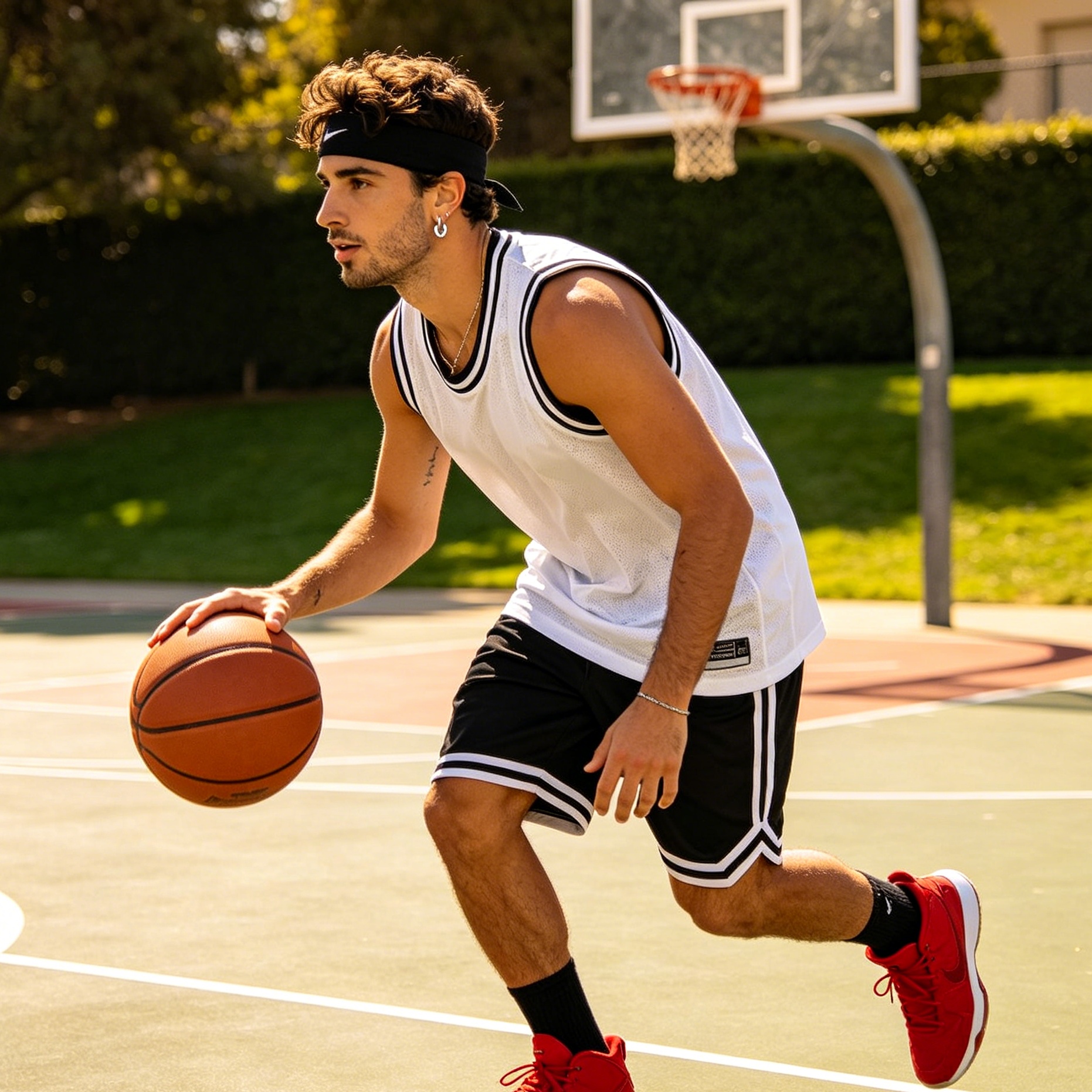
AI photo enhancement is the process of using machine learning models and artificial intelligence to automatically improve the visual quality of digital images. Unlike traditional editing software that relies on manual adjustments of brightness or contrast, AI tools analyze millions of existing images to understand patterns, allowing them to intelligently reconstruct missing pixels, remove noise, and restore lost details. At its core, AI photo enhancement bridges the gap between a flawed original shot and a high-quality professional result, often accomplishing in seconds what used to take hours of expert manual retouching.
The Core Capabilities of AI Photo Enhancement
Modern AI enhancement tools have evolved far beyond simple filters. They leverage complex neural networks to address specific photographic flaws that were previously considered permanent. To understand the value of this technology, it is essential to examine the specific tasks it performs.
Intelligent Super-Resolution and Upscaling
The most common application of AI in photography is upscaling. Traditional upscaling methods, such as bicubic interpolation, work by "stretching" existing pixels and filling the gaps with an average of surrounding colors. This inevitably results in a blurry, soft image.
AI-driven super-resolution works differently. Instead of guessing based on local pixels, the AI recognizes the subject—such as a human eye, a brick wall, or a tree leaf. It then uses its training data to "draw" new pixels that match the expected texture of that object. This allows a 1080p image to be scaled to 4K or even 8K resolution while maintaining, or even increasing, perceived sharpness. In professional printing workflows, this capability is revolutionary, enabling small smartphone photos to be enlarged for billboard-sized displays without losing clarity.
Advanced Denoising Without Detail Loss
Digital noise, characterized by grainy or "salty" textures, is a persistent problem in low-light photography. Traditional denoising algorithms often smooth out the noise by blurring the entire image, which destroys fine textures like skin pores or fabric patterns.
AI denoising models are trained to distinguish between unwanted electronic noise and actual image detail. By identifying the underlying structure of the subject, the AI can strip away the grain while preserving—or even reconstructing—the sharp edges beneath it. This is particularly valuable for photographers using older sensors or shooting at high ISO settings, as it effectively extends the usable range of their hardware.
AI Sharpening and Motion Blur Correction
Blur is often the death sentence for a photograph, whether caused by camera shake or a fast-moving subject. Standard sharpening tools work by increasing the contrast of edges, which often creates "halos" and artifacts.
AI sharpening analyzes the direction and nature of the blur. If the software identifies "motion blur," it can calculate the trajectory of the movement and attempt to re-align the pixels to their original intended positions. While not perfect, it can transform a "soft" image into a crisp one, making it a critical tool for sports and wildlife photographers who often deal with high-speed subjects.
Generative Photo Restoration
For historical archives and family heirlooms, AI photo enhancement offers a way to reverse the damage of time. AI restoration models can identify physical defects such as scratches, dust, and water stains on scanned photos. Because the AI understands what a human face or a landscape should look like, it can "inpaint" the missing areas, effectively healing the image. Furthermore, AI colorization models can analyze the grayscale values of old photos and apply historically accurate colors based on recognized objects, such as the specific green of a vintage military uniform or the skin tones of a portrait.
How the Technology Works Behind the Scenes
The "magic" of AI enhancement is actually the result of rigorous mathematical modeling and vast amounts of data. The technology is primarily built on two pillars of artificial intelligence: Deep Learning and Computer Vision.
The Role of Convolutional Neural Networks (CNNs)
The primary engine for image processing is the Convolutional Neural Network (CNN). A CNN works by breaking an image down into smaller layers and analyzing them for specific features. The initial layers might look for simple edges or color gradients, while deeper layers recognize complex shapes like eyes, noses, or architectural elements.
When an AI model is tasked with enhancing an image, it passes the data through these layers. At each step, the model compares the input to the "ideal" structures it learned during its training phase. If the model recognizes a blurry patch as "grass," it applies the mathematical patterns associated with sharp grass to that specific area.
Generative Adversarial Networks (GANs)
Some of the most impressive results in AI enhancement come from Generative Adversarial Networks (GANs). A GAN consists of two competing neural networks: the Generator and the Discriminator.
- The Generator tries to create an enhanced version of a low-quality image.
- The Discriminator evaluates the generated image against a dataset of real, high-quality photos.
The Generator "wins" only when it produces an image that the Discriminator can no longer distinguish from a real photograph. This constant feedback loop forces the AI to produce results that are not just technically sharper, but also visually realistic. This is how modern tools can generate convincing textures in skin, hair, and clothing that were never present in the original low-resolution file.
Real-World Experience and Observations in AI Enhancement
In the professional digital restoration space, the shift to AI tools has fundamentally changed the workflow. However, observing these tools in action reveals a nuanced reality that automated marketing often glosses over.
The Problem of "Plastic" Skin Textures
One of the most common issues observed during high-intensity AI enhancement is the "over-processing" effect. When an AI model is set to its maximum strength for denoising or facial enhancement, it often removes too much natural variation. The result is skin that looks like wax or plastic, lacking the natural micro-textures that make a human face look real. Experienced editors often find that running an AI enhancement at 50% or 60% strength, and then manually re-introducing a small amount of fine digital grain, produces a much more believable result than a 100% automated pass.
Hardware Requirements and Local Processing
While many AI enhancement services are cloud-based, professional-grade tools often run locally to ensure privacy and speed. In our testing, the hardware bottleneck is almost always the Video Random Access Memory (VRAM) of the GPU.
Running a sophisticated upscaling model like a modified ESRGAN (Enhanced Super-Resolution Generative Adversarial Network) requires significant computational power. For a standard 20-megapixel image, a system with less than 8GB of VRAM may experience significant lag or even software crashes. Users looking to integrate AI enhancement into a professional workflow must prioritize high-end NVIDIA or AMD GPUs, as many of these models are optimized specifically for CUDA or specialized AI cores.
The Phenomenon of AI Hallucinations
A critical observation for any user is that AI can, and will, "hallucinate" details. Because the AI is reconstructing images based on probability, it sometimes guesses incorrectly. In a recent test of a blurry historical photo, the AI misinterpreted a decorative button on a coat as a human eye, creating a surreal and unsettling artifact. Similarly, when enhancing text in the background of a photo, AI might turn a blurry "8" into a sharp "B." These errors highlight the necessity of the "Human-in-the-loop" philosophy: AI should be treated as an assistant that provides a base layer for human review, not as an infallible source of truth.
Practical Limitations and Important Considerations
As powerful as AI photo enhancement is, it is not a "magic button" that can solve every problem. Understanding its limits is as important as understanding its capabilities.
AI Cannot Invent Non-Existent Information
There is a fundamental limit to how much an AI can "recover." If a photo is so blurry that no structure remains, or if a significant portion of the subject is missing, the AI is no longer enhancing—it is inventing. For forensic or journalistic purposes, this is a major concern. An AI-enhanced photo of a crime scene might look sharp, but the details (like the specific letters on a license plate) could be entirely fabricated by the AI's imagination.
The Ethical and Privacy Landscape
Privacy is a growing concern in the AI space. Many popular online AI enhancers require users to upload their photos to a remote server. This raises questions about who owns the data and whether those photos are being used to further train the AI models without the user's explicit consent. For sensitive corporate documents or private family photos, local-first software is generally the preferred choice to ensure that data never leaves the user's machine.
The Uncanny Valley in AI Portraits
The "Uncanny Valley" refers to the feeling of unease when a digital representation looks almost, but not quite, human. AI enhancement frequently falls into this trap. By perfectly symmetrizing a face or whitening teeth to an unnatural degree, the AI can strip away the unique imperfections that define a person's identity. This is why professional portrait photographers often use AI for the background and clothing while maintaining a lighter touch on the facial features.
Comparing Enhancement Methods: Online vs. Desktop vs. Mobile
Depending on the user's needs, the "best" way to use AI enhancement varies significantly.
| Platform | Best For | Pros | Cons |
|---|---|---|---|
| Online Tools | Casual users, social media | No hardware requirements, easy interface | Privacy risks, subscription costs, limited control |
| Desktop Software | Professionals, batch processing | High-speed local processing, advanced settings | High upfront cost, requires powerful GPU |
| Mobile Apps | On-the-go editing, quick fixes | Immediate results, direct social sharing | Limited processing power, often over-sharpened |
Integrating AI Enhancement into a Professional Workflow
For those looking to achieve the best possible results, AI enhancement should be one step in a multi-stage process.
- Pre-Processing: Before running AI, manually adjust the exposure and white balance. AI models perform best when they are fed a clean, well-exposed baseline.
- AI Pass: Run the enhancement. If the software allows, choose specific models for specific tasks (e.g., a "text" model for signs and a "portrait" model for people).
- Post-Processing: Bring the image into a traditional editor. Check for hallucinations, mask out areas where the AI was too aggressive, and apply a final color grade to unify the look of the new and original pixels.
Summary
AI photo enhancement has fundamentally changed the landscape of digital imaging. By moving beyond simple pixel manipulation and into the realm of intelligent reconstruction, these tools allow us to save photos that were once destined for the trash bin. However, the technology is at its most effective when guided by human intuition and a critical eye. Whether you are upscaling a low-resolution thumbnail for a presentation or restoring a century-old family portrait, understanding the balance between AI's generative power and its inherent limitations is the key to producing truly professional results.
FAQ
What is the difference between upscaling and AI enhancement?
Upscaling specifically refers to increasing the resolution (number of pixels) of an image. AI enhancement is a broader term that includes upscaling but also encompasses noise reduction, color correction, sharpening, and the restoration of damaged areas.
Can AI enhancement fix a completely out-of-focus photo?
AI can significantly improve photos with mild blur or "soft" focus. However, if a photo is entirely out of focus (meaning there is no underlying structure for the AI to recognize), the results will likely look artificial or "smeared."
Is AI photo enhancement free to use?
There are many free online tools and mobile apps that offer basic AI enhancement. However, professional-grade software with advanced features like batch processing and high-resolution output usually requires a one-time purchase or a monthly subscription.
Does AI enhancement change the original photo?
In most workflows, AI enhancement creates a new, high-resolution copy of the image, leaving your original file untouched. It is always recommended to keep the original "raw" or unedited file as a backup.
Will AI enhancement make my photos look fake?
It can, especially if the settings are turned up too high. The "plastic" look or "uncanny valley" effect occurs when the AI removes too much natural texture. Using moderate settings and manual fine-tuning is the best way to maintain a natural appearance.
-
Topic: AI PHOTO ENHANCERhttps://gisscience.net/wp-content/uploads/31-GSJ13833.pdf
-
Topic: How can AI Enhance Image Online for Free?https://www.capcut.com/resource/ai-enhance-image
-
Topic: A Comprehensive Guide to Enhance Your Photos With Best Free AI Photo Enhancerhttps://www.cyberlink.com/blog/app-photo-editing/2246/guide-to-enhance-photos-on-phone