Home
Home
How AI Generative Art Is Changing the Way We Create and Perceive Visual Content
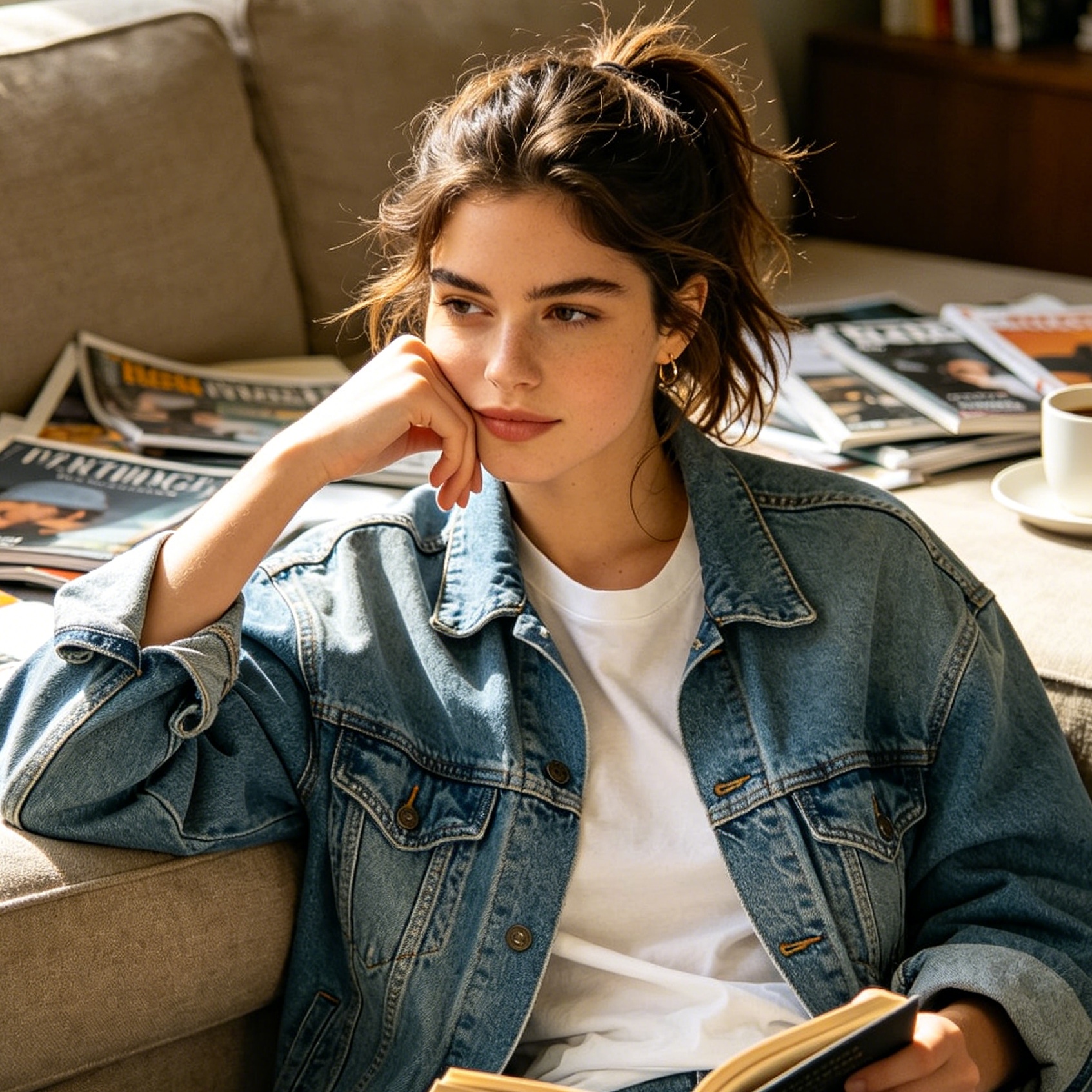
AI generative art represents a seismic shift in the history of human expression. It is a form of digital art created using artificial intelligence models—primarily deep neural networks—that have been trained on billions of image-text pairs. Unlike traditional digital art, which relies on manual manipulation of pixels through software like Photoshop or Illustrator, AI generative art functions through the synthesis of learned patterns. The machine does not "copy" and "paste" existing images; instead, it constructs novel visual outputs based on complex statistical relationships between linguistic concepts and visual elements.
The democratization of these tools since 2022 has sparked a global conversation about the nature of creativity, the definition of authorship, and the future of the professional creative class. To understand where this technology is headed, one must first look under the hood at the sophisticated mechanisms that allow a computer to "imagine" an image from a simple line of text.
The Technical Engine of Machine Creativity
The "magic" of AI generative art is rooted in machine learning and the architecture of neural networks. These mathematical systems are designed to mimic the interconnected layers of the human brain, processing information in stages to identify increasingly complex features.
Neural Networks and the Concept of Training Data
At the foundation of any AI art generator is its training dataset. Large-scale models are fed massive datasets containing billions of images paired with descriptive metadata. During the training phase, the model learns to associate specific pixel arrangements with words. For example, it learns that the word "ocean" often correlates with shades of blue, horizontal textures, and certain types of light reflection.
This process creates what researchers call a "latent space"—a high-dimensional mathematical space where every point represents a possible image. When a user inputs a prompt, the AI navigates this space to find a coordinate that corresponds to the description. The complexity of this space is staggering; it captures not just objects, but styles, moods, lighting conditions, and even the subtle brushwork of specific historical eras.
The Diffusion Revolution: From Noise to Masterpiece
Most modern industry leaders, including Midjourney and Stable Diffusion, utilize a process called "Diffusion." This represents a significant leap over previous technologies.
The diffusion process works in two stages:
- Forward Diffusion: The model takes a clear image and gradually adds Gaussian noise until it is nothing but a field of random static.
- Reverse Diffusion (Denoising): This is where the generation happens. The AI is trained to reverse the noise addition. Starting with a field of random "static," it predicts how to remove the noise step-by-step to reveal an underlying structure that matches the user's text prompt.
In our practical testing of these models, the denoising process is iterative. Each step refines the image, moving from vague blobs of color to sharp, high-definition details. This is why many AI tools show a blurry image that gradually comes into focus during the generation process.
Generative Adversarial Networks (GANs)
Before the dominance of diffusion, Generative Adversarial Networks (GANs) were the gold standard. A GAN consists of two neural networks competing against each other: the "Generator" and the "Discriminator." The generator tries to create an image that looks real, while the discriminator tries to prove it is a fake. Through millions of rounds of this "game," the generator becomes exceptionally good at producing realistic textures. While GANs are less flexible for general text-to-image tasks compared to diffusion models, they remain powerful for specific applications like deepfakes and style transfers.
A Chronology of Algorithmic Expression
While the public boom occurred recently, AI art has deep historical roots. The journey from rudimentary code to photorealistic synthesis has spanned over half a century.
Early Algorithmic Art and AARON
The conceptual origins of AI art date back to the 1960s. One of the most significant early systems was AARON, developed by artist Harold Cohen. AARON was a symbolic, rule-based program designed to mimic the act of drawing. Unlike modern AI, which learns from data, AARON followed a set of instructions encoded by Cohen to create geometric and later figurative works. This era focused on "algorithmic art," where the artist was as much a coder as a painter.
The Modern Explosion: 2020 and Beyond
The true "AI Spring" for visual arts arrived with the transition from rule-based systems to deep learning. In 2021, OpenAI’s DALL-E demonstrated that machines could understand the relationship between disparate concepts (like "an armchair in the shape of an avocado"). By 2022, the release of Midjourney and the open-sourcing of Stable Diffusion moved these capabilities from research labs to the computers of millions of users. This marked the shift from "computational art" (used by specialists) to "generative AI" (used by everyone).
Leading Platforms in the Modern AI Art Ecosystem
Navigating the landscape of AI tools requires understanding their unique "architectural personalities." Based on extensive testing and professional workflow integration, here is how the major players compare:
Midjourney: The Artistic Powerhouse
Midjourney is currently the benchmark for aesthetic quality. It operates primarily through Discord and is known for its "painterly" default style.
- Best For: Concept art, high-end illustration, and cinematic lighting.
- User Experience: It requires less "prompt engineering" to get a beautiful result, as the model has a strong internal bias toward artistic composition. However, it offers less granular control over specific pixel-level modifications than open-source alternatives.
DALL-E 3: Precision and Accessibility
Integrated into ChatGPT, DALL-E 3 excels at following complex instructions.
- Best For: Detailed scenes with multiple characters and legible text.
- User Experience: While it may lack the raw "artistic flair" of Midjourney, its ability to render specific text within an image and its adherence to intricate prompts make it an invaluable tool for designers who need literal interpretations of their ideas.
Stable Diffusion: The Open-Source Architect
Stable Diffusion changed the game by being open-source. It can be run locally on a personal computer, provided the hardware meets certain requirements (typically a GPU with at least 8GB to 24GB of VRAM).
- Best For: Professional workflows, architectural visualization, and custom model training.
- User Experience: It offers the highest level of control through features like "ControlNet" (which allows users to guide the AI using sketches or depth maps) and "Inpainting" (editing specific parts of an image). The learning curve is steep, but the creative freedom is unparalleled.
Adobe Firefly: Commercially Safe Integration
Adobe’s entry into the space is built for the corporate and professional design world. Unlike its competitors, Firefly was trained exclusively on Adobe Stock images and public domain content.
- Best For: Commercial projects, marketing assets, and integration with the Creative Cloud.
- User Experience: It is designed to be "commercially safe," meaning users don't have to worry about the legal grey areas of training data. It is seamlessly integrated into Photoshop’s "Generative Fill," allowing for a hybrid workflow of manual and AI editing.
Mastering the Prompt: The New Interface for Creativity
The primary way humans interact with AI generative art is through the "prompt." This has given rise to the term "Prompt Engineering," though the process is often more about iterative communication than traditional engineering.
Elements of a High-Quality Prompt
A professional-grade prompt typically includes four key components:
- Subject: The core focus (e.g., "A cyberpunk cybernetic owl").
- Medium/Style: The artistic approach (e.g., "Oil painting," "Macro photography," "Unreal Engine 5 render").
- Lighting and Environment: (e.g., "Golden hour," "Bioluminescent forest," "Soft studio lighting").
- Compositional Details: (e.g., "Wide angle," "Deep depth of field," "Symmetrical").
In practice, we have found that "Negative Prompts" are equally important in tools like Stable Diffusion. By telling the AI what not to include—such as "extra fingers," "blurry," or "low resolution"—the quality of the output increases dramatically.
The Iterative Workflow
Rarely does the first prompt produce the final result. The modern AI art workflow involves:
- Variation: Generating multiple versions of a single prompt to find the right composition.
- Upscaling: Taking a low-resolution generation and using AI to add detail and pixels.
- Hybrid Editing: Bringing the AI-generated image into Photoshop for manual corrections, color grading, and compositing. This "Centaur" approach—half human, half machine—is becoming the standard in professional studios.
Ethical Crossroads and Legal Battles
The rapid ascent of AI generative art has not been without friction. The industry is currently grappling with several fundamental challenges that will determine its long-term viability.
Copyright and Ownership Debates
The most contentious issue is the use of copyrighted images in training datasets. Many artists argue that training an AI on their work without consent or compensation is a form of digital plagiarism.
- Current Legal Status: In the United States, the Copyright Office has generally ruled that images generated entirely by AI cannot be copyrighted because they lack "human authorship." However, works that involve significant human creative input (like a comic book where AI is used for individual panels but the layout and story are human) may be eligible for partial protection.
- Artist Protection: Tools like Glaze and Nightshade have emerged, allowing artists to add "digital cloaks" to their work that confuse AI training models, effectively "poisoning" the data to protect their unique styles.
Bias and Representation
Because AI models learn from the internet, they often inherit the biases present in digital media. This can result in the reinforcement of stereotypes or the underrepresentation of certain cultures and demographics. Ethical AI development now focuses on "Reinforcement Learning from Human Feedback" (RLHF) to mitigate these biases and ensure more diverse and accurate outputs.
Impact on the Creative Workforce
There is a legitimate concern regarding the displacement of entry-level roles in illustration, concept art, and stock photography. While AI can produce a usable image in seconds for a fraction of the cost of a human artist, it lacks the ability to understand "intent" and "brand nuance" at a deep level. The consensus among many industry leaders is that AI will not replace artists, but artists who use AI will replace those who do not.
Future Outlook: Synergy Between Humans and Machines
The future of AI generative art lies in "Transformational Creativity"—the ability to break fundamental conventions and create things that were previously impossible. We are moving toward a world where the barrier to entry for visual expression is lower than ever.
Emerging trends include:
- Text-to-Video: Expanding from static images to cinematic sequences.
- 3D Generative AI: Creating assets for gaming and the metaverse directly from text.
- Personalized AI: Models trained on an individual's own artistic style to act as a "creative assistant."
Ultimately, AI is a tool. Just as the camera did not end painting, and the synthesizer did not end music, AI generative art will find its place as a powerful new medium in the human toolkit. It challenges us to move away from the "how" of creation and focus more on the "why"—the vision, the story, and the emotional resonance behind the image.
Summary
AI generative art is the synthesis of vast datasets and complex neural networks to create novel visual content. Driven by diffusion models and GANs, it has evolved from 1960s algorithmic experiments to the accessible, photorealistic tools we see today. While Midjourney, DALL-E, and Stable Diffusion lead the market, the industry faces significant ethical hurdles regarding copyright and bias. As the technology matures, it is transforming from a novelty into a standard component of the professional creative workflow, emphasizing a future of human-AI collaboration.
Frequently Asked Questions about AI Generative Art
What is the difference between AI art and generative art?
Generative art is a broad category where the artist uses a system, such as a set of natural language rules, a computer program, or a machine, to set in motion a process that results in an artwork. AI art is a specific sub-category of generative art that uses artificial intelligence and machine learning models (like neural networks) to generate the output, rather than just pre-programmed mathematical rules.
Can I sell AI-generated art?
In most jurisdictions, you can sell AI-generated art, but the legal landscape regarding copyright is complex. Since the US Copyright Office has ruled that AI-generated works without significant human intervention cannot be copyrighted, you may not be able to prevent others from using or selling the same image. Always check the Terms of Service of the specific tool (e.g., Midjourney, DALL-E) you used.
Does AI art steal from real artists?
This is a subject of intense debate. AI models do not "store" images or copy-paste pieces of existing art. They learn statistical patterns of styles and objects. However, because they were trained on billions of images from the internet—often without the artists' explicit consent—many in the creative community view this as an ethical violation of intellectual property.
What hardware do I need to generate AI art?
Web-based tools like Midjourney or DALL-E 3 run on the provider's servers, so you only need a basic internet connection. If you want to run Stable Diffusion locally on your own computer, you typically need a PC with a dedicated NVIDIA GPU (Graphics Card) with at least 8GB of VRAM for decent performance.
How can I make my AI art look more realistic?
To achieve realism, focus on "lighting" and "lens" keywords in your prompts. Use phrases like "volumetric lighting," "depth of field," "8k resolution," and specify a camera model like "shot on 35mm lens." Additionally, using "Negative Prompts" to exclude "cartoon," "illustration," and "deformed" can significantly enhance photorealism.
-
Topic: AI art - Wikipediahttps://en.wikipedia.org/wiki/A.I._art
-
Topic: RETHINKING CREATIVITY: AI IN ARTISTIC EXPRESSIONhttps://pnbri.com.my/sites/default/files/2025-07/PNBRI%20Views%2008%20-%20CREATIVE%20AI%20%28FULL%20ARTICLE%29.pdf
-
Topic: Understanding AI art.https://www.adobe.com/cc-shared/fragments/products/firefly/discover/what-is-ai-art/content