Home
Home
How AI Generated Art Is Redefining Modern Creative Expression
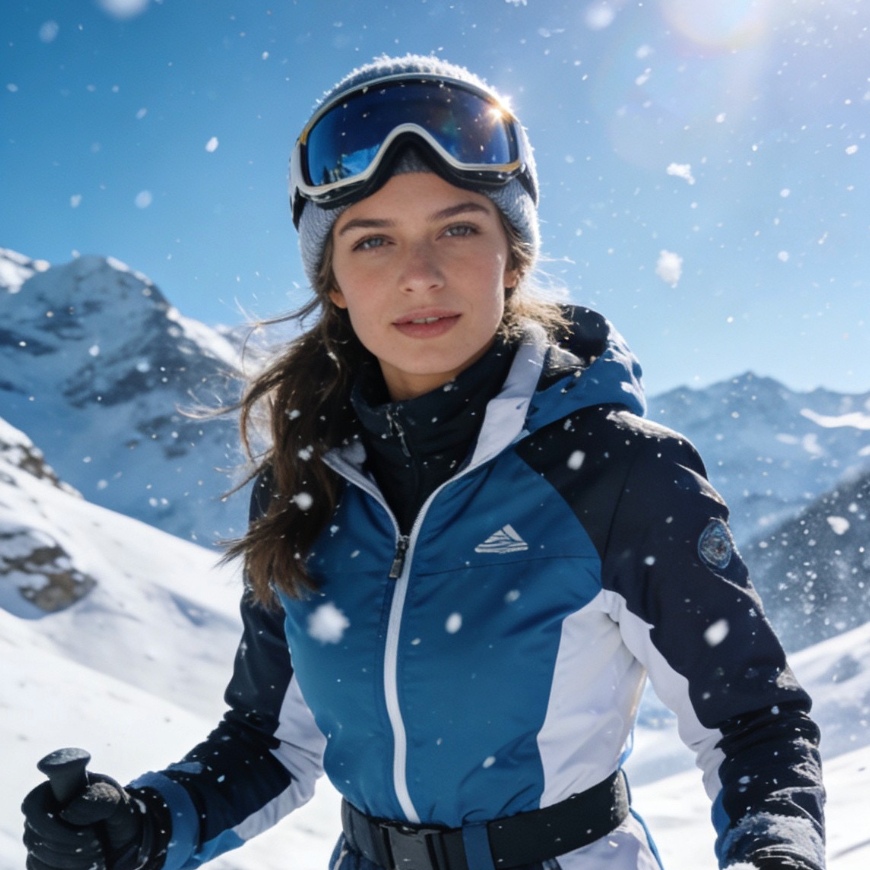
AI generated art represents the convergence of advanced machine learning and human intentionality, fundamentally altering how visual content is conceived and produced. At its simplest, it is digital imagery created through the implementation of artificial intelligence models, primarily text-to-image generators, which translate natural language descriptions into complex visual outputs. This technology does not merely "search and collage" existing images; it synthesizes entirely new pixels based on learned patterns from billions of data points.
The rapid democratization of these tools since 2022 has moved AI art from academic laboratories to the center of global cultural discourse. Today, professional designers, concept artists, and casual hobbyists utilize these systems to bypass traditional technical barriers, shifting the focus of creativity from manual execution to conceptual orchestration.
The Technical Framework Behind AI Generated Art
Understanding how AI generates art requires a look into the underlying neural networks. Unlike early algorithmic art that relied on hard-coded rules, modern generative AI uses probabilistic models to predict what a specific arrangement of pixels should look like based on a user's prompt.
Understanding Diffusion Models and Denoising
The dominant technology in the current landscape is the Diffusion Model. This process works on the principle of reverse entropy. During training, researchers take high-quality images and progressively add "Gaussian noise" until the image is unrecognizable—a field of random static. The model then learns the mathematical process of removing that noise to recover the original image.
In the generation phase, the AI starts with a completely random field of noise. As the user inputs a text prompt, the model uses its training to "steer" the denoising process. If the prompt is "a cybernetic owl in a neon forest," the model identifies patterns in its latent space that correspond to "owl," "cybernetic," and "neon," gradually carving those shapes and colors out of the static. This iterative process usually takes 20 to 50 steps, with the image becoming clearer and more detailed at each stage.
The Role of GANs in Evolutionary History
Before Diffusion Models took over, Generative Adversarial Networks (GANs) were the industry standard. A GAN consists of two competing neural networks: the Generator and the Discriminator. The Generator creates an image, and the Discriminator attempts to determine if it is "real" (from the training set) or "fake" (produced by the Generator). Through millions of rounds of this "cat and mouse" game, the Generator becomes exceptionally good at mimicking reality. While GANs are still used for tasks like Deepfakes or specific texture synthesis, they struggle with the complex, multi-concept prompts that Diffusion Models handle with ease.
Comparative Analysis of Leading AI Art Tools
In a professional production environment, selecting the right tool is a matter of balancing aesthetic quality, control, and computational cost. Our internal testing reveals distinct strengths and weaknesses across the "Big Three" platforms.
Midjourney and the Pursuit of Aesthetics
Midjourney is widely regarded as the most "artistic" of the available tools. It operates primarily through a Discord interface, which, while unconventional, has fostered a massive community of prompt-sharers.
- Subjective Experience: In our testing, Midjourney v6.1 excels at lighting, texture, and "vibe." It has a strong internal bias toward cinematic compositions. When prompted with vague terms, it tends to make "beautiful" choices by default, which is excellent for concept inspiration but can sometimes be difficult to override for specific brand requirements.
- Strengths: Superior skin textures, photorealistic lighting, and an intuitive "Style Reference" feature that allows users to maintain visual consistency across multiple generations.
- Weaknesses: Higher subscription costs and a lack of granular control compared to open-source alternatives.
DALL-E 3 and Semantic Intelligence
Developed by OpenAI and integrated into ChatGPT, DALL-E 3 is the leader in "prompt adherence." It understands complex instructions, spatial relationships, and even legible text better than most competitors.
- Subjective Experience: For workflows requiring strict logic—such as "a blue ball on a red table to the left of a green cube"—DALL-E 3 is the most reliable. It uses a Large Language Model (LLM) to "rewrite" user prompts into more descriptive instructions for the image generator, bridging the gap between human language and machine requirements.
- Strengths: Seamless integration with ChatGPT, excellent understanding of complex scenes, and improved safety filters.
- Weaknesses: The images can sometimes have a "plastic" or "overly digital" look that lacks the grit and texture of Midjourney or Stable Diffusion.
Stable Diffusion and Open Source Control
Stable Diffusion (SD), created by Stability AI, is the power user's choice. Unlike the others, it can be run locally on a personal computer (requiring a high-end GPU with at least 8GB to 24GB of VRAM).
- Subjective Experience: The true power of SD lies in its ecosystem. Tools like ControlNet allow users to dictate the exact composition of an image using depth maps or edge detection. This is the only tool that allows for professional-grade "precision" where you can ensure a character's pose matches a specific 3D model.
- Strengths: Free to use (if self-hosted), massive library of community-trained "LoRAs" (small models that teach the AI specific styles or characters), and zero censorship in local versions.
- Weaknesses: A steep learning curve and high hardware requirements.
The Historical Evolution of AI Art
The concept of automated art is not a 21st-century invention. Its roots stretch back to the early 19th century with automata, but the digital era began in earnest in the late 1960s.
The Era of Symbolic AI: AARON
British artist Harold Cohen spent over 40 years developing AARON, a complex system of rules that allowed a computer to "draw." AARON did not use neural networks; it used "symbolic AI"—thousands of "if-then" statements written by Cohen. It understood the formal rules of composition and how the human body is structured. In 1972, AARON’s robotic arms were already creating original artworks exhibited at the Los Angeles County Museum of Art.
The Deep Learning Revolution: 2015 to 2018
The modern "boom" can be traced back to 2015 when Google engineers released DeepDream. This program used convolutional neural networks—originally designed for image recognition—to find and amplify patterns in images. The result was a hallucinatory, psychedelic aesthetic that first introduced the public to the idea of AI as a creative collaborator.
A significant cultural turning point occurred in October 2018, when the "Portrait of Edmond de Belamy," an AI-generated artwork by the Paris collective Obvious, was sold at Christie's for $432,500. This event signaled the art market's acknowledgment of AI, though it also sparked a fierce debate about the originality of GAN-generated outputs.
What Is Prompt Engineering?
Prompt engineering has emerged as a new form of digital literacy. It is the art of communicating with a latent space to extract a specific visual outcome. A high-quality prompt typically follows a structured hierarchy:
- Subject: The core focus (e.g., "An ancient warrior").
- Action/Context: What is happening (e.g., "standing atop a snowy peak").
- Style: The artistic medium (e.g., "oil painting," "cyberpunk," "uprisal engine render").
- Lighting/Mood: (e.g., "golden hour," "moody," "volumetric lighting").
- Technical Parameters: Aspect ratios, stylize values, or negative prompts (e.g., "--ar 16:9 --v 6.0").
Advanced users often employ "Negative Prompts" to tell the AI what not to include, such as "low resolution," "extra fingers," or "deformed limbs," which are common artifacts in current models.
Ethical and Legal Challenges in AI Art
The rise of AI art has not been without controversy. The technology sits at the center of a complex web of legal and ethical questions that remain largely unresolved.
The Copyright Crisis and Human Authorship
In August 2023, the U.S. District Court for the District of Columbia upheld a ruling from the U.S. Copyright Office stating that AI-generated artwork cannot be copyrighted. The core argument is that copyright law requires "human authorship." Since the AI, and not the human, makes the final pixel-level creative decisions, the output is considered part of the public domain.
However, this is a gray area. If a human artist uses AI as a tool—similar to a brush in Photoshop—and performs "significant human creative contribution" (such as manual retouching or complex compositing), the resulting work may still be eligible for protection.
Data Sourcing and the Rights of Human Artists
The most significant ethical criticism involves the training data. Models like Stable Diffusion were trained on billions of images scraped from the open internet, including the work of living artists who did not consent to their data being used. This has led to class-action lawsuits where artists argue that AI models are essentially "unlicensed derivative works."
In response, companies like Adobe have released "Firefly," which is trained exclusively on Adobe Stock images and public domain content, offering a "commercially safe" alternative for enterprise clients who are wary of copyright infringement.
How to Use AI Art for Professional Workflows
For businesses and creators, AI art is most valuable when integrated into a hybrid workflow rather than used as a "one-click" solution.
Rapid Prototyping and Storyboarding
In the film and gaming industries, AI art has slashed the time required for concept development. Instead of spending days on a single character sketch, an artist can generate 50 variations in an hour to establish a visual direction with a director or client.
Asset Generation for Marketing
Small businesses use AI to generate high-quality stock photography and social media assets that would otherwise require expensive photoshoots. By using tools like "Generative Fill" in Adobe Photoshop, users can extend backgrounds, change clothing, or add objects to existing photos with remarkable realism.
The Rise of the "Cyborg Artist"
We are seeing the emergence of the "Cyborg Artist"—individuals who combine traditional fine art skills with AI capabilities. These creators might sketch a rough composition by hand, use AI to add texture and lighting, and then manually paint over the result to add "human soul" and specific details. This approach solves the "artifact" problem of AI while significantly increasing productivity.
Summary of the Current State of AI Art
AI generated art is no longer a futuristic concept; it is a disruptive reality. It has moved from rule-based systems like AARON to the sophisticated Diffusion Models of today, offering unprecedented creative power to anyone with a text prompt. While legal and ethical battles regarding copyright and training data continue to rage, the technology's utility in rapid prototyping, marketing, and creative experimentation is undeniable.
The future of AI art lies not in the replacement of the human artist, but in the expansion of what a single human is capable of imagining and executing. As models become more controllable and copyright laws adapt, the boundary between "AI-made" and "human-made" will likely blur into a new era of collaborative creativity.
Frequently Asked Questions
What is the best AI art generator for beginners?
DALL-E 3 is generally considered the best for beginners due to its integration with ChatGPT and its ability to understand simple, conversational language without the need for complex technical parameters.
Is AI art truly "stolen" from other artists?
This is a subject of intense legal debate. While the models "learn" from copyrighted works, they do not store copies of those images. Instead, they store mathematical patterns. Critics call this "high-tech plagiarism," while proponents compare it to a human artist being inspired by visiting a museum.
Can I sell AI generated art?
Technically, yes, you can sell the prints or digital files. However, because you likely cannot claim copyright on the raw AI output, you cannot stop others from using or selling that same image if they find it.
Why do AI-generated images often have trouble with hands and text?
This is due to the way Diffusion Models understand global structures versus local details. While an AI knows a "hand" has "fingers," it doesn't always understand the anatomical logic that there must be exactly five. However, newer models like Flux.1 and Midjourney v6 have significantly improved these areas.
Does AI art require a powerful computer?
Only if you want to run models like Stable Diffusion locally. Most popular services like Midjourney and DALL-E run on the provider's cloud servers, meaning you can use them on a basic laptop or even a smartphone.