Home
Home
Building Computer Vision Applications Faster With Roboflow Universe
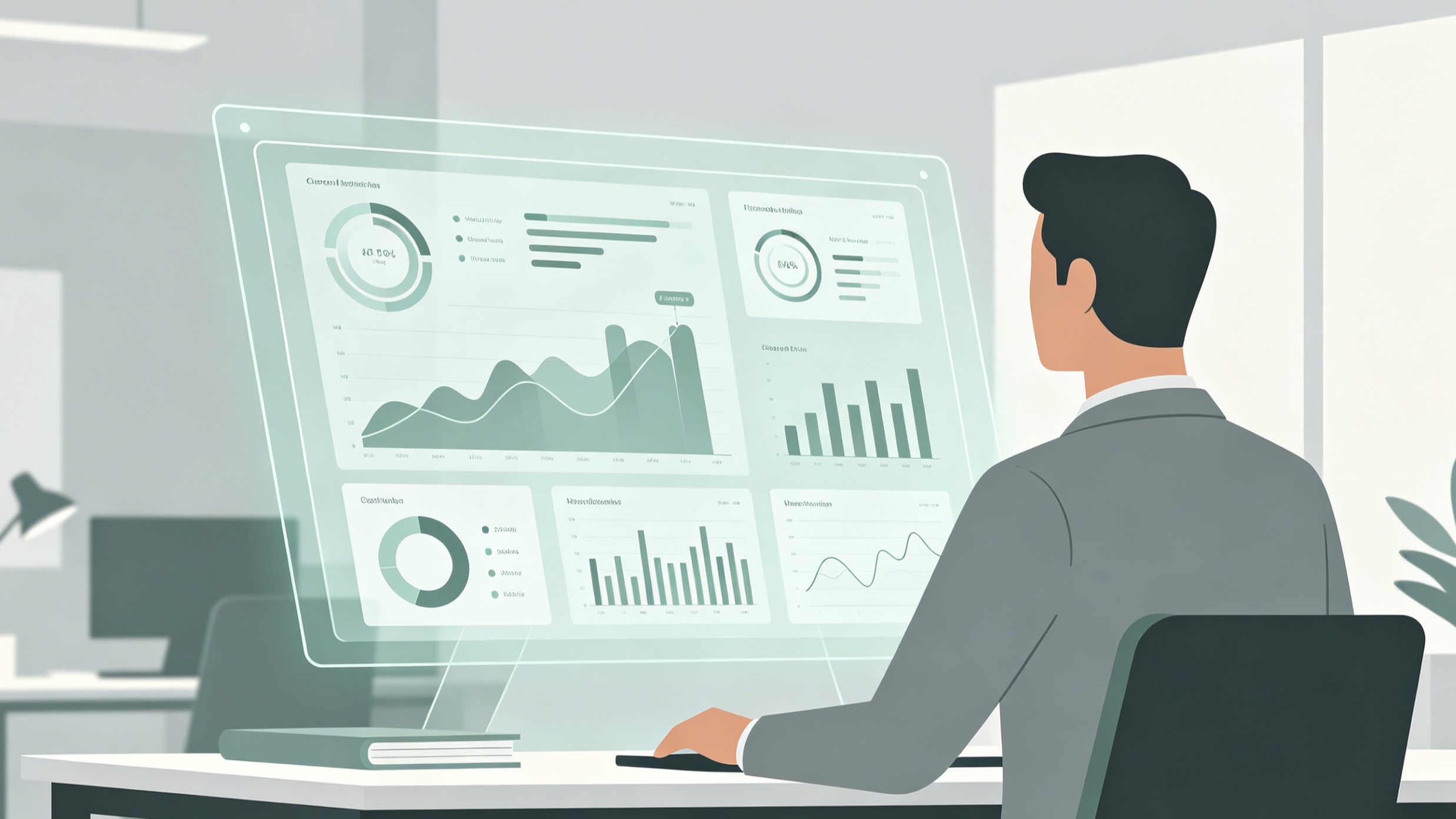
Roboflow Universe serves as the central nervous system for the global computer vision community. It is a massive, open-source repository that hosts hundreds of thousands of datasets and pre-trained models designed to accelerate the development of vision-based artificial intelligence. For developers, researchers, and engineers, this platform eliminates the most significant bottleneck in AI production: the scarcity of high-quality, labeled data.
The Transformation of Computer Vision Development Through Open Data
The traditional workflow for building a computer vision model was once a linear, exhausting process. It began with sourcing thousands of raw images, followed by months of manual annotation, and ended with iterative training cycles that often yielded suboptimal results due to limited data diversity. Roboflow Universe has fundamentally shifted this paradigm by creating a collaborative ecosystem.
Instead of starting from zero, developers now begin at the sixty or seventy percent mark. By accessing shared intelligence, a startup working on autonomous drone navigation or a researcher studying plant pathology can find existing datasets that closely match their requirements. This democratization of data ensures that the power of computer vision is no longer reserved for tech giants with massive labeling budgets, but is accessible to any developer with a creative solution to a real-world problem.
Breaking Down the Massive Scale of Roboflow Universe
The scale of Roboflow Universe is its primary strength. It is not merely a collection of files; it is a living library of visual information that spans across every imaginable niche.
Key Statistics and Content Scope
As of the current landscape, Roboflow Universe hosts over 500,000 public datasets and more than 175,000 pre-trained models. These repositories contain over 750 million images, encompassing hundreds of millions of individual annotations. These are not just raw pixels; they are structured data points that teach machines how to see.
The platform supports a comprehensive range of computer vision tasks, including:
- Object Detection: Identifying and locating specific objects with bounding boxes (e.g., detecting safety vests on a construction site).
- Instance Segmentation: Tracing the exact pixels of an object for high-precision tasks (e.g., measuring the surface area of a tumor in medical imaging).
- Classification: Assigning a label to an entire image (e.g., determining if a product is defective or non-defective).
- Keypoint Detection: Identifying specific points of interest on an object (e.g., tracking human joint movements for sports analytics).
Essential Features for Modern Vision Engineers
In our practical experience building edge AI solutions, we have found that the utility of Roboflow Universe extends far beyond simple downloads. The platform provides a suite of tools designed to refine and repurpose existing data.
Advanced Dataset Search and Semantic Discovery
The search functionality within Universe is built for semantic relevance. If a developer is looking for "rust on industrial pipes," the search engine doesn't just look for those keywords; it surfaces projects that have been categorized and tagged by experts in the field. This discovery process is enhanced by the "Health Check" feature. Before downloading a single megabyte, a developer can inspect the class balance of a dataset. If a dataset has 10,000 images of "safety helmets" but only 50 images of "no helmet," the Health Check warns the user of the potential bias, allowing them to supplement the data before training.
The Power of Project Forking and Image Cloning
One of the most valuable aspects of Universe is the ability to "fork" a project. Much like in software development, forking allows a user to create a personal copy of a public project. In one of our internal tests, we found a dataset for "license plate recognition" that was nearly perfect but lacked regional plates for our specific deployment area. By forking the project, we could keep the thousands of existing annotations and simply add 500 of our own localized images.
Furthermore, the "Clone" feature allows for surgical precision. Instead of taking an entire dataset, developers can select specific images or classes that are relevant to their needs and import them directly into their own Roboflow workspace. This prevents data bloat and keeps training sets lean and effective.
In-Browser Model Testing and Benchmarking
Universe allows users to test pre-trained models directly in the web browser. By using a webcam or uploading a local video file, a developer can see a model’s real-time inference performance. This is critical for benchmarking. For instance, if you are comparing two different YOLOv8 models for "pedestrian detection," you can see which one handles low-light conditions better before you commit to the computational expense of integrating them into your local environment. The ability to adjust confidence and overlap thresholds in the browser UI provides immediate feedback on how the model might behave in production.
Practical Applications Across Global Industries
The versatility of Roboflow Universe is best demonstrated through its impact on specific industrial sectors. The platform has become a repository for "long-tail" use cases that are often ignored by general-purpose AI models.
Transforming Precision Agriculture
In agriculture, the diversity of crops, pests, and environmental conditions makes it impossible for a single model to rule them all. Roboflow Universe hosts specific datasets for grape leaf disease, wheat head detection, and automated fruit counting. In our experience, using a pre-trained "apple ripeness" model from Universe allowed a small farm tech group to deploy a harvesting robot in weeks rather than months. They utilized the existing 3,000 images of Gala apples and fine-tuned it with a small set of Fuji apples, achieving over 92% accuracy in the field.
Modernizing Manufacturing and Quality Control
Manufacturing environments require extreme precision. Universe contains specialized projects for PCB defect detection, screw counting, and beverage container inspection. These datasets often include "null examples"—images with no defects—which are vital for reducing false positives. For a quality control engineer, being able to pull 5,000 images of "solder bridge defects" from a community-vetted project is the difference between a successful pilot and a failed project.
Enhancing Healthcare and Medical Imaging
While medical data is often highly sensitive, Roboflow Universe provides a space for researchers to share anonymized, de-identified datasets for academic and development purposes. From classifying X-ray images for pneumonia to segmenting MRI scans for brain tumor analysis, the platform provides the foundational data needed to train diagnostic assistants. The presence of specialized benchmarks like the Roboflow 100 (RF100) allows medical researchers to see how different model architectures perform across various specialized domains.
Technical Integration and Production Deployment
A common misconception is that Roboflow Universe is only for data discovery. In reality, it is deeply integrated into the deployment pipeline.
Implementing the Inference SDK in Python
Once a model is identified or trained on Universe data, it can be called into a local application using the Roboflow Inference SDK. For example, running a model on a local server or an edge device like an NVIDIA Jetson requires only a few lines of Python code. By utilizing the inference_sdk, developers can connect to a hosted API or run the model locally with high throughput.
During our testing of a YOLOv8n model for "traffic flow analysis," we utilized the following workflow:
- Identify the model ID on Roboflow Universe.
- Install the
inferenceandsupervisionlibraries. - Initialize the model using a private API key.
- Run inference on local CCTV frames.
This workflow abstracts away the complexity of managing model weights and architecture definitions, allowing engineers to focus on the logic of their application rather than the plumbing of the AI.
Leveraging Model-Assisted Labeling
Perhaps the most advanced way to use Universe is for "Model-Assisted Labeling." If a developer has 10,000 unlabeled images, they can use a pre-trained model from Universe to "auto-label" their data. For instance, if you are building a specialized "wildlife monitor," you can use a general "animal detection" model from Universe to draw initial bounding boxes. The human annotator then only needs to correct or refine these boxes, which we have observed to increase labeling speed by 5x to 10x.
Cost Efficiency and the Public Collaboration Model
Roboflow Universe operates on a "give-to-get" philosophy. For individuals, students, and open-source researchers, the platform is free. The condition is that the projects created under the free plan remain public on Universe, contributing back to the global knowledge base. This creates a virtuous cycle where every new user potentially adds value for the next.
For organizations requiring privacy, there are paid tiers that allow for private projects. However, the vast majority of the "intelligence" in the ecosystem comes from the public tier. This model has successfully built a library that rivals the datasets held by proprietary research labs, but with the transparency and accessibility of the open-source movement.
Summary
Roboflow Universe is more than a dataset repository; it is an essential infrastructure for the modern computer vision engineer. By providing access to over half a million datasets and hundreds of thousands of models, it solves the "cold start" problem in AI development. Whether you are building a simple hobbyist project or a complex industrial monitoring system, the ability to find, fork, test, and deploy data-driven solutions from a centralized hub is a game-changer. It reduces the time to market, lowers the barrier to entry, and fosters a collaborative environment that accelerates the pace of innovation across the entire field of computer vision.
Frequently Asked Questions
What is the difference between Roboflow and Roboflow Universe?
Roboflow is the overall platform and company that provides tools for annotating, training, and deploying computer vision models. Roboflow Universe is a specific, public-facing part of that platform where users share their datasets and models with the community. Think of Roboflow as the "IDE" and Universe as the "GitHub" of computer vision.
Can I use the models found on Roboflow Universe for commercial projects?
The answer depends on the license of the specific dataset or model. Most projects on Universe are open-source, but they may use different licenses like MIT, Apache 2.0, or Creative Commons. Always check the project's license page on Universe before integrating it into a commercial product.
How do I contribute my own data to Roboflow Universe?
By default, any project created on the Roboflow "Public" or "Free" plan is automatically added to Roboflow Universe. Simply upload your images, annotate them, and generate a version of your dataset. It will then be searchable by other developers worldwide.
Is there a limit to how much I can download from Universe?
Roboflow provides generous limits for public use, though high-volume API access for inference may require a dedicated plan. For most developers downloading datasets for training or using the browser-based tester, the platform is highly accessible without restrictive barriers.
Can I run Universe models on edge devices?
Yes. Using the Roboflow Inference server, you can run models found on Universe on local hardware such as NVIDIA Jetson, Raspberry Pi, or OAK-D cameras. This ensures that your application can function in real-time without needing a constant internet connection to a cloud API.
What task types does Roboflow Universe support?
Universe supports the four primary computer vision tasks: Object Detection (bounding boxes), Instance Segmentation (pixel-level masks), Classification (image-wide labels), and Keypoint Detection (identifying specific coordinates on an object).
-
Topic: Roboflow Universe: The Largest Community of Vision Datasetshttps://roboflow.com/universe?ref=whoishiring0625
-
Topic: What is Roboflow Universe? | Roboflow Docshttps://docs.roboflow.com/~/changes/1221/universe/what-is-roboflow-universe
-
Topic: Import from Roboflow Universe | Roboflow Docshttps://docs.roboflow.com/~/changes/1220/datasets/adding-data/roboflow-universe