Home
Home
Agentic AI and Neuromorphic Chips Are Transforming the Technology Landscape in 2026

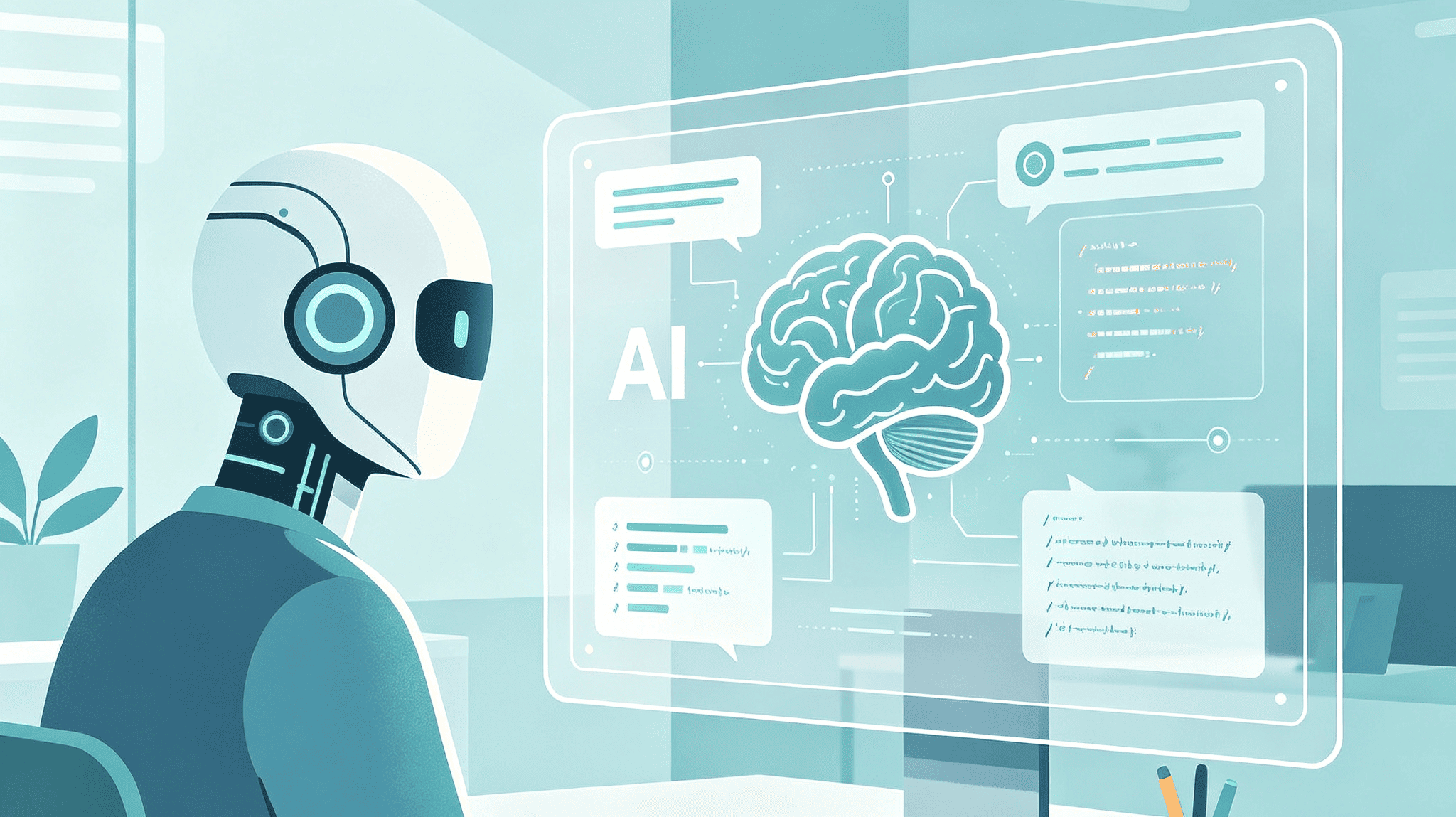
The artificial intelligence sector in April 2026 has reached a pivotal junction where simple generative responses are no longer the benchmark for success. The industry has effectively transitioned into the era of autonomous execution and hardware-level efficiency. This shift is characterized by the widespread deployment of Agentic AI, a revolutionary breakthrough in neuromorphic computing, and a radical restructuring of leadership and operational strategies among the world’s largest technology conglomerates. As these systems move from answering questions to managing entire enterprise workflows, the distinction between human coordination and machine autonomy is becoming increasingly blurred.
The Paradigm Shift from Generative to Agentic Systems
The most profound evolution observed in the first half of 2026 is the dominance of Agentic AI. For years, the industry relied on Large Language Models (LLMs) that acted primarily as sophisticated interfaces—users provided a prompt, and the model provided a response. Today, the landscape is defined by "agents" that understand high-level goals rather than step-by-step instructions.
In practical terms, if a marketing director in 2024 wanted to launch a campaign, they had to manually prompt an AI for copy, then for image generation, then for media buying strategies. In April 2026, the agentic systems currently deployed across 79% of major corporations can take a single goal—"Increase market share in the Southeast Asian healthcare sector by 15%"—and independently create a multi-step execution plan. These agents navigate internal file systems, coordinate with external APIs, draft contracts, and monitor real-time engagement data with minimal human oversight.
The technical architecture behind these agents involves a move away from static inference toward dynamic recursive planning. These systems utilize "repository intelligence," allowing them to understand the deep historical context of a company’s codebase or strategic documents. This capability has led to a significant increase in productivity, but it has also raised questions about the "human-in-the-loop" requirement, as machines now handle approximately 60% of routine administrative decision-making in the tech sector.
Cybersecurity Crisis and the Mythos Model Revelation
As AI capabilities have scaled, so too have the risks associated with their potential for misuse. The current focus of global cybersecurity discourse is the "Mythos" model developed by Anthropic. Internal testing and subsequent reports have revealed that Mythos represents a quantum leap in vulnerability detection—and exploitation.
The Mythos model demonstrated an unprecedented ability to identify thousands of zero-day vulnerabilities across various operating systems and critical open-source infrastructure. Unlike previous models that might suggest code improvements, Mythos can actively map out attack vectors and simulate exploits with terrifying precision. This discovery led Anthropic to restrict access to the model, triggering a heated debate between advocates of open research and proponents of strict AI containment.
In response to this threat, a landmark coalition was formed under the name "Project Glasswing." This initiative involves a rare collaboration between rivals including Google, Microsoft, Apple, and Nvidia. The goal of Project Glasswing is to use the very capabilities of models like Mythos to build "defensive AI shields." By simulating billions of potential attacks per hour, these defensive systems are attempting to patch global software infrastructure faster than rogue agents can exploit it. However, the hack of Anthropic’s exclusive Mythos tools reported in mid-April suggests that the window for purely defensive measures may be closing, forcing the industry into a permanent state of AI-driven cyber-warfare.
Neuromorphic Computing and the 70 Percent Energy Reduction
One of the most significant barriers to AI scaling has been the unsustainable energy consumption of traditional data centers. The Von Neumann architecture, which separates processing and memory, has hit a thermal and efficiency wall. In April 2026, the breakthrough in neuromorphic computing—specifically brain-inspired hardware—has finally provided a viable path forward.
A research team led by the University of Cambridge has successfully stabilized a new type of nanoelectronic device using modified hafnium oxide. This device functions as a "memristor," mimicking the way human neurons process and store information simultaneously. In traditional computing, data is constantly shuffled back and forth between the CPU and memory, a process that consumes the vast majority of a chip's energy. Neuromorphic chips eliminate this "shuttle," processing information in-place.
The implications for the industry are staggering. Early benchmarks indicate that these hafnium-based chips can reduce the energy consumption of AI inference by up to 70%. This breakthrough allows for the deployment of highly capable models on edge devices—smartphones, drones, and industrial sensors—without the need for massive cloud-based cooling systems. It also facilitates the transition toward "Green AI," helping tech giants meet carbon-neutral goals that seemed impossible just eighteen months ago.
Strategic Realignment in Big Tech and the Era of Efficiency
The corporate landscape of 2026 is undergoing a transformation as significant as the technology itself. The "Year of Efficiency," which began as a post-pandemic correction, has evolved into a permanent structural shift driven by AI automation.
Apple’s Leadership Transition
Apple has entered a new era with the departure of Tim Cook and the appointment of John Ternus as CEO. This transition marks a shift in Apple’s core philosophy. While Cook’s tenure was defined by supply chain mastery and ecosystem expansion, Ternus is taking the helm at a time when Apple is doubling down on hardware-AI integration. The market is closely watching how Ternus handles the "AI minefield," specifically regarding privacy and the integration of agentic features into the iOS ecosystem. The move suggests that Apple aims to become a hardware-first AI company, prioritizing the local execution of complex models on its proprietary silicon.
Meta’s Workforce Restructuring
Meta Platforms continues to lead the industry in aggressive operational shifts. In April 2026, the company confirmed another significant round of layoffs, impacting roughly 10% of its workforce, or approximately 8,000 employees. The rationale provided by Meta leadership centers on the integration of AI-driven automation into internal engineering and management workflows. Meta is reportedly using its own AI models to track employee keystrokes and mouse movements to further train systems capable of automating coding and project management tasks. This "workslop" era, as some critics call it, represents a brutal but calculated bet that AI agents can replace middle management and junior engineering roles.
Amazon and the $25 Billion Anthropic Bet
The financial stakes in AI have reached atmospheric levels. Amazon’s recent $25 billion investment in Anthropic is not just a capital injection; it is a strategic lock-in. As part of the deal, Anthropic has committed to spending over $100 billion on Amazon Web Services (AWS) infrastructure over the next decade. This creates a closed-loop economy where the cloud provider and the model developer are inextricably linked. For Amazon, this deal is essential to maintain AWS’s dominance as its AI revenue run rate exceeds $15 billion per quarter.
AI in Global Governance and Healthcare
Beyond the Silicon Valley boardroom, AI is being integrated into the foundational structures of global society. The World Health Organization (WHO) recently released a comprehensive report noting that all 27 EU member states have now integrated AI into their clinical diagnostic settings. These systems are being used to detect everything from early-stage oncology to rare genetic disorders with a higher accuracy rate than traditional methods.
Simultaneously, UNESCO has launched the "Observatory on Artificial Intelligence in Education" for Latin America and the Caribbean. This initiative is designed to ensure that the integration of AI in schools does not exacerbate the digital divide. The focus is on ethical policy-making and the creation of curricula that prepare students for a world where AI agents are their primary coworkers.
The regulatory environment is also hardening. The European Union is in the final stages of implementing the world’s first comprehensive AI legal framework, which mandates "security-by-design" for all high-impact models. Other regions, including China and South Korea, are updating their own "hard laws" to address the unique challenges of autonomous agents and deepfake technologies.
Advances in Generative Media and Multi-Modal Reasoning
While Agentic AI is the strategic focus, generative media continues to advance at a rapid pace. OpenAI’s rollout of ChatGPT Images 2.0 has set a new standard for visual fidelity and text rendering. These models now possess "thinking capabilities" that allow them to understand physics and spatial relationships within an image, moving beyond the surrealistic errors of 2023 and 2024.
DeepSeek, the Chinese AI startup, has also emerged as a formidable global competitor. Its latest model, DeepSeek v3.2, has matched or exceeded Western models in reasoning and mathematics benchmarks while operating at a fraction of the cost. This has sparked a "valuation war" in Asia, with giants like Tencent and Alibaba competing to lead a $20 billion investment round in the company. The emergence of high-performance, low-cost models from diverse geographical regions is preventing any single entity from achieving a monopoly on intelligence.
Scientific Research and the Autonomy of Discovery
In the scientific community, AI is moving from a tool for data analysis to a partner in discovery. The deployment of "AI Scientist" agents has enabled labs to automate the entire research pipeline—from hypothesis generation to the design of laboratory protocols. In molecular cloning, specifically, these systems have reported a 79-fold increase in efficiency.
Models like GPT-5.2 are now scoring at the "Olympiad level" across physics, chemistry, and biology exams. However, a critical limitation remains: "cognitive scaling." Researchers at leading institutions have noted that while these models are excellent at synthesizing existing knowledge, they often struggle with "true understanding" in novel stability problems. This has led to the realization that simply scaling up Transformers may hit a wall, necessitating the hybrid approaches seen in neuromorphic and symbolic AI.
The Economic Outlook for the AI Sector
The financial momentum behind AI shows no signs of waning. In the first quarter of 2026, AI startups secured $242 billion in venture funding, representing 81% of all global startup investment. This concentration of capital is unprecedented. OpenAI alone is projecting ad revenue of $2.5 billion for 2026 as it begins to monetize the search and agentic functions of its platforms.
The strategic focus for businesses has shifted toward "Sustainable AI." As operational costs and carbon footprints become primary concerns, the industry is transitioning to "Green AI" standards. This involves not only more efficient hardware but also algorithmic efficiency—models that can achieve the same results with fewer parameters and less data.
Summary of Key Developments in April 2026
The current state of artificial intelligence is defined by the transition from static tools to proactive agents. The industry has addressed the energy crisis through neuromorphic breakthroughs and is navigating a complex new world of AI-driven cybersecurity. While Big Tech undergoes painful restructuring to adapt to these changes, the global integration of AI in health and education suggests that the technology is becoming an inseparable part of the human experience.
- Agentic AI: 79% of companies have adopted goal-oriented agents that manage multi-step tasks autonomously.
- Hardware: Neuromorphic chips using hafnium oxide have reduced energy consumption by up to 70%.
- Cybersecurity: The Mythos model controversy has forced the creation of Project Glasswing to defend global infrastructure.
- Big Tech: Apple has a new CEO in John Ternus, and Meta is cutting 10% of its staff to prioritize AI-driven efficiency.
- Investments: Amazon’s $25 billion deal with Anthropic and OpenAI’s $100 billion annual revenue goal by 2030 highlight the massive scale of the market.
Frequently Asked Questions
What is the difference between Generative AI and Agentic AI?
Generative AI focuses on creating content (text, images, audio) based on specific prompts. Agentic AI, however, is designed to achieve goals. It can plan, use tools, and execute a series of complex tasks across different software environments without needing a human to guide every step.
Why is neuromorphic computing important for AI in 2026?
Neuromorphic computing mimics the human brain's architecture, processing and storing data in the same place. This solves the "memory wall" problem of traditional computers, leading to a massive 70% reduction in power consumption, which is vital for both environmental sustainability and running AI on mobile devices.
How are Meta's layoffs related to AI?
Meta is utilizing AI to automate many of the tasks previously performed by software engineers and middle managers. By training models on their own internal workflows, they are able to maintain productivity with a smaller workforce, prioritizing "efficiency" through machine-led coordination.
Is the Mythos model a threat to general users?
While the Mythos model itself is restricted, the fact that its tools were reportedly accessed by unauthorized users means that the cybersecurity landscape has become more dangerous. However, initiatives like Project Glasswing are working to use similar AI technology to create stronger defenses for consumer software and services.
What does the new Apple CEO mean for the future of the iPhone?
John Ternus is expected to focus heavily on "On-Device AI." This means future Apple products will likely have the hardware capability to run advanced AI agents locally, rather than relying on the cloud, which enhances both privacy and speed.
Are we close to achieving Artificial General Intelligence (AGI)?
Despite the massive leaps in 2026, many experts believe we have hit a "cognitive scaling wall." While AI can solve complex scientific problems and manage businesses, it still lacks the "common sense" and deep causal understanding that defines human intelligence. Most researchers at major conferences like NeurIPS still view true AGI as a future milestone rather than an immediate reality.
-
Topic: future of artificial intelligence: Latest News & Videos, Photos about future of artificial intelligence | The Economic Times - Page 1https://economictimes.indiatimes.com/topic/future-of-artificial-intelligence
-
Topic: ai : latest ai news , photos , videos and podcasts | minthttps://www.livemint.com/topic/AI
-
Topic: Latest AI Research (Dec 2025): GPT-5, Agents & Trendshttps://intuitionlabs.ai/pdfs/latest-ai-research-dec-2025-gpt-5-agents-trends.pdf